Ford Vehicle Systems
Ford TPMS Sensors, the Battery Monitor Reset, and Auto Start-Stop: The Three Things Every Ford Owner Ends Up Asking About
Ask a Ford owner what's wrong with their truck and you usually get one of three answers: a tire pressure light that won't go out, a battery-related fault message after a battery change, or a complaint about the engine shutting off at every light. All three are real, all three have a specific fix, and none of them are related to each other. This is the Ford version of that conversation — which models carry which hardware, what the dashboard is actually reporting, and where a free procedure ends and a part begins.
01 — Three Recurring Questions
Why Ford Questions Cluster Around Tires, Batteries and Stop-Start
Ford is unusual in how little its owner base asks about cylinder deactivation. The badge means a tire system, a battery registration system and a stop-start system, and each one generates more forum traffic than the next. Sorting them at the start saves a lot of wrong purchases.
TPMS
A sensor on each wheel reports pressure, temperature and a unique identifier. The identifiers are written to the body control module so the dash can name a corner. The two classic Ford questions are "where are the sensors" and "why won't my new sensor pair," and both have concrete answers.
Battery Monitor System
On later F-150s and other Ford vehicles, a battery monitoring system records what battery is installed. Replace the battery without registering it and the truck reports a battery fault message, sometimes with a check engine light. The fix is a registration step, not a new battery.
Auto start-stop
Ford shuts the engine down at lights and in traffic, then restarts it on your foot. Across seven model years the implementation and the switch location moved, which is why the eliminator catalog lists gateway harnesses, switch modules and memory modules separately for the same truck.
02 — Inside The Sensor
What a Ford TPMS Sensor Is, and Why a Brand-New One Can Still Fail
Each sensor is a sealed module with a pressure port, an antenna and a coin cell, and each one is identified by a serial number that the body control module has to be told about. That last requirement is the source of most of the confusion in tire-sensor purchases.
03 — Where They Sit
Ford TPMS Sensor Locations by Model, and the Spare Question
The question "where are the TPMS sensors on my Ford" has a short answer — one per wheel, on the valve stems — and a follow-up that takes longer: how many positions does the truck actually monitor. Most Fords watch four wheels and leave the spare alone.
| Ford model | Monitored positions | What the spare does | Notes worth knowing |
|---|---|---|---|
| Ford F150 TPMS sensor locations | Four road wheels | The bed-mount spare has no sensor and is not monitored | Wheel size and trim package decide the tire size the system expects, which is why an owner swapping to 20s can see pressures the dash displays oddly. |
| Expedition | Four road wheels | Under-floor spare, generally unmonitored | The 2011–2017 generation is the most common Ford emulator fitment, because the original sensors on those trucks are now well past their service life. |
| Explorer / Escape | Four road wheels | Compact spare or no spare, depending on trim | Ford Escape tire pressure questions and Explorer ones land in the same place: both flash an amber tire icon when the system reports a fault rather than a pressure. |
| Edge | Four road wheels | Under-floor spare on most trims | Check the placard in the door jamb — Edge trims changed wheel sizes across the run, and the displayed pressures follow the placard, not the tire sidewall. |
| Focus | Four road wheels | Compact spare, unmonitored | A 2010–2018 Focus with four original sensors is the clearest emulation case in the Ford line: cheap car, expensive sealed sensors. |
| Ranger / Maverick / Bronco | Four road wheels | Bed-mount spare on most trims, unmonitored | The Bronco and Maverick are newer, so their sensors have years left — a replacement sensor is the sensible route there. |
| Fusion | Four road wheels | Compact spare | Late-model sensors, and the system behaves — most Fusion tire questions are real pressure problems, not sensor failures. |
04 — The Relearn
Ford TPMS Relearn: The Keyless Sequence, and When You Need a Tool
A relearn teaches the truck about a sensor. Ford offers two routes, and the difference in convenience is the whole reason people buy a small tool. TPMS Ford F150 relearns cover both, which is why a driver who learned the routine on an Escape sometimes expects the truck to work the same way.
Keyless relearn
On vehicles with a four- or five-button remote, the truck can be told to go looking for sensors: ignition on, transmitter held at the lock button for several seconds, then lock and unlock presses in a set pattern. The system wakes each sensor as the vehicle is driven, and the dash confirms when it has them all. It works well when the sensors are healthy and the transmitter is the original unit.
ID write
A scan tool or programmer reads each sensor's identifier and writes it directly to the body control module, usually position by position. This is the reliable route after a single sensor replacement, when the vehicle has no working transmitter to relearn from, or when a corner keeps dropping out. The Ford TPMS reset tools sold for this purpose do exactly this one job.
Two practical notes. First, drive at least twenty miles at highway speed after a relearn before you believe the message has cleared — the system can take a full drive cycle to stop reporting a corner it has already found. Second, if a new sensor pairs and the message comes straight back, the pairing probably worked and something else is wrong: check that corner's pressure by hand, and check for a wheel or accessory causing interference.
05 — Steady Or Flashing
A Steady Ford Tire Light and a Flashing One Are Different Faults
Ford's tire icon changes meaning depending on how it's lit, and the distinction is the fastest way to know whether you're chasing air or a wire. A flashing amber tire icon is the one that sends owners looking for a sensor, and the Ford F150 tire pressure questions that follow are almost always a corner the truck can't hear from.
| On the cluster | What the vehicle is telling you | What to do first |
|---|---|---|
| Steady amber tire icon, with a low-pressure message | At least one sensor reported below the alert threshold and the vehicle has been driven long enough to be sure. | Check all four with a gauge while cold. If they're all at placard, the light should clear within a drive cycle. |
| Flashing amber tire icon | A system fault. The vehicle cannot see one or more sensors reliably — a failed sensor, an unpaired sensor, or interference. | Read the codes before replacing parts, then watch the per-wheel pressures one at a time to find the corner that won't hold a reading. |
| Both, and the message names a wheel | That position is reporting, and the others are fine. | A single sensor or valve at the named corner, plus a relearn. This is the cheap version of the same problem. |
| Nothing, ever | Either the system is working and stays quiet, or this vehicle predates direct monitoring. | Check the owner manual for a tire pressure warning light, and check whether a sensor is fitted to a valve stem at all. |
06 — What A Reset Tool Is
Ford TPMS Reset Tools: What You Actually Get for the Money
"Ford TPMS reset tool" covers two different products that share one name. Knowing which one you need prevents the most common disappointment in tire-sensor work.
Reads and writes sensor IDs
A TPMS programmer activates a sleeping sensor, reads its identifier and frequency, and lets you clone an old sensor's identity onto a new one. It's the tool for a single replacement that the truck refuses to learn, and for matching a replacement to the correct band. The genuine article costs real money; the category also contains a lot of very cheap units that read nothing.
Teaches the vehicle
A scan tool with TPMS service functions does the ID write into the body control module and runs the relearn. A Ford tire pressure sensor reset tool is this category of device, and a general OBD reader that only reads and clears codes cannot do the job. The diagnose before buying guide covers what a $25 reader can and cannot tell you.
One more distinction that matters on Ford: a tool that works on one model year may not cover the next, because Ford changed sensors, bands and module behavior across generations. Before buying any tool for an F-150, check the vehicle list against your specific year and trim — a truck bought in 2021 and a truck bought in 2025 are not the same tire system.
07 — Sensor Or Emulator
When Four New Ford Sensors Stop Being the Sensible Answer
One dead sensor on a truck with recent tires is a repair. Four original sensors on a vehicle that predates most of its parts list is a different calculation, because each sensor is a sealed battery that has to be renewed whole.
| Situation | Sensible route | Why |
|---|---|---|
| One corner failed, other sensors are recent | Replace the sensor, relearn | Cheapest correct answer, and the module already knows the other three positions. |
| All four are original and old | Emulator | Four sealed coin cells on the same retirement schedule will fail in sequence. A single purchase retires that question permanently, at that position. |
| Vehicle rarely sees a tire shop | Emulator | Sensor programming is the expensive part of a replacement, and it usually means a second trip. |
| Truck is newer, sensors have years left | Nothing yet | A 2021 Bronco with original sensors is not in this conversation. Replacing good sealed sensors early costs money and gains nothing. |
The emulator catalog carries Ford listings for the 2011–2017 Expedition and the 2010–2018 Focus, the two Ford applications where original sensors are now old enough to make the arithmetic obvious. Two honest caveats: an emulator is still paired to the body control module exactly like a sensor, and it is a monitoring device — the system stays live and a genuinely low tire still gets a warning.
08 — Battery Monitor
The Ford Battery Monitor Reset, and Why a New Battery Can Light the Dashboard
The second question every F-150 owner ends up asking has nothing to do with tires. On later F150s and several other Ford vehicles, the vehicle records which battery is installed — and if the record doesn't match the battery in the bay, it says so. A BMS reset F150 asks a simple question: is the battery in the vehicle the battery the vehicle knows about?
09 — Idle Relearn
Throttle Body and Throttle Position Relearns on a Ford, Without a Scanner
After a throttle body, throttle position sensor or intake service, a Ford relearns its idle. Skip it and the truck idles oddly, hunts, or responds lazily to the pedal — which owners frequently misread as a sensor problem and buy parts for. A Ford TPS reset is the short form for the same job, and it costs nothing to do by hand.
10 — Exhaust, Honestly
IWE, DEF and DPF Delete Kits on Ford: What They Are, and What We Don't Sell
Ford owners ask about a lot of delete kits — integrated wastegate, DEF, DPF — and they're a genuinely different category of job from a plug-in module. Here is what they are, why they come up, and why we don't sell them.
| Kit | What it is | Why it comes up | Our position |
|---|---|---|---|
| Integrated wastegate (IWE) delete | An F150 IWE delete kit removes or changes the exhaust valve control on certain 3.5L EcoBoost applications | Some of those engines have a weak valve or solenoid that produces misfires, rough running or a limp-mode condition owners trace to the exhaust rather than the valve | Not a product we carry. The diagnose before buying guide is the right first step — confirm the fault before changing exhaust hardware |
| DEF / DPF delete | Removes or changes the exhaust valve control on certain 3.5L EcoBoost applications | Some of those engines have a weak valve or solenoid that produces misfires, rough running or a limp-mode condition owners trace to the exhaust rather than the valve | Not a product we carry. The diagnose before buying guide is the right first step — confirm the fault before changing exhaust hardware |
| DEF / DPF delete | Removes or bypasses diesel exhaust after-treatment hardware — a Ford DEF delete kit or Ford DPF delete kit, in plain terms | Because it's for the 6.7 Power Stroke, and because it's a well-known aftermarket market | Not a product we carry, and not a conversation we want to have lightly — it affects emissions compliance, warranty, and in some jurisdictions legality |
These questions come up whether we answer them or not, and a straight answer is worth more than a silence. What we do carry for Ford is tire monitoring, idle relearn information, and auto start-stop hardware. What we don't carry, we say so. If you need a cylinder deactivation answer instead, the cylinder deactivation guide is the right page, and it explains why Ford trucks are rarely part of that conversation.
11 — Stop-Start Hardware
Why Ford Start-Stop Eliminators Come in Gateway, Switch and Memory Variants
Most brands need one part for a model. Ford needs several, because the same truck changed how the function is switched and where the switch lives across a handful of model years. This is the single most common reason a Ford start-stop part "fits the truck but doesn't work."
| Implementation | What it does | Typical Ford coverage |
|---|---|---|
| Gateway harness | Interfaces with the vehicle's central gateway and prevents the stop-start function from engaging, remembering the off state across ignition cycles | F-150 2021–2026 including Tremor and Raptor; also the current Bronco |
| Switch module | Plugs into the A-OFF switch circuit itself, so the button still works but the function stays off | F-150 2015–2020, and the 2025 left-side button variant |
| Memory harness | An inline harness that stores the off selection so you don't re-press it every drive | Expedition 2018–2021, Edge 2019–2024, Maverick and Ranger 2022–2024 |
| OBD module | A plug-in module that talks to the vehicle over the diagnostic port to disable the function | F-150 2015–2020 and Raptor, an easy fit for owners who want zero interior disassembly |
Coverage in the start-stop catalog also runs to the Fusion 2017–2020, the Edge with and without active park assist, the Ranger, the Maverick and the Bronco. The rule is simple: match the model year and the switch location, not just the model name. How the system works, why Ford fits larger starters and alternators, and what changes after it's switched off are covered in the auto start-stop guide.
12 — Dashboard Messages
Ford Warning Lights and Messages: What Each One Starts With
Ford's cluster is wordy, which helps when you know where to start. Here's a working list of the messages that come up most often, what each one is really about, and the first check that pays off. F150 dash lights are the version of this question that arrives most often, and the order below is roughly the order of frequency.
| Message or light | What it usually means | First check |
|---|---|---|
| Tire pressure / flashing tire icon | Low pressure, or a sensor the vehicle can't read | Steady and flashing mean different things |
| Battery monitor fault | A new battery that hasn't been registered, or a real charging fault | Battery and alternator first, registration second |
| Engine malfunction / wrench light | Stored codes the vehicle is reporting, not a diagnosis | Read the codes. The message is a delivery mechanism, not a finding |
| Ford Edge parking brake malfunction (also Escape, Bronco) | The electronic parking brake reporting a switch, actuator or module condition | The brake switch and the actuator, and the codes behind them — a reset doesn't fix a switch |
| Reduced functionality / Lane keeping / Pre-collision unavailable | A driver-assistance system switched itself off | Usually conditions, not faults: covered windshield, lane markings, weather, or a dirty camera behind the glass |
| Service brake system | The brake system reporting a condition it wants you to check | Fluid level, the message's stored codes, and the electronic parking brake on models that have one |
13 — Where To Start
Which Ford Problem You Have, and What to Do First
Five symptoms cover most Ford traffic. Two of them are solved with air and a drive, one with a five-minute registration, and the rest need a code read before any part is bought.
| Symptom | Likely cause | First step | Where the answer lives |
|---|---|---|---|
| Steady tire light | A low tire | Air all four to placard cold | Free, and correct most of the time |
| Flashing tire light, message won't clear | Failed or unpaired sensor | Read codes, watch per-wheel pressures, then replace and relearn — or emulate on an old vehicle | TPMS emulators for the Expedition and Focus listings |
| Battery fault after a battery change | Unregistered battery | Confirm charging is healthy, then register the battery | A BMS registration, not a new battery |
| Rough idle after throttle service | Uncompleted relearn | Run the idle relearn, then drive the vehicle properly | No tools needed |
| Engine cuts out at every light | Auto start-stop doing its job | Decide whether you want it gone, then match the switch location | Start-stop harnesses and modules, matched to the year |
| Misfire or limp mode on a 3.5L EcoBoost | Many candidates, including the integrated wastegate | Read codes and test before changing exhaust hardware | Exhaust hardware, and the diagnose before buying guide |
14 — Ford Modules By Year
Ford Auto Start-Stop Eliminators and Switch-Memory Harnesses
Every Ford unit below is matched to a model year and a switch arrangement. Find your truck, then confirm the year range on the product page — Ford changed the implementation more often than the badge.
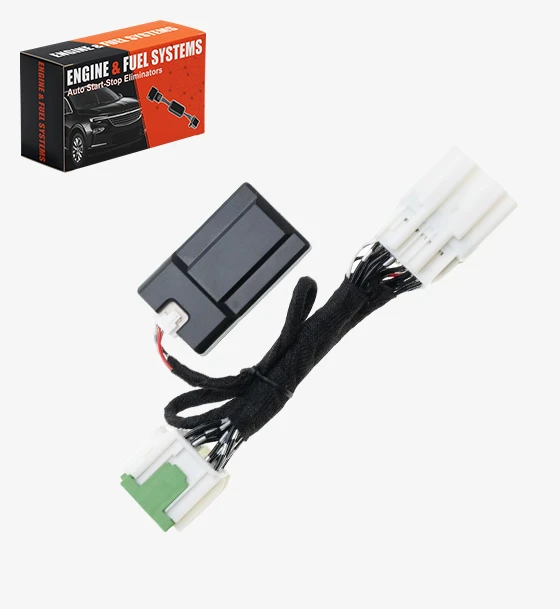 2021–2026 Ford F-150
Gateway Harness · Tremor & Raptor
$79.98
Central gateway interface · remembers the off state
2021–2026 Ford F-150
Gateway Harness · Tremor & Raptor
$79.98
Central gateway interface · remembers the off state
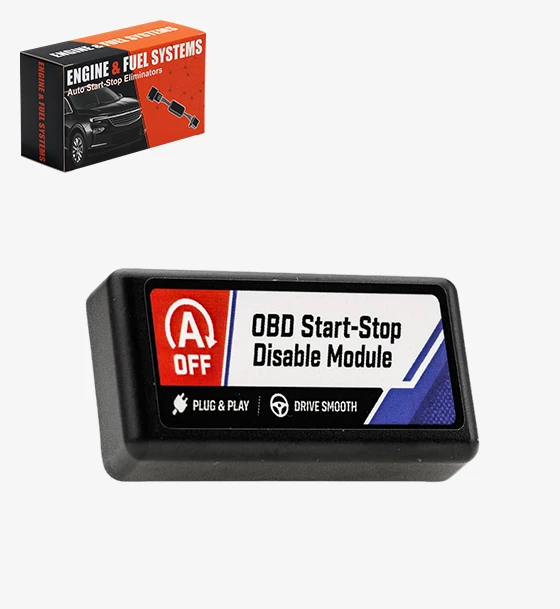 2015–2020 Ford F-150
OBD-II Disabler Module
$59.98
No interior disassembly · F-150 and Raptor
2015–2020 Ford F-150
OBD-II Disabler Module
$59.98
No interior disassembly · F-150 and Raptor
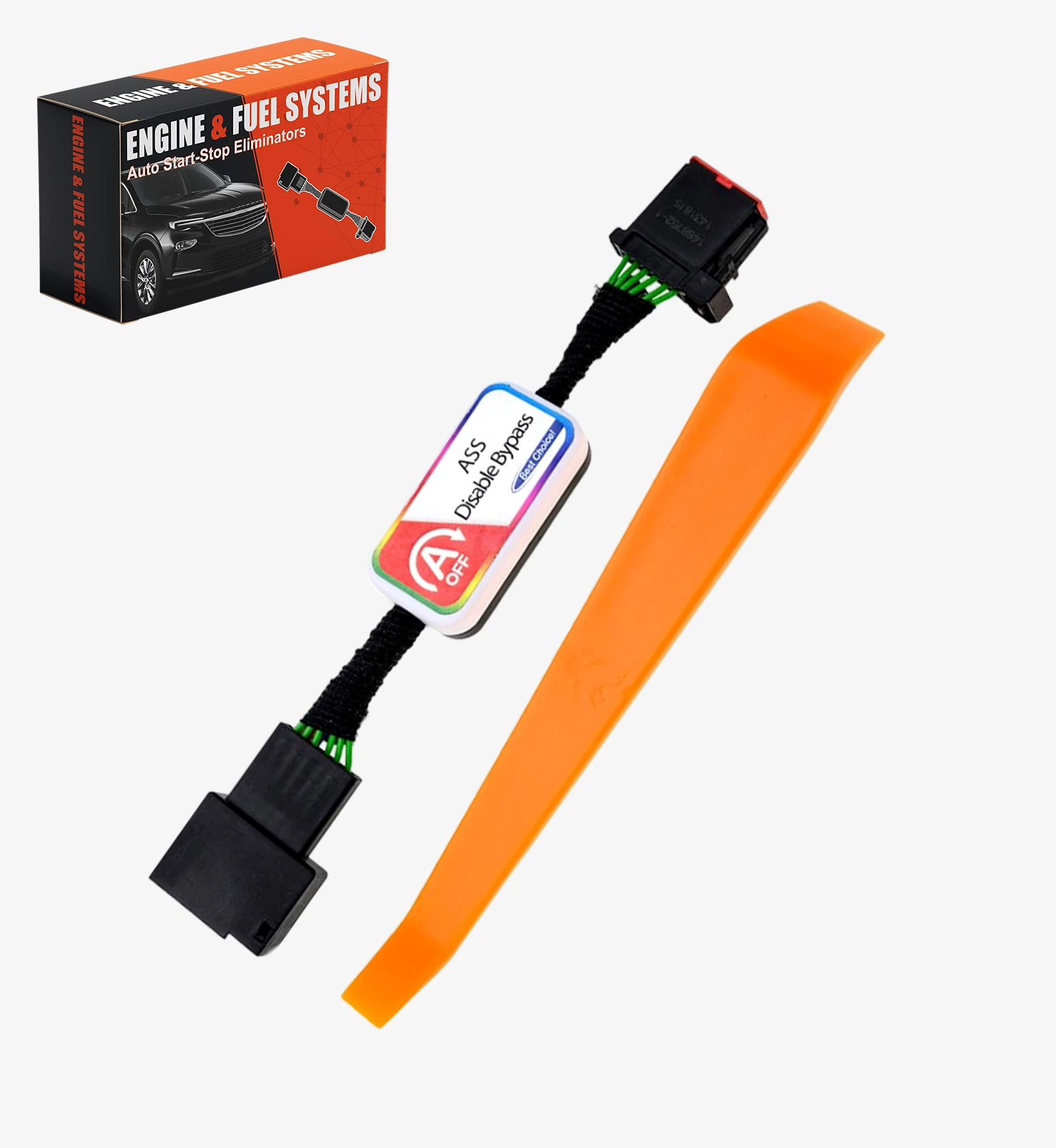 2019–2020 Ford F-150
Inline Harness · Plug & Play
$79.98
F-150 and Raptor · no dash button changes
2019–2020 Ford F-150
Inline Harness · Plug & Play
$79.98
F-150 and Raptor · no dash button changes
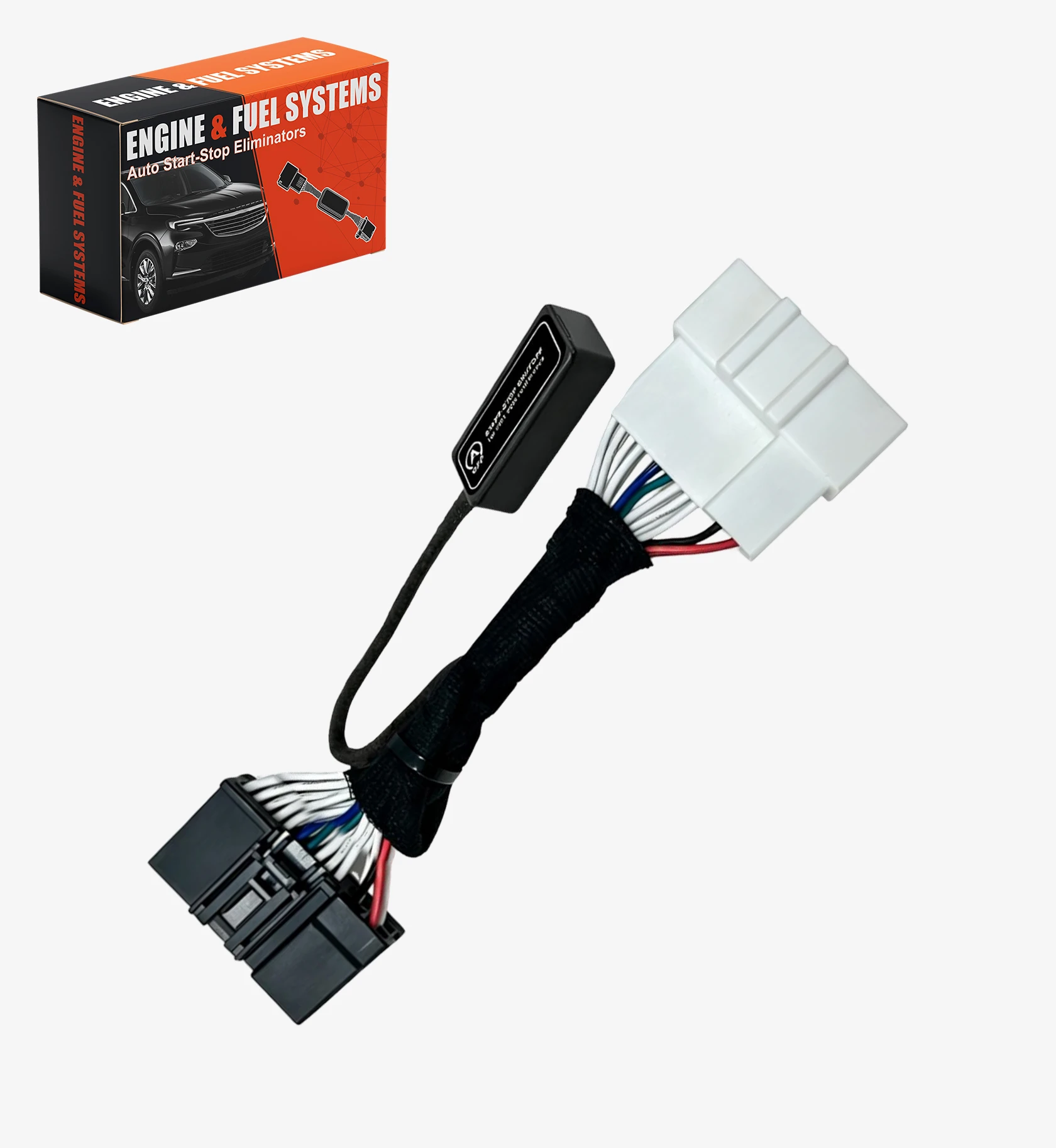 2021–2026 Ford Bronco
Switch Memory Harness
$79.99
Plug & play · remembers your off selection
2021–2026 Ford Bronco
Switch Memory Harness
$79.99
Plug & play · remembers your off selection
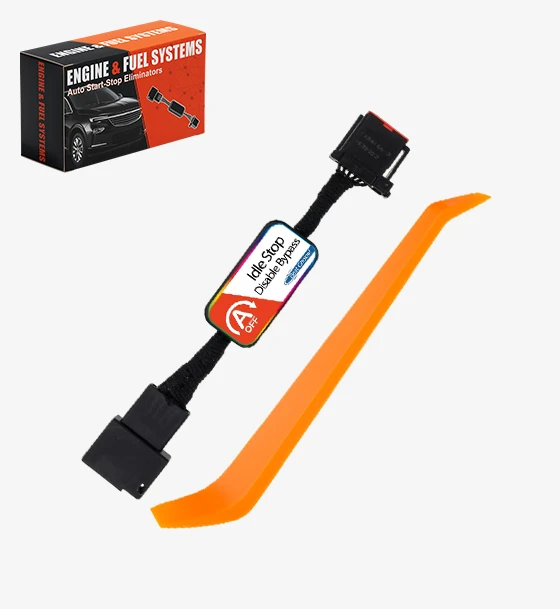 2019–2023 Ford Ranger
Auto Start-Stop Eliminator
$69.98
Plug & play · midsize truck
2019–2023 Ford Ranger
Auto Start-Stop Eliminator
$69.98
Plug & play · midsize truck
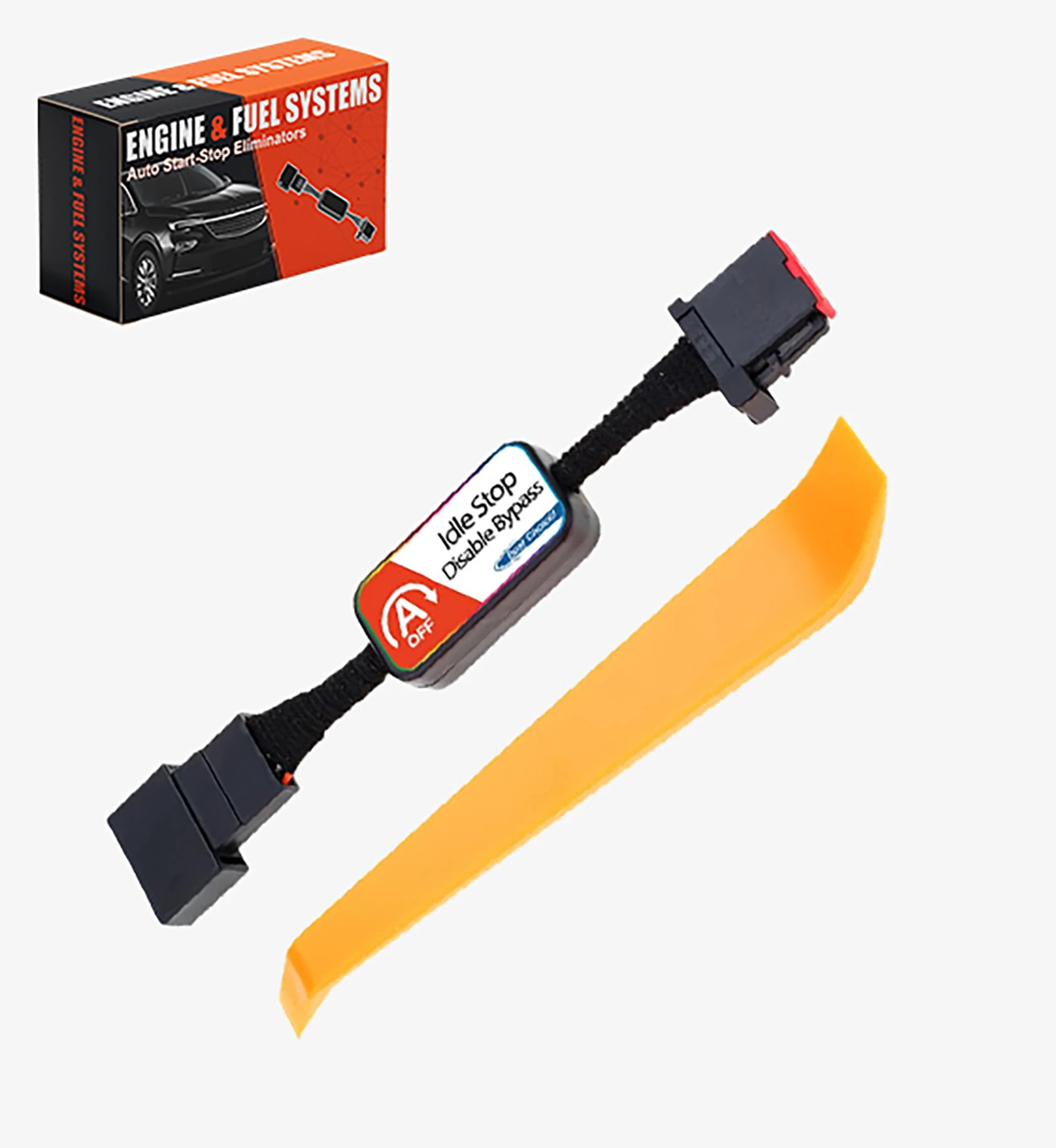 2018–2021 Ford Expedition
Auto Start-Stop Eliminator
$89.99
Plug & play · full-size SUV
2018–2021 Ford Expedition
Auto Start-Stop Eliminator
$89.99
Plug & play · full-size SUV
Also in the Ford range: the start-stop catalog covers the F-150 across 2015, 2018, 2019, 2020, 2021, 2025 and 2026 configurations, the Expedition 2018–2021, the Edge 2019–2024 with and without active park assist, the Ranger, Maverick, Fusion and Bronco. For tire monitoring, the TPMS emulator catalog carries the 2011–2017 Expedition and 2010–2018 Focus. If your model isn't listed, check the compatibility guide before assuming it doesn't exist.
15 — Ford Questions Answered
Ford TPMS, Battery Monitor and Start-Stop: Straight Answers
How do I find the TPMS sensor on a Ford?
Look at the valve stem on each wheel — a sensor is a small metal module fitted over the valve, usually with a visible hex nut or a plastic cap over the top. On a truck with aftermarket wheels, the sensor often moves to the wheel rather than the valve stem, and a TPMS-specific wheel keeps the original hardware. If you find no sensor on any valve, the vehicle is either indirect or pre-dates the system; the owner manual's placard section will say.
Why won't my new Ford TPMS sensor program?
Three common reasons. The sensor is on a different radio band than the vehicle expects, which happens with some earlier Ford applications. The identifier was written but the relearn wasn't completed, and the module drops the pairing when you cycle the ignition. Or the sensor itself is a failure in a different form — a valve that leaks, a seal that weeps — and the vehicle is reporting a fault, not a bad transmitter. A TPMS scan tool that reads and writes the identifier settles the first two in one step.
What does a BMS reset do on a Ford?
It performs the battery registration the vehicle expects after a battery change. On a later F-150 and some other Fords, the monitoring system records which battery is installed; a new battery that hasn't been registered reads as a mismatch and triggers a battery fault message, sometimes with a check engine light. The reset tells the vehicle "this is the battery now." It doesn't fix a bad battery — confirm charging is healthy first, or you'll register a fault.
Do Fords have a spare tire pressure sensor?
Usually not. Most Fords monitor four road wheels; the F-150's bed-mount spare and the Expedition's under-floor spare don't carry a sensor. That's why the system shows four positions rather than five. A few models and years do monitor the spare, and the door-jamb placard is the authority for yours — check it rather than inferring from the model.
Can I disable Ford auto start-stop with a switch?
Yes, and Ford even builds an A-OFF button for some model years. The aftermarket modules work the same way: they plug into the switch or gateway circuit and keep the function from engaging, remembering the off selection across drives so you don't press it every time. The reason there are several Ford types in the catalog is that the switch location and interface changed across 2015, 2021 and 2025 on the F-150 alone — match the year and the switch, not the badge.
Is there a free way to reset the throttle body on a Ford?
Yes. How to do a Ford throttle body reset without a scanner: key on with the engine off, take up firm limited travel on the pedal and hold it so the closed-throttle position is learned, release, start, let the idle settle, then drive through a range of throttle conditions. A Ford throttle position sensor reset is the same job in different words, and skip the drive and it often looks like the relearn didn't work.
Does my Ford have cylinder deactivation?
Rarely. Ford didn't fit GM-style collapsing-lifter deactivation across its truck line, which is why cylinder deactivation barely comes up on a Ford — when you see a "delete kit" for a Ford, it's usually referring to exhaust hardware like the integrated wastegate or diesel after-treatment, which is a different system entirely. The cylinder deactivation guide covers the brands that do have it, if you want to compare.
Should I replace all four TPMS sensors or just the bad one?
One bad sensor on a vehicle with mixed-age sensors: just that one. Four original sensors on an older vehicle where they were all installed at the factory: consider an emulator, because each is a sealed battery that can only be renewed whole, and they'll fail in sequence. A newer vehicle with sensors that have years left: nothing yet. The deciding question is the age of the original sensors, not how many are broken today.
Why does my Ford tire light come back after I aired up the tires?
Usually because the system is reporting a fault, not a pressure, and the fault is what makes the light return. A flashing icon points at a sensor the vehicle can't read. A steady icon that returns after correct air usually means a sensor has drifted, or the sensor learned the wrong pressure, or the tire has a slow leak at that corner. Watch the per-wheel pressures on the dash, one tire at a time, and the fault usually names itself.
16 — Next Steps