Auto Start-Stop Guide
Auto Start-Stop System: How It Works, Why It Varies, and How to Turn It Off
An auto start-stop system shuts your engine down at a red light and restarts it the moment you lift off the brake. Whether it actually engages — and how the restart feels — comes down to your battery, your starter, and even the weather.
It's also one of the most misunderstood features in a modern car: owners watch it quit on cold mornings, feel a rough restart, or lose A/C at a stoplight and assume something is broken. Usually, nothing is. Here's what's actually happening — and what to do when it isn't.
01 — The Basics
How an Auto Start-Stop System Works (and How Much Fuel It Saves)
When you stop at a red light with your foot on the brake, the engine computer cuts fuel and spark instead of letting the engine idle. Lift off the brake or touch the gas, and the engine fires back up — usually before your foot reaches the pedal. The idea is that simple: a stopped engine uses no fuel, and city driving is full of stops.
How much fuel you actually save depends on where you drive. Tests put the reduction at roughly 7% to 26%, with city driving gaining up to 7% compared with the same car running with start-stop switched off. The savings come from idle time: a standard city test cycle spends about 19% of its time idling, and a dense stop-and-go cycle almost 38%. On the highway, where the engine never shuts off, you save essentially nothing. Start-stop pays off in direct proportion to how much stopping your commute involves.
02 — The Decision Logic
How the System Decides to Shut Off — and to Restart
Nothing about a start-stop stop is random. Sensors report, the engine computer decides, the engine acts. Every stop goes through the same three steps.
Sensors Check The Conditions
Throughout the stop, the car is watching:
- Vehicle speed = 0, brake pedal pressed
- Transmission in Drive
- Engine warmed up to operating temperature
- Battery charge and temperature in range
- A/C and heat demand versus cabin temperature
- Steering angle, incline, and gear position
The Computer Gives — Or Refuses — Permission
The engine computer weighs everything at once: battery charge, engine temperature, climate load, gear position. When all of it lines up, it shuts the engine off. When one thing doesn't — a cold engine on a winter morning, a low battery, the A/C on max — it quietly keeps running, with no warning and no message on the dash. That silent "no" is why start-stop seems random from the driver's seat. It isn't random; it's just invisible.
Off At The Stop, Back On In A Blink
At the stop: fuel and ignition cut. The engine comes back the moment you ask for it:
- Brake pedal released (the most common trigger)
- Accelerator touched
- Battery charge dropping too low
- Cabin temperature drifting too far from your setting
- Shifting out of Drive or opening the door
The starter fires the engine before the car has moved an inch.
Notice there's no warning light in this picture — when the system says no, the dash stays quiet and the engine just keeps running. The next time it behaves differently, a condition changed, not a fault.
03 — Configuration
Why Two of the Same Car Behave Differently
Two identical-looking cars can shut off and restart in noticeably different ways. What separates them isn't the badge — it's the battery, the starter hardware, and the software the car was built with.
Battery Type And Health
Start-stop cars use AGM or EFB batteries — not standard flooded ones — because the engine has to crank all day with accessories running while it's off. As that battery ages, it holds less charge, and the computer reacts by allowing fewer stops. From the driver's seat it looks like "it worked yesterday, not today." An aging battery is the number-one reason start-stop gets less active over time.
Which Starter System You Got
Some cars use a heavy-duty starter motor built for constant cycling; others use a belt-driven starter-alternator (mild hybrids) that restarts the engine so quietly you can't feel it. You can tell them apart from the driver's seat: one gives a solid crank, the other feels like nothing happened at all.
Build Date And Trim Level
The rules are written per configuration, and manufacturers update them mid-production. A software revision can change how warm the engine must be, how much battery reserve is required, or how long a stop has to last before it's worth taking. Two cars of the same model year can behave differently if one was built before the update and one after.
Cold Mornings, Short Trips, Max A/C
Cold weather, short trips that never fully warm the engine, full blast on the A/C or heat, and steep hills all hold the system back. A car that starts and stops all day in September may barely do it on a January school run — and that's correct behavior: it's protecting your ability to start and your cabin comfort first.
The Dash Button Doesn't Always Remember
On many vehicles the off-button has to be pressed every single trip — each time you start the car, start-stop comes back on. Others remember your last choice; others only remember for that drive. Whether the button sticks is a software decision, not a defect — and it's the main reason drivers look for a permanent fix.
Not Everything Is Start-Stop
Engine behavior around a stop can also involve cylinder deactivation at highway speed (AFM/DFM/VCM) or a tire-pressure light that happens to pop up at the same time. Those are separate systems with their own logic — see AFM, DFM & VCM and TPMS & Vehicle Monitoring before blaming start-stop.
Same badge, same year, different behavior: what matters is the battery, the starter, and the software your specific car left the factory with.
04 — Symptoms
Start-Stop Not Working? What's Normal and What's a Real Problem
Start-stop sends a lot of confusing signals: it disappears for a week then comes back, the A/C weakens at a light, a message shows up after a battery change. Here's what each one usually means — and when it's time to get out the scanner.
"It Works Some Trips, Not Others"
What's going on: conditions change trip to trip — engine temperature, battery charge, climate load, trip length. A cold morning with the heat on full may give you zero shut-offs; a mild afternoon in traffic gives you plenty.
When to check it: if it has become rare in every condition, test the battery first — an aging AGM/EFB battery is the usual cause. Start with Diagnose Before Buying.
"The Restart Feels Rough"
What's going on: a heavy-duty starter cranking a warm engine is always a little noticeable on some cars — that's its character, not a failure. A bit of engine movement on restart is the mounts doing their job.
When to check it: if the restart has become noticeably harsher than it used to be, or it nearly fails, that points to an aging battery or starter — worth diagnosing before it strands you.
"The A/C Weakens At Red Lights"
What's going on: with the engine off, the A/C compressor isn't turning. The system allows the cabin to drift a little, then restarts the engine when it gets too warm — or keeps the engine running when cooling demand is high.
When to check it: if you have no cooling at all, engine running or not, that's an A/C system fault of its own — test it before you suspect start-stop.
"My Battery Keeps Dying"
What's going on: start-stop multiplies the number of charge cycles a battery goes through. A battery at end of life, all-short-trip driving that never fully recharges it, or a failing alternator will show up first as start-stop quitting — then as a no-crank.
When to check it: right away if the battery is over three years old or has needed a jump. Electrical faults get worse, not better — see the Troubleshooting Center.
"The Button Is Greyed Out / Message On Dash"
What's going on: an explicit message like "start-stop unavailable" means the computer has logged a condition or a fault code — battery sensor, brake switch, or a lockout from another system.
When to check it: a message on the dash deserves a code scan before you buy anything — a stored fault is different from the system simply waiting for better conditions. Follow Diagnose Before Buying.
"Warning Light After A Battery Change"
What's going on: many cars need the new battery registered to the car — skip that and the computer misreads its charge and restricts features. Lights like TPMS or ABS that appear after service are separate systems entirely.
When to check it: a TPMS light is about tire pressure, not start-stop — handle it through TPMS & Vehicle Monitoring.
05 — Dashboard Messages
Start-Stop Unavailable? Every Start-Stop Warning Light and Message, Decoded
The dash shows start-stop trouble in a handful of standard ways, and the wording changes by brand. Most messages mean the system is sitting this drive out — not that anything is broken. Two of them are worth acting on. Here's what each one means and the first move to make.
| Message or light | What it means | Usual cause | First move |
|---|---|---|---|
| "Start-Stop System Unavailable" (wording varies by brand) | The system switched itself off for now — no fault implied. | Low battery charge, cold engine, A/C or heat demand, an open door or hood, an incline. | Nothing. It normally comes back on a later trip once conditions improve. |
| "Stop/Start Unavailable — Service Stop/Start System" | The computer stored a fault code and took the system offline until it's resolved. | Battery sensor not re-learned after a battery change, an aging AGM battery, a brake-switch fault. | Scan for codes. If it appeared right after a battery replacement, ask for battery registration / re-learn first. |
| "Auto Stop Standby" (VW / Audi) | Purely informational: the system is ready but holding off. Not a fault. | Warm-up, climate load, or stop length hasn't met the conditions yet. | None needed — drive normally. |
| "Stop/Start Disabled" + check-engine light | A fault somewhere else disabled start-stop as a side effect. | Charging-system or engine fault that set a trouble code. | Get the codes read — start-stop usually returns once the underlying fault is fixed. |
| Amber "A-off" symbol (engine with an off arrow) | The system is off — you turned it off, or a condition is blocking it. Informational, not a warning. | Button setting that resets each trip; unmet conditions. | Press the button to toggle it. If it stays amber with no message, scan codes. |
| Red battery light + start-stop gone | The charging system is struggling — start-stop is the first feature cut to protect starting. | Weak battery, failing alternator, bad battery connection. | Stop safely and have the charging system checked — this one won't fix itself. |
06 — Myths vs. Reality
Does Start-Stop Damage Your Engine? Four Myths, Debunked
"It Destroys Starters And Batteries"
The truth: these cars use starters rated for far more cycles and batteries built for the extra work. Parts do wear out — and a start-stop car shows its battery's age a bit sooner than one without it — but the hardware is made for the job. The real cost is a premium AGM or EFB battery at replacement time, so budget for that.
"The Fuel Savings Are A Myth"
The truth: the savings are measured — 7–26% in testing, up to 7% in city driving. What's also true: if your commute is mostly highway, you'll see close to nothing. Start-stop saves money in traffic, not at 70 mph.
"Restarting Constantly Wears Out The Engine"
The truth: the hardest thing on an engine is a cold start. Start-stop only ever restarts a fully warmed-up engine with oil already circulating — the easiest restart there is. Worries about oil dilution belong to certain direct-injection engines and how they're driven, not to start-stop itself.
"Pressing The Button Every Trip Solves It"
The truth: pressing the button works — until someone else drives the car, or the battery is disconnected and the setting resets. If your button won't remember, the permanent fixes are in the next section.
Start-stop won't destroy your engine, and it won't make everyone rich at the pump. It turns idle time into stopped time — whether you keep it, disable it, or tune it out is your call to make.
07 — Your Options
How to Turn Off Auto Start-Stop: Four Options Compared
If you'd rather the engine stayed on, you have four ways to get there. They differ in cost, in how easily they undo, and in how much they change inside your vehicle's computer.
| Option | What It Does | Reversible? | What To Know |
|---|---|---|---|
| 1. Press the button each trip | Turns start-stop off for the current drive, the way the factory intended. | Yes — nothing changed | Free. If your button remembers the last setting, this may be all you need. If it resets every trip, it's a habit, not a fix. |
| 2. Dealer / software coding | A software session changes how the system defaults or activates. | Depends on the method | Availability, cost, and results vary by brand and dealer. It's a software change to your vehicle's computer — understand what gets written before you schedule it. Full comparison: Disabler vs Delete vs Tune. |
| 3. Plug-and-play eliminator | A vehicle-specific harness that makes "off" the remembered default — with no change to your factory software. | Yes — unplug to return to stock | It has to match your exact year, trim, and engine — there is no universal fit. See available eliminator fits → |
| 4. Mechanical delete / ECU tune | Removes hardware or rewrites engine calibration. | Often hard or expensive to undo | Commonly confused with options 2 and 3, but it changes much more of the car. Full comparison: Disabler vs Delete vs Tune. |
08 — Vehicle Fitment
Auto Start-Stop Eliminator Fitment List
A plug-and-play eliminator is available for the vehicles below. Find your year and model, then open the product page to confirm it matches your trim and engine.
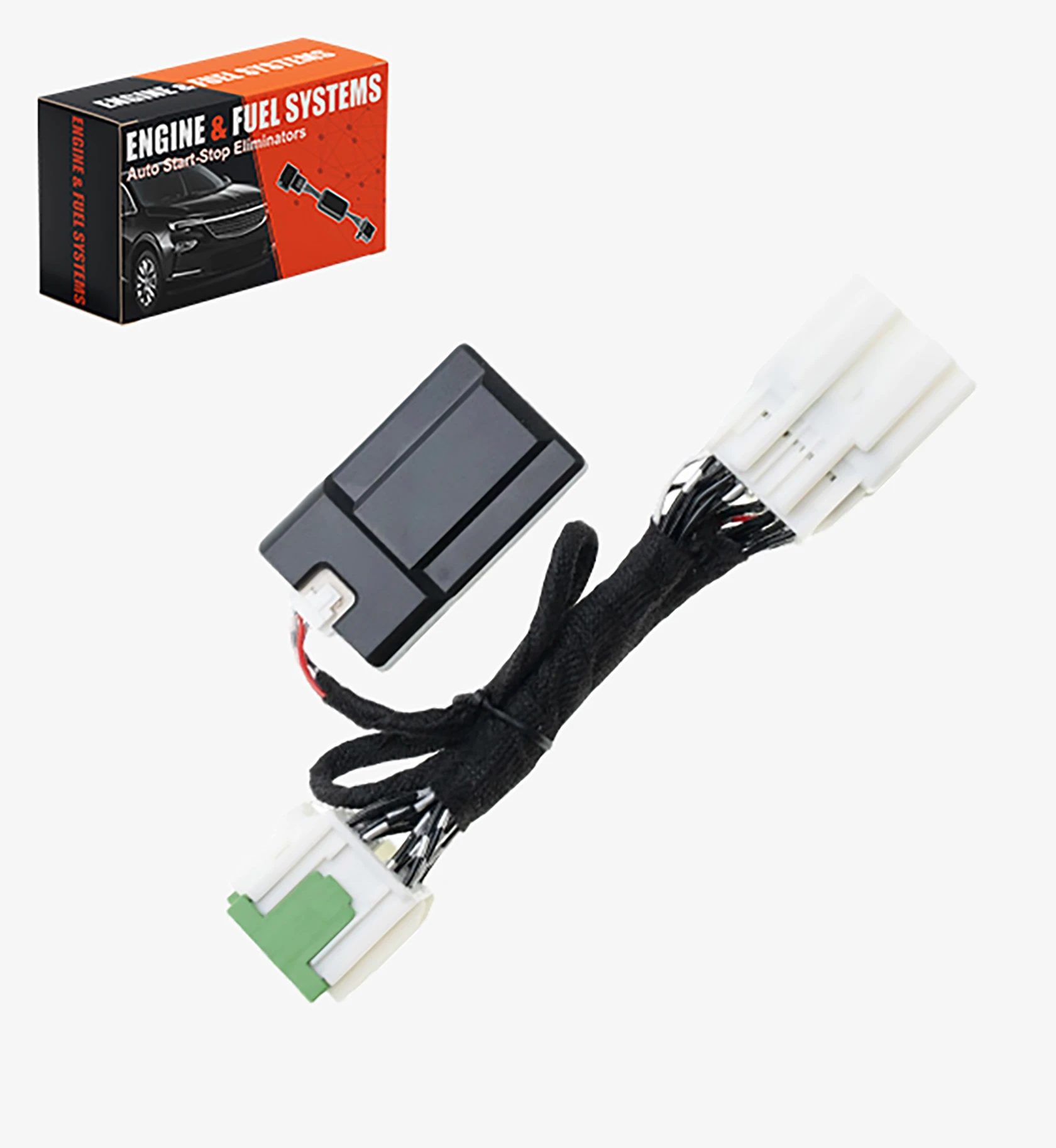 2021–2026 Ford F-150
Plug & Play Start-Stop Eliminator
$104.99
View product →
2021–2026 Ford F-150
Plug & Play Start-Stop Eliminator
$104.99
View product →
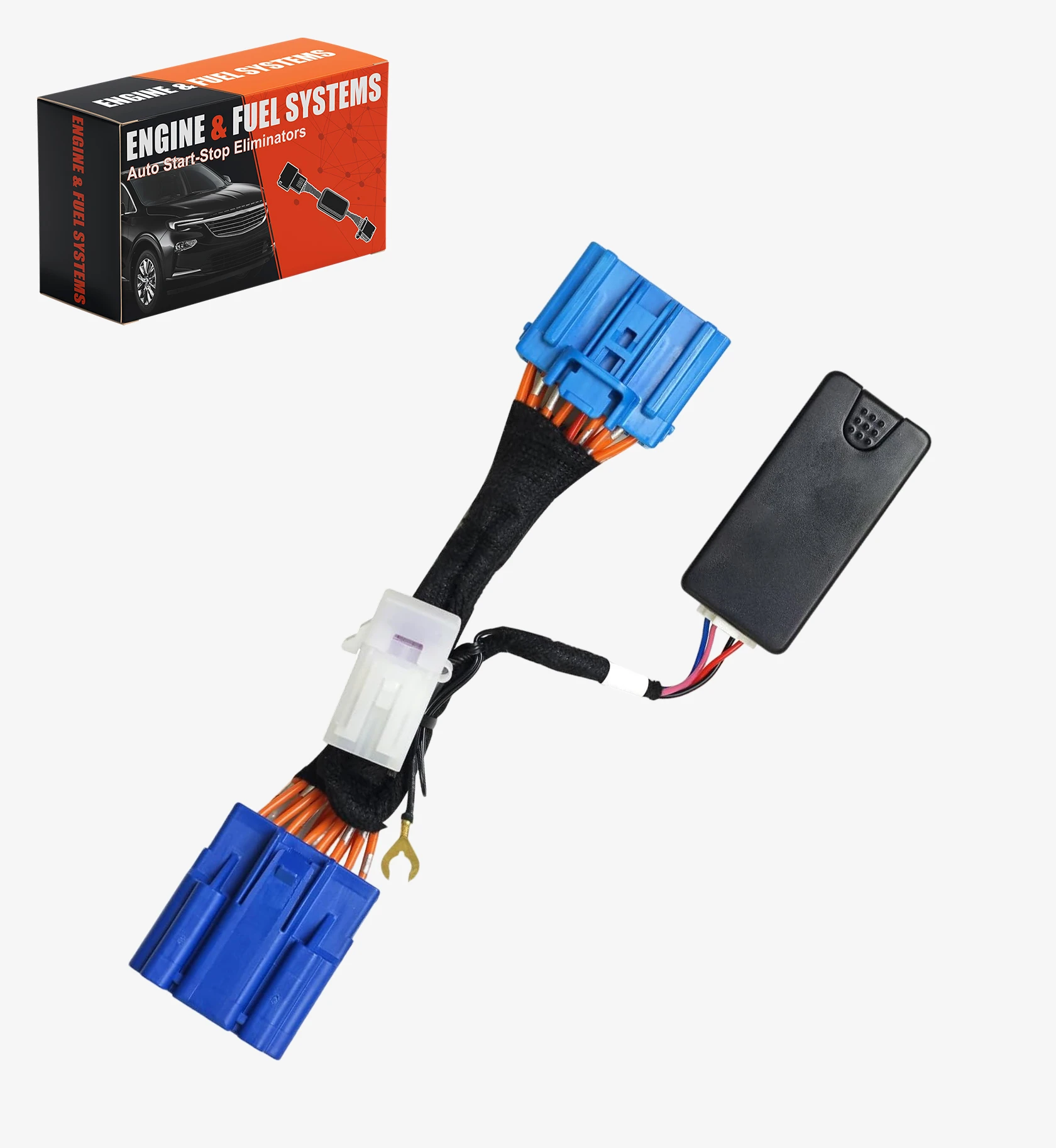 2025–2026 Ram 1500 (4WD)
Plug & Play Start-Stop Eliminator
$109.99
View product →
2025–2026 Ram 1500 (4WD)
Plug & Play Start-Stop Eliminator
$109.99
View product →
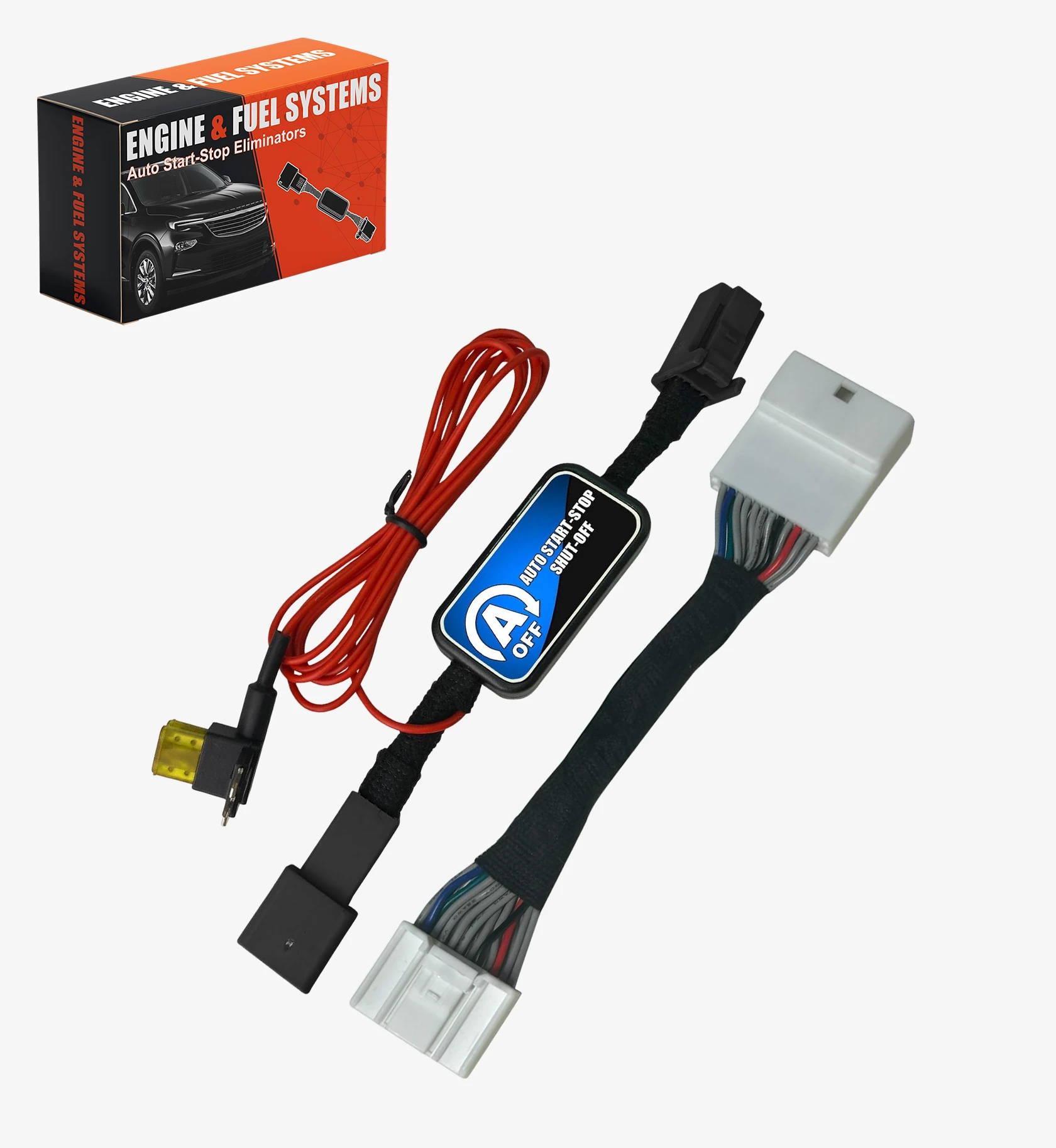 2018–2025 Honda Odyssey
Plug & Play Start-Stop Eliminator
$109.99
View product →
2018–2025 Honda Odyssey
Plug & Play Start-Stop Eliminator
$109.99
View product →
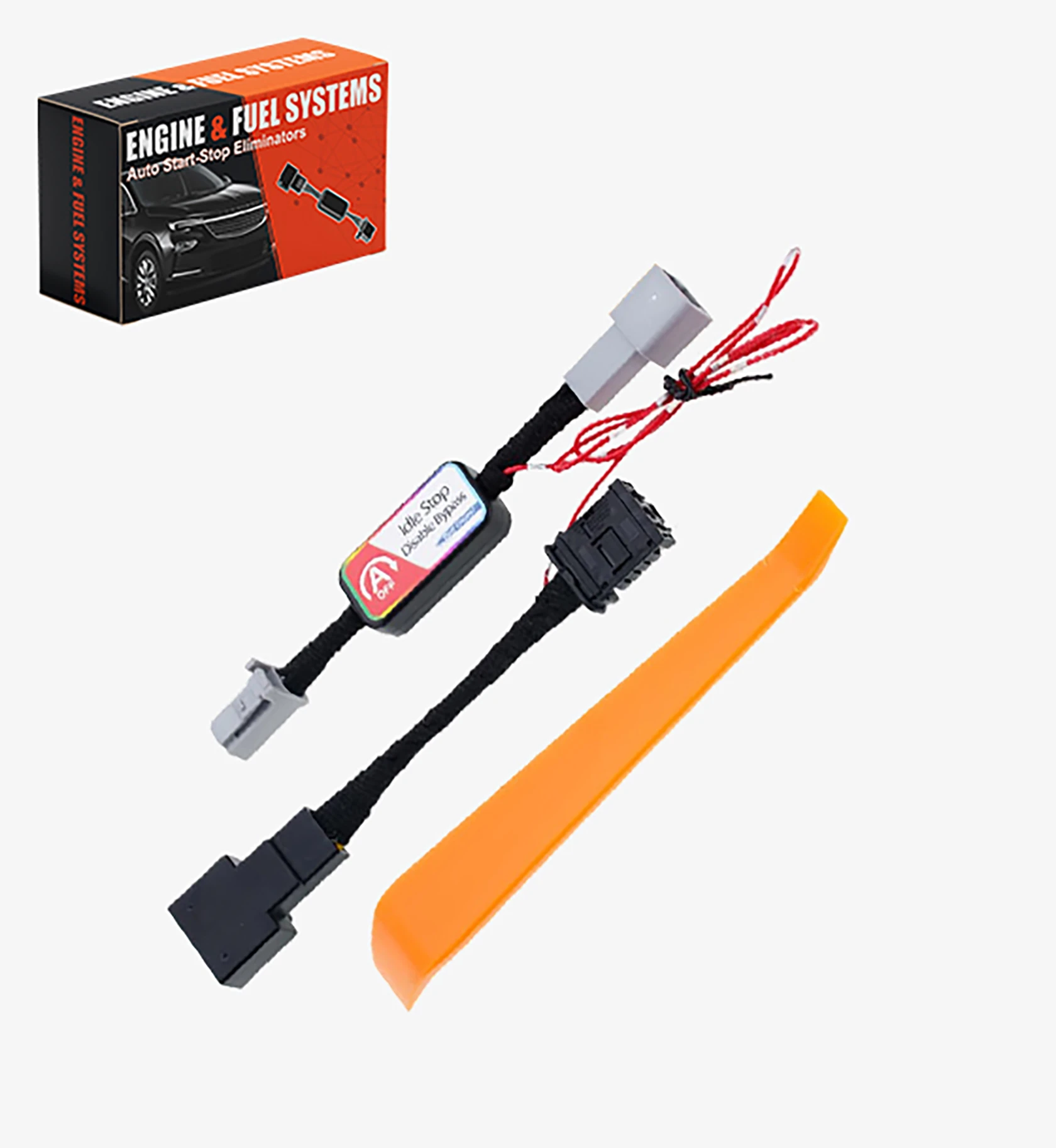 2025–2026 Nissan Frontier
Plug & Play Start-Stop Eliminator
$95.99
View product →
2025–2026 Nissan Frontier
Plug & Play Start-Stop Eliminator
$95.99
View product →
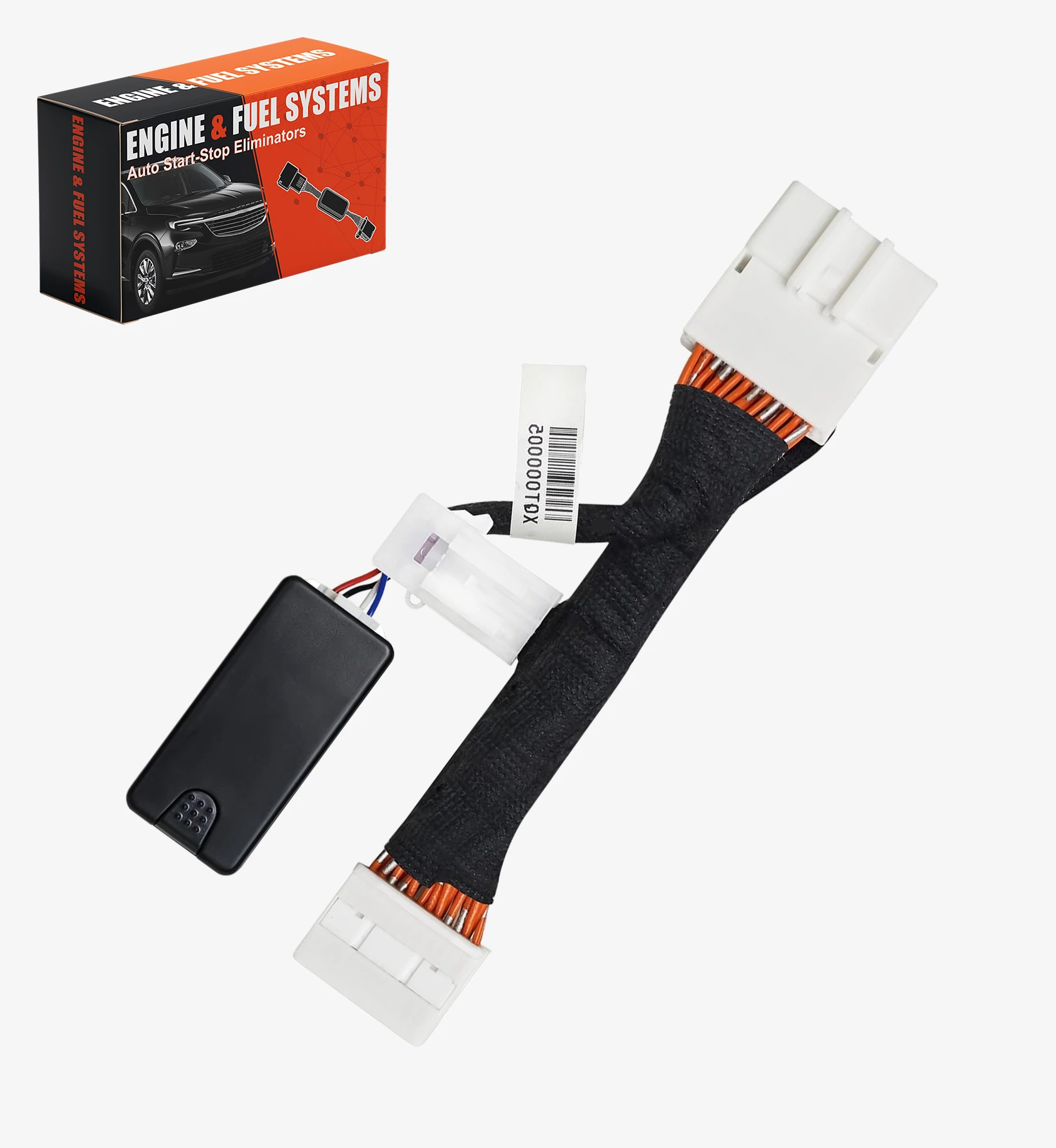 2023–2025 Subaru Outback
Fused Memory Harness
$95.99
View product →
2023–2025 Subaru Outback
Fused Memory Harness
$95.99
View product →
Don't see your vehicle? Browse the full start-stop eliminator catalog or check your car against the vehicle compatibility guide — new models are added regularly. For brand-specific details, see our Ford, Honda, RAM, Chevrolet, GMC, and Toyota guides.
09 — FAQ
Auto Start-Stop: Frequently Asked Questions
Does auto start-stop damage the engine?
No — not in normal use. Start-stop only ever restarts a fully warmed-up engine with oil already circulating, which is far easier on it than the cold start every trip begins with. The starter and battery are heavy-duty parts sized for the extra cycles. Concerns about oil dilution apply to certain direct-injection engines and how they're driven, not to start-stop as a system.
How much fuel does start-stop actually save?
Tests show roughly 7–26% lower fuel use depending on conditions, with city driving gaining up to 7% versus the same car with the system off. The savings come from idle time — city test cycles spend about 19% of their duration idling, and heavy stop-and-go nearly 38%. If you mostly drive highway, expect close to zero.
Why does my start-stop work sometimes but not other times?
Every condition has to be true at once: warm engine, charged battery, manageable A/C load, foot on the brake, the right gear. Miss one and the engine keeps running, silently. Changes with weather, trip length, or climate load are normal. If it suddenly never engages in any condition, the battery is the usual suspect.
Does the A/C still work when the engine is off?
It weakens. The A/C compressor isn't turning while the engine is stopped, so the system lets the cabin drift a little, then restarts the engine when it gets too warm. If you have no cooling at all — engine running or not — that's an A/C fault of its own, not start-stop.
What does it mean when my start-stop says unavailable?
Usually nothing is broken. A single "unavailable" message almost always means one condition failed — battery charge, engine temperature, climate load, or an open door — and the system re-engages on a later trip. If the message stays up for several days, or reads "Service Stop/Start System," a fault code is stored: scan the battery and charging system first.
What does the start-stop light on my dashboard mean?
An amber symbol — an engine with an off arrow, or an "A" with a slash — means the system is currently off: you switched it off, or conditions are blocking it. It's informational, not a warning. A red battery light showing up alongside a lost start-stop is the exception — that points at the charging system, not the feature.
How do I turn off auto start-stop permanently?
It depends on the vehicle. Some remember the button's last setting; others reset to "on" every trip. For cars that won't remember, your options are dealer/software coding or a vehicle-specific plug-and-play eliminator that makes "off" the default — compare them in Disabler vs Delete vs Tune and check the fitment list for your vehicle.
What's the difference between an eliminator, dealer coding, and an ECU tune?
They overlap, but they aren't the same. An eliminator is a plug-in harness — unplug it and you're back to stock. Dealer coding changes software settings. An ECU tune rewrites engine calibration itself. Reversibility and risk differ a lot; the comparison guide lays them side by side.
Will disabling start-stop void my warranty?
No — not by itself. Under U.S. law (the Magnuson-Moss Warranty Act), a dealer has to show your modification caused the specific failure being claimed; an accessory alone doesn't void your warranty. What's true is that modifications are visible. A plug-in eliminator can be removed in minutes, which keeps your factory setup easy to restore before a visit.
Why did my start-stop stop working after a battery replacement?
Two common causes: many cars need the new battery registered to the car — skip that and the computer restricts features like start-stop — or the replacement battery doesn't match the required type or capacity. If a message popped up rather than the system quietly quitting, scan for codes — see the Troubleshooting Center.
10 — Continue