The Short Answer
There are three ways to keep a GM V8 or V6 on all of its cylinders, and they differ in one thing only: how permanently they change the vehicle. A plug-in disabler changes nothing and can be unplugged. A tune changes the calibration and cannot be undone by unplugging anything. A delete kit changes metal, and after that the vehicle never runs the way it did when it left the shop.
| Your situation | What it points to |
|---|---|
| Engine is healthy, out of warranty, kept for years | A plug-in disabler. It writes nothing, it costs less than a tank of fuel over a year, and the vehicle goes back to stock the second it is unplugged |
| Engine is healthy, still under warranty | Do nothing yet. A healthy engine does not need the system off, and the case for changing it is strongest the longer you keep the vehicle, not the shorter |
| Already ticking, misfiring, or burning oil | Diagnosis first, and the symptom page before any purchase. A disabler reduces future transitions; it does not repair a lifter that is already collapsing |
| Engine is open for other work, or you are building it | The hardware change. It is the only one of the three that removes the components, and it is the one that cannot be reversed |
| You want to know first, decide later | The free method. Manual mode in the transmission holds the system off for as long as you keep it there, and it costs nothing |
Everything below works through in this order: what each method physically changes, the one question that separates them, how to confirm any of them is actually working, which vehicles each applies to, what the removable option actually gives you for its price, and the four things it will never do for you.
Want the vehicle list first? It is the fastest way to rule yourself in or out →
What each method actually changes: signal, calibration, or metal
Three methods get compared constantly, and the comparison is usually made on price or on how fast the throttle feels afterwards. Both of those are downstream. The useful question is what each method physically changes on the vehicle, because that single difference predicts everything else about it: whether it can be undone, whether it leaves a trace, what it costs when something goes wrong, and whether it helps at all.
The system you are dealing with makes its request in a message between two controllers, and does the work hydraulically. That structure is what gives you three separate places to act, and it is why the three methods below are not variants of one idea.
| Method | What it changes | Reversible by |
|---|---|---|
| A plug-in disabler | A message. It sits on the diagnostic connector, sees the deactivation request come through, and does not agree to it. No calibration is touched and no part is removed | Unplugging it. The vehicle is exactly as it was before, byte for byte |
| An ECU tune | The calibration. The engine computer's own instruction set is rewritten so the system never commands the lifters, and the same rewrite is also where idle and fuel settings get corrected for the new state | Flashing the original calibration back, which needs the original file and the right tool |
| A delete kit | Metal. The lifters that can collapse are replaced with ordinary ones, the oil passages that fed them are blocked off, the cam that was ground for the system is replaced with one that was not, and the calibration is changed to match | Nothing. The parts that came off do not go back, and the engine is a different engine afterwards |
Read that table twice, because the third row is the one people underestimate. A delete kit is not an upgrade to a disabler. It is a different mechanical state of the same engine, and the reason it exists is that the hardware change is the only one of the three that removes the components the system was stressing. That is also why it is the one that cannot be undone and the one that needs a calibration change to work properly at all.
The part nobody tells you about the hardware route
Two names travel over the same job. A DOD delete and an AFM delete are the same hardware change, because displacement on demand and Active Fuel Management are the two names General Motors gave to the same arrangement — so a parts list written under the older name describes the same work, and the word that actually decides whether a part fits is the command structure a device has to speak, not the name above it.
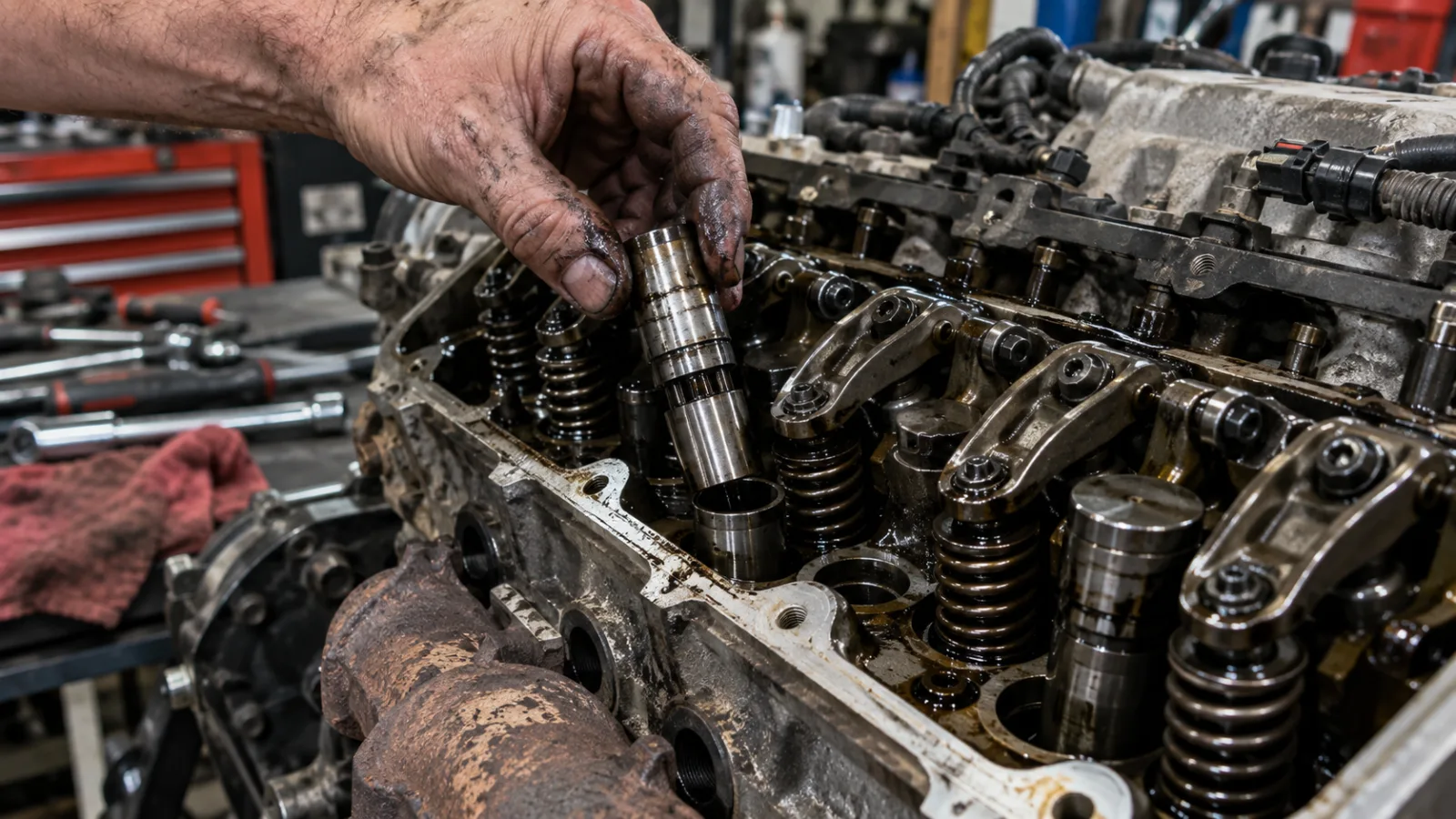
The cam on a deactivating engine is not interchangeable with an ordinary one, and this is the single most important thing to understand before anyone starts pricing a delete kit. The lobes on the four deactivating cylinders are ground differently, because they have to lift a bucket that spends most of its life held down. Fit an ordinary cam to an engine that still has the deactivating lifters, and those four cylinders do not get the same lift as the other four — which is a compression difference, which is a misfire code. Which is why a proper hardware change is always a set: cam, lifters, the blocked oil passages, and a calibration that matches.
The consequence for a buyer is straightforward. A hardware change priced as a single part is not a hardware change, and an engine assembled from a mismatched set is worse than one left alone. If you are considering that route, the parts list is the thing to look at first, before any price.
What the three have in common
All three do one thing: they stop the lifters on the inactive bank from collapsing and refilling. None of them touches the reason a lifter fails when it fails, which is a mechanism holding its charge with oil. A disabler reduces the number of transitions from tens of thousands over a vehicle's life to close to none. A tune does the same thing at the source of the instruction. A delete removes the part that had the problem. The common ground is real, and it is also the limit of what any of them can promise.
The one question that decides it: which stage is your engine in
Most of the confusion in this topic comes from answering the wrong question. "Disabler or delete" is the wrong question for almost everyone, because it assumes the choice is technical. In practice the choice is nearly always determined by a single piece of information about your engine, and that information is free to find out.
Does the engine show a symptom yet? Not a noise you are imagining, and not something a video told you is normal. A tick that tracks engine speed. A dash light that came back after the codes were cleared. Compression on one cylinder that does not match the rest of its bank. Oil consumption that has moved in the last year. Anything on that list changes the question from which method to how soon.
| Stage | What it looks like | What it changes about the decision |
|---|---|---|
| Stage one: no symptom | Noises are the ones the system makes, no stored codes, consumption stable | Nothing is broken, so nothing needs repairing. The only question is exposure, and the removable option answers it with no consequence if you are wrong |
| Stage two: a sound, no code | A tick at idle that tracks RPM, a light shudder, or an exhaust note that sounds wrong under load | Decide whether the sound belongs to the system or to a lifter before spending anything. Holding the transmission in manual for one drive answers that, and it costs nothing |
| Stage three: a code, or a compression result that does not match | Misfire codes, a light that returns, one cylinder low against its neighbours | A disabler reduces future transitions. It does not bring a collapsed lifter back, and a running compression test with the system commanded on and off is what separates the two |
| Stage four: metal damage already visible | Consumption rising, visible valve movement stopping, damage found with the cover off | No device of any kind is the answer. This is a mechanical repair, and the hardware route only makes sense as part of that repair |
Two of those stages need a test rather than an opinion, and the second one is the one people get wrong most often. The cheap test is manual mode: put the transmission in manual, hold a gear above the threshold where the system engages, and drive the same route. If the sound goes away, the sound belonged to the system. If the sound stays, it belongs to the engine, and no disabler of any kind is going to change it. That single drive is more informative than any product page, and it costs nothing.
There is a second version of this question for a vehicle you are buying rather than owning. A truck that already has a delete kit or a tune on it is a vehicle with a different mechanical history, and a truck with a module plugged into the diagnostic port is a truck whose owner has already made the decision you are considering. Neither is a problem, but both change what you are looking at when you open the hood, and both are worth asking about before you buy either vehicle.
How to tell whether it is working
This is the question the product pages never answer, and it is the only question that matters before you keep a part. A device can plug in, light up, draw power and change nothing, and there is no sound for that. The confirmation is behavioural, and it takes one drive.
The three observations. All three should be present on a healthy engine with the system held off, and all three absent on an engine that is still switching cylinders under light load.
| Observation | What the system is doing | What held off looks like |
|---|---|---|
| The exhaust note on a steady light-load cruise | Changes pitch and volume when the bank is dropped, then returns when it is picked up again | One note, unchanged, for the whole cruise. No drop and no recovery |
| The low-speed shudder at a stop-start crawl | Present whenever the system engages, and it stops when it does | Nothing at a crawl, and a smooth idle with no change of sound on and off throttle |
| The transition when you ask for power | A half-second of softness as the lifters refill, every time you pull out of a low-speed situation | No transition at all. Throttle response is the same from idle as it is at speed |
The two-phase test, which is stronger. If you want to know whether the device is doing anything rather than whether the system is off, drive the same route twice — once with it fitted and once with it unplugged. The route matters: steady light load, a stop-start crawl, and one acceleration from a low speed. Three conditions, same road, same day, nothing else changed.
If the note, the shudder and the transition all disappear while it is fitted and all come back when it is unplugged, the device is doing exactly what it claims. If nothing changes between the two drives, the device is not reaching the request — and the reason is nearly always that the interface does not match the generation of system on the vehicle, which is the subject of the next section.
What you cannot check without a tool. Whether the engine computer reports the reduced-mode cylinder list as active, and whether the vehicle's readiness monitors are set, both need a scan tool. Neither is required for the drive test, but the first one is worth having if you want a record rather than an impression, and the second one is worth knowing before an inspection.
Which vehicles it applies to, and which it does not
A device that plugs in and does nothing is the most common outcome of a purchase in this category, and in almost every case the reason is that the interface on the vehicle is not the interface the device was built for. This section is the one to read before anything else, because it is the part you can get exactly right.
The table below is the per-vehicle list behind this site, which records the make, the model, the year and the engine the part is built for. It is the list an AFM disabler for GM vehicles is built against, and a Chevy AFM disabler and a GMC one are the same module at the same price — the badge is the only difference. To disable AFM on a Silverado or a Sierra, find your model in the table and check the engine column against your own build. A 2015 Silverado with the 5.3, a 2018 Silverado 1500 or a 2016 Tahoe all sit inside the rows above, and so does the Chevy Silverado 1500 with the 5.3 or the 6.0 and the matching GMC Sierra 1500 — an AFM disabler 5.3 Silverado and an AFM disabler 5.3 GMC Sierra are the same part with the same fitment rule. It is deliberately narrow. Where a vehicle is not in it, the answer is no rather than probably, because probably is what a product page offers and no is what saves you the return.
| Vehicle | Engines on the list | Years |
|---|---|---|
| Chevrolet Silverado 1500 | 4.3L V6, 5.3L V8, 6.0L V8 | 2007–2018 |
| GMC Sierra 1500 | 4.3L V6, 5.3L V8, 6.0L V8, 6.2L V8 | 2007–2018 |
| Chevrolet Suburban / Tahoe | 4.3L V6, 5.3L V8, 6.0L V8, 6.2L V8 | 2007–2018 |
| GMC Yukon / Yukon XL 1500 / Denali | 5.3L V8, 6.0L V8, 6.2L V8 | 2007–2018 |
| Chevrolet Avalanche | 5.3L V8, 6.0L V8, 6.2L V8 | 2007–2013 |
| Chevrolet Camaro | 3.6L V6, 6.2L V8 | 2010–2018 |
| Chevrolet Corvette | 6.2L V8 | 2012–2019 |
| Chevrolet SS / Caprice PPV | 6.2L V8 / 6.0L V8 | 2014–2018 / 2011–2019 |
| Chevrolet Colorado / GMC Canyon | 3.6L V6 | 2015–2019 |
| Chevrolet Trailblazer / GMC Envoy / Buick Rainier / Saab 9-7X | 5.3L V8 | 2005–2009 |
| Chevrolet Impala / Monte Carlo / Buick LaCrosse / Pontiac Grand Prix | 5.3L V8 | 2005–2009 |
| Chevrolet Malibu / Uplander / Buick Terraza / Pontiac Montana | 3.9L V6, 3.6L V6 | 2006–2012 |
| Cadillac ATS, XTS, XT5, SRX, STS | 3.6L V6 | 2004–2019 |
| Cadillac CTS | 3.6L V6, 6.0L V8, 6.2L V8 | 2004–2018 |
| Cadillac Escalade / ESV / EXT | 6.2L V8 | 2010–2017 |
| Buick Enclave, Pontiac G8, Saturn Vue, Suzuki XL-7 | 3.6L V6, 6.0L V8, 6.2L V8 | 2004–2018 |
What is deliberately not on the list
This is the part that saves money, so it is worth being blunt about it. A part that fits and does nothing is the worst outcome available, and most of the ways that happens are predictable from the table above.
| Vehicle or engine | Why it is not here |
|---|---|
| 2019 and later Silverado and Sierra — a 2020 Silverado, a 2021 Silverado, a 2025 Silverado, a 2020 GMC Sierra | The later generation changed the interface and the control logic together with the ten-speed transmission. A device built for the earlier trucks does not reach the request on these, and a 2020 or 2021 truck is not the same purchase as a 2018 one |
| The 6.2 with the ten-speed, and any AFM disabler 6.2 10-speed question | Same reason. The engine being the same displacement is not the point; the generation of the system is |
| 5.7 litre HEMI | There is no AFM disabler for a 5.7 Hemi, because it is not a GM cylinder deactivation engine and there is nothing to hold off |
| 2.7 litre turbo four | There is no AFM disabler for a 2.7 turbo. The engine has no cylinder deactivation system, and the searches that put it next to this topic are searches about something it does not have |
| Ram, Ford, Toyota and the other badges | Different systems with different interfaces. A disabler is built for one control structure, not for an idea |
| Honda and Acura | A different system again, with a different product on this site built for it. The decision logic is the same and the part is not |
One boundary is worth drawing explicitly, because the same trucks appear on both sides of it elsewhere on this site. A 2019 or later Silverado or Sierra does appear on this site, on a start-stop product. That is a different job on a different part of the powertrain, and it being in the catalogue does not mean the AFM line reaches those years.
And one thing the list cannot tell you: it says which engines carry the hardware, not which of them will wear out early. Nobody can give you that, this site does not have failure data, and any page that appears to know is telling you about a fleet it does not own.
Six questions, and they give you the answer
Everything above reduces to six things you can establish about your own vehicle in a few minutes, most of them for free. The table below is the shortest version of this page: answer the six, and the route is already decided. If an answer is unclear, what you need is a diagnosis rather than a purchase.
| # | Question | How to settle it | What the answer sends you to |
|---|---|---|---|
| 1 | Does the engine make a noise that tracks engine speed? | Transmission in manual, above the deactivation threshold, same route. Noise gone means it was the system; noise there means the engine | Noisy: the symptom page, before any purchase. Quiet: continue |
| 2 | Are there stored codes, or did a light come back after they were cleared? | Read the codes. Whether a cylinder is named changes which test matters | Yes: the symptom page. A running compression test with the system commanded on and off separates the two causes |
| 3 | Is consumption stable, or has it moved in the last year? | The last two fill-ups, not the manual | Moving: mechanical, not a device question. Stable: continue |
| 4 | Is the vehicle on the list above, with the engine in the table? | Model, year, engine. The build sheet if the year is not obvious | Not on the list: nothing to buy. On the list: continue |
| 5 | Is it under warranty, and do you intend to keep it past the warranty? | Two questions, both yes-or-no | Under warranty and kept: do nothing yet, decide at renewal. Out of warranty and kept: the removable option |
| 6 | Is the engine open for other work, or being built? | A question about your plans, not the vehicle | Yes: the hardware change belongs in that job. No: the removable option, or nothing |
Four of the six answers point at the removable option, and one of them points at doing nothing — which is the correct answer for a healthy engine under warranty, and is not a failure of this page. What the six almost never produce is a hardware delete on a healthy engine, because that trade only makes sense when the engine is already apart or already damaged.
One note on question one, because it does more work than the others. The manual-mode drive is the only free instrument in this category, and it is the step people skip and then regret. It costs a tank of fuel and fifteen minutes of driving, and it turns a purchase decision into a fact.
What the removable option gives you, and what it does not
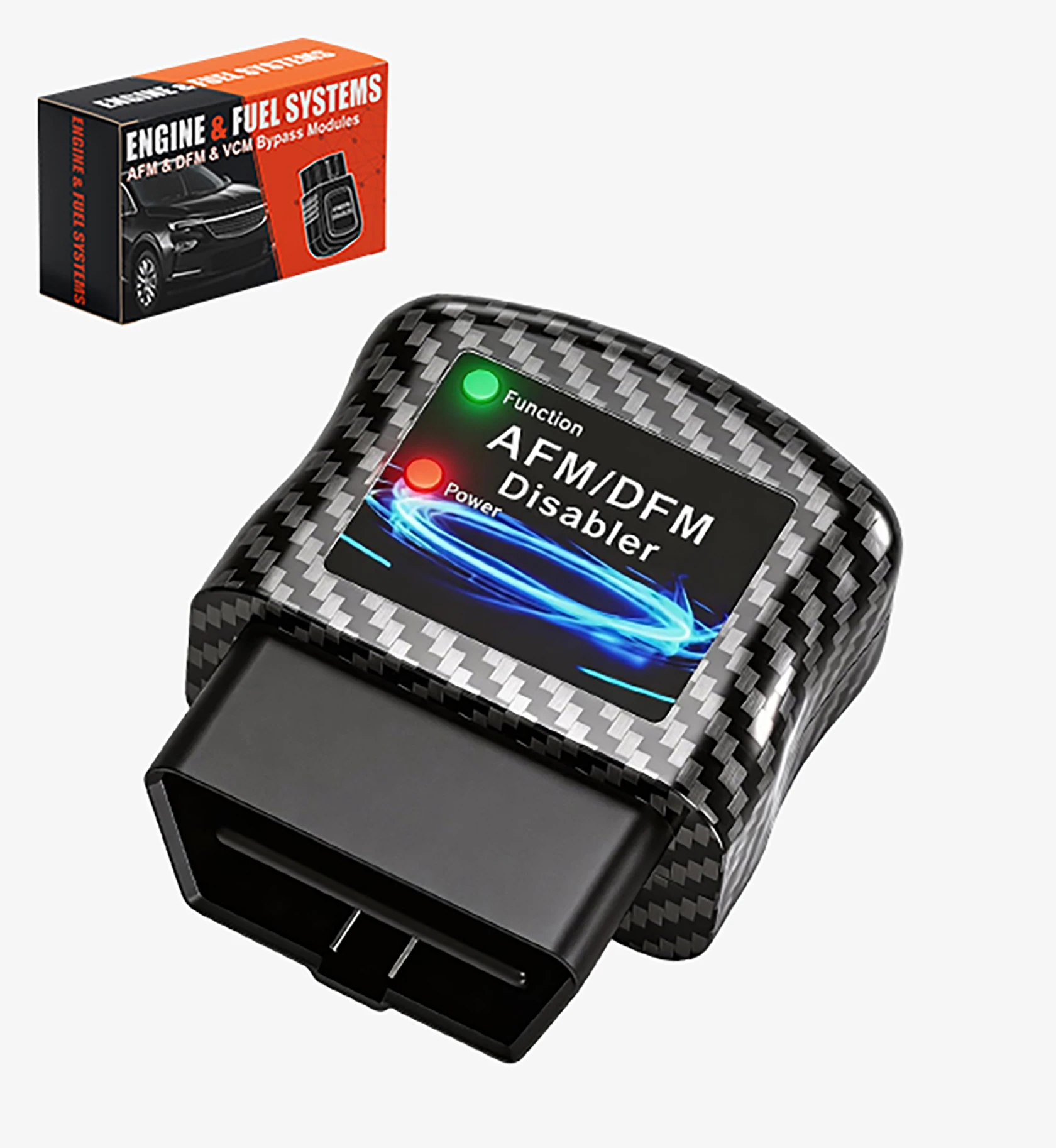
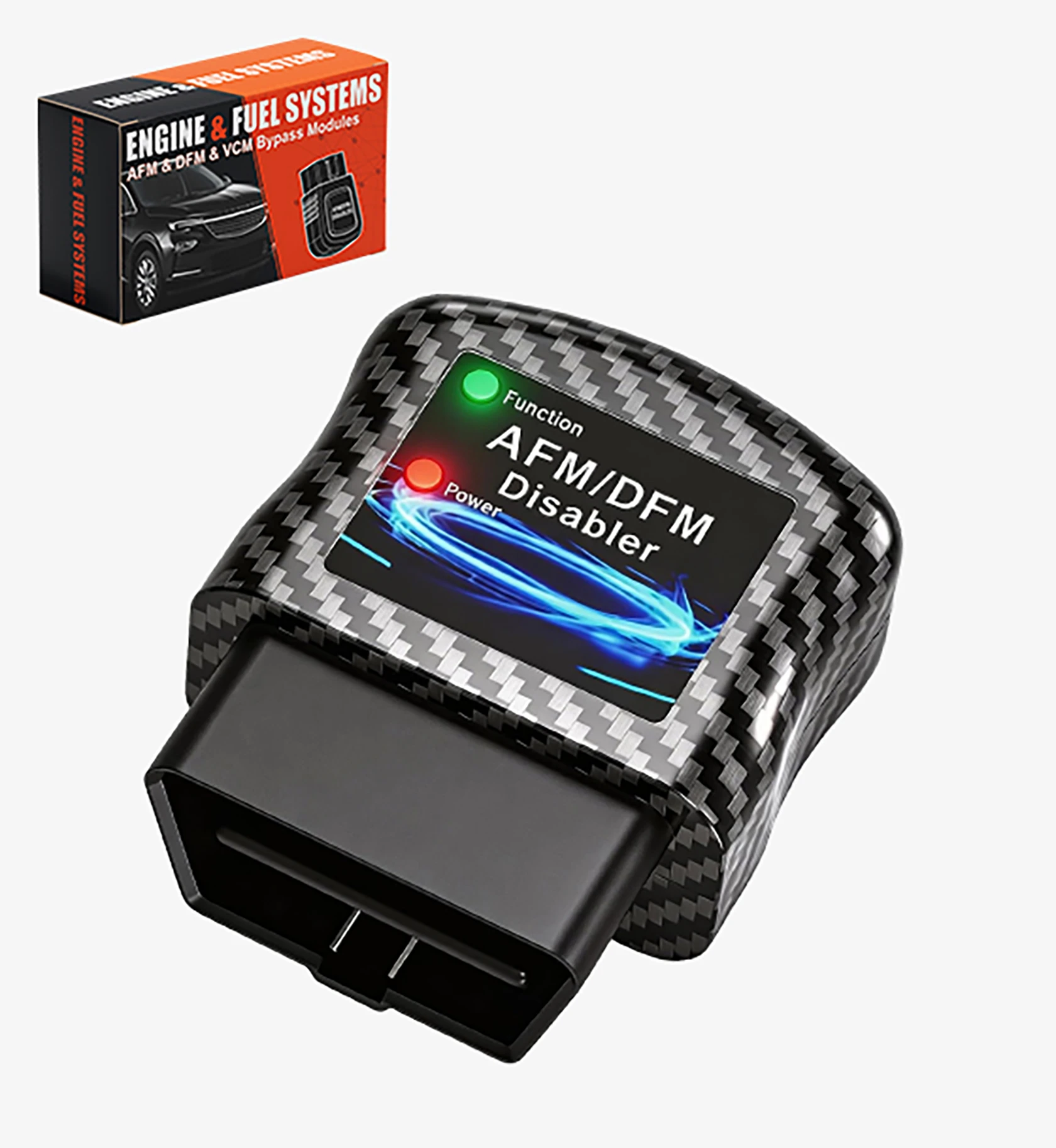
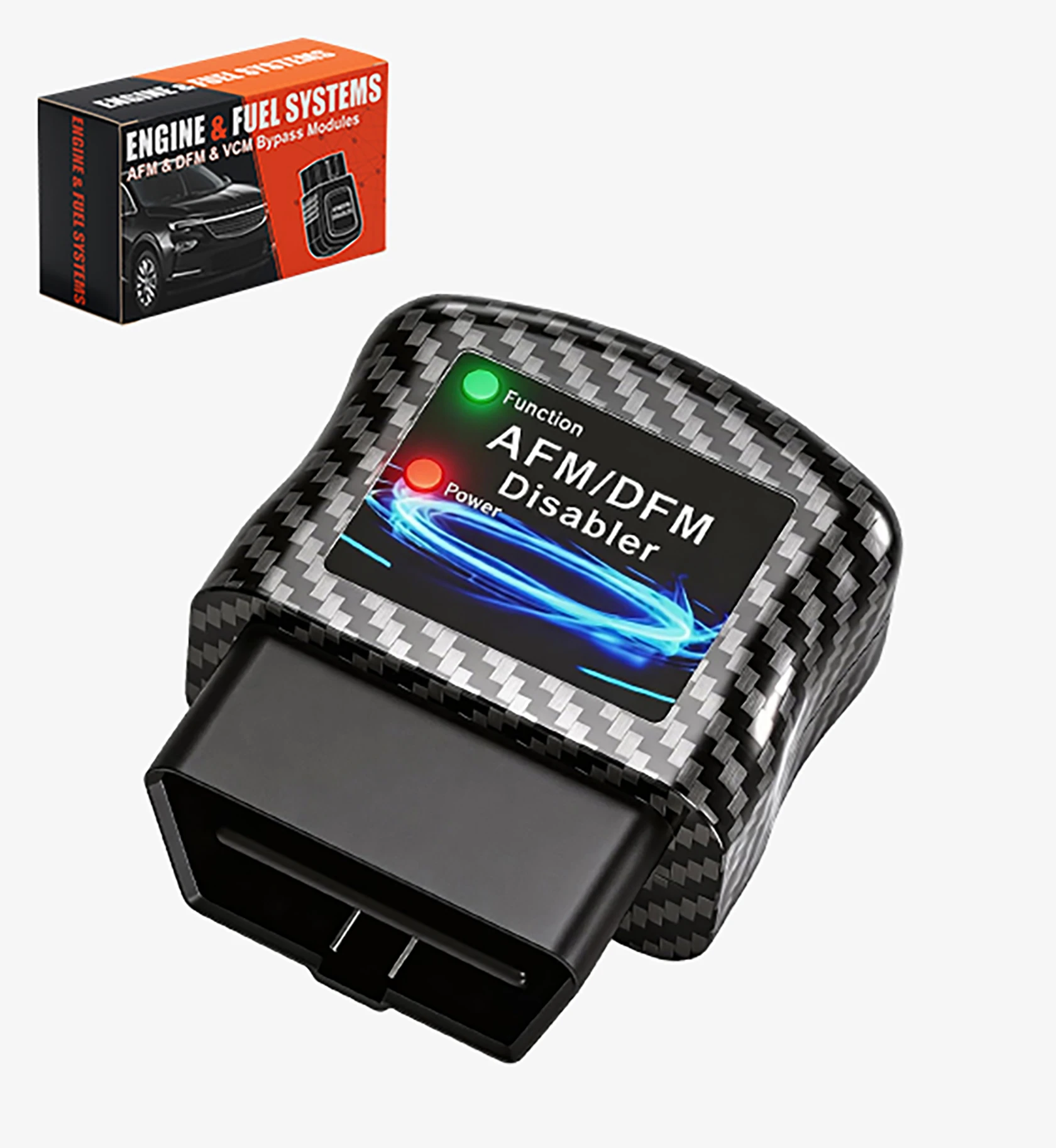
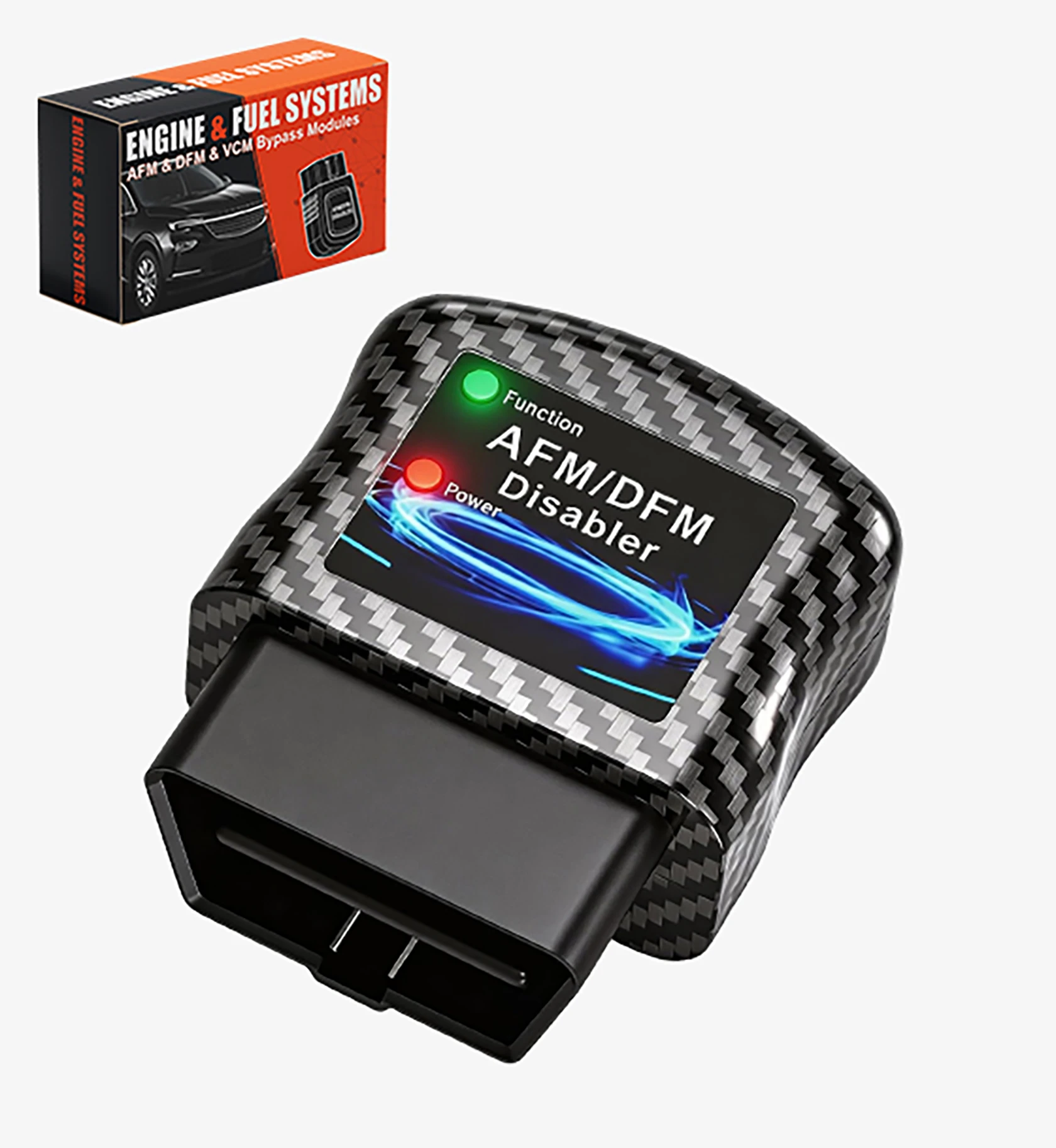
The removable option is a small module that plugs into the diagnostic connector under the dash, refuses the deactivation request while it is fitted, and draws no vehicle wiring. An OBD or OBD2 AFM disabler, an AFM disable device and an AFM disabler module are three names for that one part, and the price here is the same for each of them. It costs $79.99 on this site for the vehicles in the list above, and that number is worth putting on the table because the category is full of descriptions that stop at "affordable".
What you get
- All cylinders stay live. The bank that would have been dropped keeps running, so the exhaust note, the low-speed shudder and the transition on power all stay as they would be on a vehicle without the system.
- Nothing is written. No calibration is altered, no part is removed, and the vehicle returns to exactly its previous state the moment it is unplugged. That is the property that makes this a decision rather than a commitment.
- Nothing has to be opened. The port is under the dash, the install is plug and leave, and there is no wiring to cut and no connector to find.
- The transition count stops. This is the only item on the list that is more than cosmetic, and it is the one that matters if you keep the vehicle past the point where the lifts would have been asked to do another hundred thousand transitions.
- It carries nothing else. The module only answers the one request, so there is no calibration to destabilise and no idle or fuel settings to be retuned after the fact.
What you do not get
- No repair. An engine that is already making a noise keeps making it. The module reduces future transitions, and a lifter that has already moved is unaffected by anything you plug in.
- No fuel saving. The system saves fuel precisely by running fewer cylinders at light load, so holding them all on removes the saving. The loss is in exactly the driving where the system was doing its job, and a consumption figure that does not change much afterwards is the expected result rather than a fault.
- No work on the other side of the engine. The parts that come apart when a lifter fails come apart regardless. A device that reduces the number of times the lifters move is a smaller exposure, not a smaller engine.
- Nothing after you unplug it. This is the same point as the first bullet, and it is the one people get wrong when they are three years into ownership. There is no accumulated benefit in the device.
Is it worth $79.99
Here is the arithmetic rather than a recommendation. A vehicle doing three hundred thousand miles with a V8 that spends a large share of that time at light load accumulates a transition count in the region of six figures. The module costs less than a service visit and less than one tank of fuel, and the case for it is strongest exactly where you would expect: a vehicle you intend to keep, out of warranty, driven in traffic rather than only on the highway.
And here is where it is not worth it. A vehicle under warranty with a healthy engine, one that spends its life towing on the open road where the system is used least, is a vehicle where the exposure is lowest and the argument is weakest. That is not a reason to avoid it. It is a reason to know which vehicle you are.
Two variables decide most of it, and both are free to assess: how long you keep the vehicle, and how much of its life happens at a light load in a gear that allows deactivation. A short-lease truck, or one that lives on the motorway, is a poor fit. A long-kept daily driver is the case the product is built for.
Will a disabler hurt my engine
No, and the reason is structural rather than a matter of opinion. The system is a fuel-economy feature, not a fault, and every cylinder it disables is closed at both valves and fed no fuel. Holding those cylinders on instead does not put the engine outside anything it was designed to do — it runs all of them, which is what a V8 did before the feature existed.
Two real costs are worth stating rather than skipping.
The fuel economy goes the other way. This is not damage, it is the removal of a saving, and the direction of the logic matters. The system saves fuel by running fewer cylinders at light load. Holding all cylinders on means the engine is working harder at exactly the point where it was being helped. The effect is a small consumption difference, concentrated in light-load and city driving, and it disappears at steady highway speed where the reduced set is used least.
It is not a repair. A disabler reduces the number of transitions a lifter makes from here on. It does not address why a lifter fails: a locking pin that loses its hold because the lifter could not fill fast enough, which is a function of oil pressure, aeration and time. If the engine is showing a symptom, the device is the wrong purchase and the diagnosis is the right one.
What does not happen: no fuel enters an area that should stay clean, no valve is held open under a pressure it was not built for, and the whole arrangement is one the manufacturer designed and then spent twenty years refining. The engine is not being asked to do something unusual. It is being asked to do what it did by default.
How to disable AFM for free, and why there is no fuse
The most searched version of this question asks for an AFM disable fuse. The answer is that no AFM disable fuse exists, and understanding why is more useful than any switch, because it explains the whole chain.
The request to run on fewer cylinders is a message between two controllers. The cylinders are then held off hydraulically. Between those two points there is no power feed, because there is nothing to power — the solenoids receive a low-current command, and the mechanical state is held by oil, not by electricity. Removing a fuse cannot interrupt a message, and there is no fusible link in the chain to remove.
What people find when they pull body and interior fuses is a truck that still switches cylinders and now has a missing feature as well. That is not a modification, it is a fault.
The method that does work, and what it costs
Put the transmission in manual mode and hold a gear above the threshold at which deactivation engages. The engine still asks. The transmission still declines. The cylinders stay live, and the moment you shift back to automatic the system returns exactly as it was.
There is no installation, no cost, and nothing to undo. There is also no persistence: it works exactly as long as you keep the transmission in manual, which is why it is a diagnostic instrument rather than a solution. Used as one it is the best-value tool in this whole topic, because a single drive in manual separates a system noise from an engine noise before you spend anything.
What to do if you want it permanent without a device
There is no third option involving a switch, a wire or a fuse. Permanent means a calibration change or a hardware change, and both of those have consequences described in the sections above. The manual-mode method is the only way to hold the system off that leaves nothing behind, and its price is having to keep doing it.
Warranty, inspection and long storage
Three practical questions come up with any device that sits in the diagnostic port, and none of them are as complicated as they sound once you separate what the device does from what you do.
Warranty
A plug-in module writes nothing. There is no reflash, no calibration file, no record in the vehicle's own memory, and nothing to remove before a sale. That is the whole warranty argument: the vehicle's software is the vehicle's software, because nobody changed it.
What is left is the ordinary caution, which applies to anything at all. A dealer can ask whether the vehicle has been modified and a driver can answer that question however they intend to. Unplugging the module before a dealer visit takes seconds and makes the question disappear, and that is why it is worth knowing where the port is before the day you need it.
Inspection and the readiness monitors
The engine computer runs its own checks and reports their state as monitors. A device sitting in the diagnostic port can leave those monitors in a not-ready state, the same as any tool that talks to the vehicle, and an inspection can fail on a vehicle whose engine is perfectly healthy.
The handling is simple and it costs nothing. Unplug the module before the test, then drive the vehicle normally until the monitors reset. How long that takes depends on the vehicle and the drive cycle, and any figure quoted for it is somebody else's vehicle. The rule that holds everywhere: the monitors need a complete drive cycle, so a fifteen-minute errand immediately before an inspection is not what resets them.
Long storage
A device on the diagnostic port draws a small amount of standby current, because the port is live with the ignition off. On a vehicle driven regularly that is irrelevant. On a vehicle that stands for weeks at a time it is worth taking the module out, and worth doing so before the weather turns rather than after a flat battery.
That is the complete list: unplug for a dealer visit, unplug for an inspection and drive a full cycle before it, unplug for long storage. Three habits, each taking under a minute, and none of them about the vehicle's condition.
Disabler, tune or delete: what changes on the vehicle
The comparison below is deliberately about the vehicle rather than about the purchase. What each method leaves on the truck is the thing that determines whether it was the right call three years later.
| Factor | Plug-in disabler | ECU tune | Hardware delete |
|---|---|---|---|
| What changes | A message is not agreed to | The engine computer's own instruction set is rewritten | Lifters, cam, oil passages and the calibration |
| Reversible | Completely. Unplug it | Only by flashing the original calibration back | No. The removed parts do not go back on |
| Leaves a trace | None | A changed calibration | A mechanically different engine |
| Work required | Plug in under the dash | A tool, a file, and a decision about the calibration | Engine opened, parts replaced, calibration matched to the new state |
| Removes the deactivating hardware | No. It stays fitted, unused | No. It stays fitted, unused | Yes. That is the point of it |
| Effect on fuel economy | Removes the light-load saving | Removes the light-load saving | Removes the light-load saving |
| Effect on a symptom already present | None. It is not a repair | None. It is not a repair | Removes the mechanism, as part of a repair |
| Suits | A healthy engine, kept for years | A vehicle being built or reconfigured anyway | An engine already open, or a deliberate build |
A disabler is not a tuner, and the AFM/DFM disabler pros and cons are not a matter of preference — they follow from two rows in the table above. Those two rows carry most of the decision. The first is reversibility, which is the difference between a decision and a commitment. The second is the row about an existing symptom, which is the row that stops a purchase from being a substitute for a diagnosis.
It is also worth naming the option that is missing from the table, because it is the one most owners start with. Doing nothing is a legitimate choice, and for a healthy engine under warranty it is the strongest one available. A healthy engine does not need the system disabled, and the case for changing anything grows with the length of time you keep the vehicle and the amount of light-load driving it does, not the other way round.
When the hardware change is the right answer
There are three situations where a hardware change is genuinely the correct answer rather than the impressive one, and it is worth being able to name them, because outside those three it is a very large decision to make for a small problem.
The engine is already open. If the engine is having other work done, the marginal cost of removing the deactivating hardware is a set of parts and a longer job rather than a second teardown. This is the clearest case, and it is the one that arrives by circumstance rather than by plan.
The hardware change is the repair. If a lifter has collapsed and the bank has to come apart anyway, replacing the deactivating components with ordinary ones removes the thing that failed instead of replacing it with the same part. The failed part and the fix are the same component, which is a situation that does not arise with a module.
The vehicle is being built. A deliberate build with a non-deactivating cam, ordinary lifters, blocked passages and a matching calibration has removed the system for a reason that no plug-in part can serve.
Outside those three, the same effect is available at a fraction of the involvement — because the point of the hardware change is to stop the lifters moving, and the first two rows of the previous table stop the lifters moving without removing anything. The trade being made is permanent change against a problem that does not yet exist.
Two things make the hardware route unforgiving, and both are worth understanding before a price is discussed. First, the set has to be complete and matched: an ordinary cam with deactivating lifters still fitted gives four cylinders a different lift from the other four, which is a compression difference, which is a misfire code. Second, the calibration has to change with the parts. An engine with the hardware removed and the original calibration still commanding the system is a check-engine light waiting to happen, and that is the failure mode people hit when a kit is assembled from parts bought separately.
What to look at first if you are considering it, in this order: the complete parts list rather than a headline price, whether the cam is included, whether the oil passages are blocked, and whether the calibration change is part of the job. A price that excludes any of those four is not the price of the job.
Five claims that do not hold up
Five statements about this category repeat often enough to be worth addressing directly, and in each case the real answer is shorter than the claim.
| The claim | What is actually true |
|---|---|
| A fuse disables it | There is no fusible link in the chain. The request is a message and the cylinders are held hydraulically, so a fuse changes nothing and removes something else |
| It adds power | It does not change the engine's output. All the cylinders were already there and the system was already deciding not to use them. What changes is that the decision is not being made for you |
| It makes the engine last longer | It reduces the number of times the deactivating lifters collapse and refill, which is exposure. Whether that translates into a measurable change in how long an engine lasts depends on factors no seller can measure for you |
| It improves fuel economy | It cannot. The saving exists because fewer cylinders run at light load, and holding all of them on removes it |
| It stops a ticking engine | Only if the tick belonged to the system, and the only way to know that is the free manual-mode test before you buy anything |
One more that is not quite a myth but functions like one: that a disabler and a delete are two settings on the same dial. They are not related options, they are a different mechanical state of the vehicle, and the reason the second one exists is the reason the first one is usually enough.
What this page covers, and what it does not
This page stays on the decision. It covers what each of the three methods physically changes, the single question that separates them, how to confirm any of them is working, which vehicles each applies to, what the removable option gives you and what it will never do, and the practical consequences for warranty, inspection and long storage.
It leaves three questions to their own pages, because answering them here would mean restating facts that are already written once.
| Question this page does not answer | Where it is answered |
|---|---|
| What the system is, how the request travels, and which engines carry it | Active Fuel Management explained, with the vehicle list |
| What a misfire code or a ticking valvetrain means, and how to confirm the cause | AFM lifter failure symptoms and codes |
| Why a fitted device is not doing anything | AFM disabler problems |
If you arrived here because the engine is making a noise, the symptom page comes first. If you arrived knowing the system and deciding what to do about it, you are in the right place.
Frequently asked questions
The questions that come up after the mechanism is understood:
What is an AFM disabler?
A plug-in module for the diagnostic port that intercepts the cylinder deactivation request and never agrees to it, so the engine stays on all of its cylinders. It writes nothing to the vehicle, it needs no tools, and unplugging it puts the truck back exactly as it was.
What does an AFM disabler do, and what does it not do?
It stops the deactivating lifters collapsing and refilling by keeping the request from being satisfied. It does not repair anything, it does not change the engine's output, it does not improve fuel economy, and it does nothing at all once it is unplugged. Those four sentences are the whole product description.
Do AFM disablers really work, and are they any good?
On a vehicle whose system generation matches the device, yes, and the proof is behavioural rather than a light on the module: the exhaust note on a steady cruise stops changing, the low-speed shudder goes, and the transition before power arrives disappears. Drive the same route with it fitted and unplugged and the difference is immediate. If nothing changes between the two drives, the interface does not match the vehicle.
Does an AFM disabler work on a 5.3?
On a 5.3 in a vehicle on the list above, yes. The 5.3 appears in the pickups from 2007 to 2018 and in the earlier crossovers and sedans, and it is the most common engine this category is sold for. What matters is the generation of the system on that particular vehicle, not the displacement.
How to disable AFM on a 5.3
With the module, by plugging it into the port under the dash and confirming the three observations on a drive. Without anything, put the transmission in manual and hold a gear above the deactivation threshold — free, and it ends when you shift back. There is no fuse version, because there is no fusible link in the chain.
Can I disable AFM with a fuse?
No. The request travels as a message between two controllers and the cylinders are held off hydraulically, so there is nothing for a fuse to interrupt. Pulling a body or interior fuse changes nothing about the system and removes a feature the vehicle needs.
Are AFM disablers worth it?
On a healthy engine you intend to keep, out of warranty, and drive in traffic rather than only on the open road, the case is strong and the outlay is small. On a vehicle under warranty, or one that spends its life at a steady cruise where the system is used least, the case is weak. And on an engine already making a noise, the question is a diagnosis rather than a purchase.
Will an AFM disabler hurt my engine?
No. Every cylinder it holds on is closed at both valves and fed no fuel while the system is active, so running them all is what the engine did by default. The cost is the loss of the light-load fuel saving, which is a small consumption difference concentrated in city and part-throttle driving, not damage.
Will an AFM disabler void warranty?
Nothing is written, so there is no software change for anyone to object to. The practical habit worth having is to unplug it before a dealer visit, so the question does not arise. The same applies to a state inspection: unplug, then drive a full cycle before the test so the readiness monitors reset.
Are AFM disablers safe to leave plugged in?
On a vehicle driven regularly, yes. The port is live with the ignition off, so on a vehicle that stands for weeks the small standby draw is worth avoiding: take the module out before long storage rather than after a flat battery.
What is an AFM disabler module, and what is an OBD or OBD2 disabler?
Three names for one thing: a module on the diagnostic connector. The connector is the OBD-II port, which on these vehicles is under the dash. None of the names implies anything about how it works.
Does it work on a 6.2 with the ten-speed?
The 6.2 in an earlier truck is on the list. The 6.2 in a truck paired with the ten-speed is not, because the later generation changed the interface along with the transmission, and a device built for the earlier one does not reach the request.
What about a 5.7 HEMI, a 2.7 turbo or a Ram?
None of them is this system. The 5.7 and the 2.7 turbo do not carry GM cylinder deactivation, so there is nothing to hold off. A Ram is a different manufacturer's system with a different interface. A disabler is built for one control structure, not for an idea.
Does an AFM disabler add horsepower or improve throttle response?
No power is added, because the cylinders were always there and the system was choosing not to use them. Throttle response can feel more consistent simply because the mode changes stop happening underneath you, which is a different thing from more power.
How do I choose between a disabler, a tune and a delete kit?
Start with the engine's stage, not the budget, and not the word used for the hardware route: a DOD delete and an AFM delete ask for the same job. A healthy engine gets the removable option, an engine that is already open or being built gets the hardware change, and an engine with a symptom needs a diagnosis before any of them. Doing nothing stays a legitimate answer for a healthy engine under warranty.
 GMC Sierra 1500
 Chevrolet Tahoe
 GMC Yukon