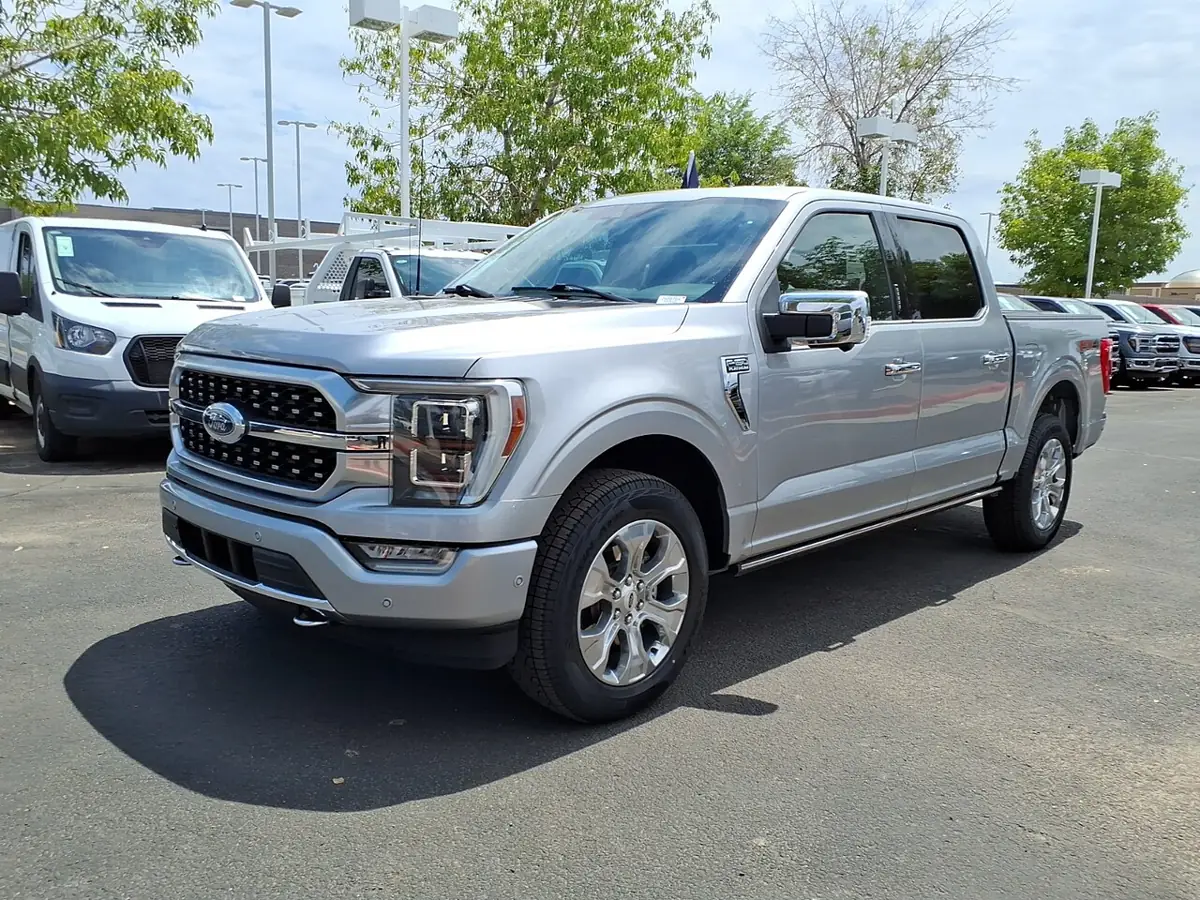
Ask an F-150 owner what they do first after starting the truck, and plenty will say the same thing: switch off Auto-Start-Stop. They do it every drive, because the truck turns the system back on every time the ignition comes on. Forget once, and the engine shuts down at the first light with a trailer behind you or a left turn to make.
This guide covers the 2021-2026 Ford F-150, including the Raptor. It explains what Ford's own manual says about the system, why the OFF setting never sticks, the three realistic ways to deal with it and what each one involves, how our plug-in eliminator installs behind the glove box, and the questions owners ask most about towing, the battery, warranties and fuel. Where we quote Ford or a government source, the link is right there.
Key Takeaways
The short answers first.
| Question | Short answer |
|---|---|
| Why does Auto-Start-Stop come back on? | Ford designed it that way. The manual says the system turns on when you switch the ignition on, and the button "lasts only one key cycle." |
| Which trucks does our eliminator fit? | 2021-2026 Ford F-150 and F-150 Raptor with factory Auto-Start-Stop. Earlier trucks have their own listings. |
| Where does it install? | Inline at the factory gateway module connector behind the glove box. No cutting, splicing, drilling or programming. |
| Can I undo it? | Yes. Unplug it and reconnect the factory connector, and the truck is back to stock behavior. |
| What about the hybrid? | On the PowerBoost hybrid, engine-off at stops is part of how the hybrid system works. Send us the VIN before ordering. |
| Price? | $104.99, with a 3-year replacement warranty from us. |
What Ford says the system does
Auto-Start-Stop shuts the engine off when the truck is stopped and restarts it when you are ready to go. It exists to save fuel that would otherwise be burned at idle. Ford's online owner's manual for the F-150 explains the control in a few lines: "The system turns on when you switch the ignition on. Press the button to switch the system off." When it is off, "OFF illuminates in the switch." Then the line that matters: "Deactivating the system using the button lasts only one key cycle" (Ford F-150 owner's manual, online).
The manual also notes that "the system turns off if it detects a malfunction," and asks owners to have the truck checked as soon as possible if that happens. That is worth remembering later. If your system has stopped working on its own and you never touched the button, that is a warning sign, not a free fix.
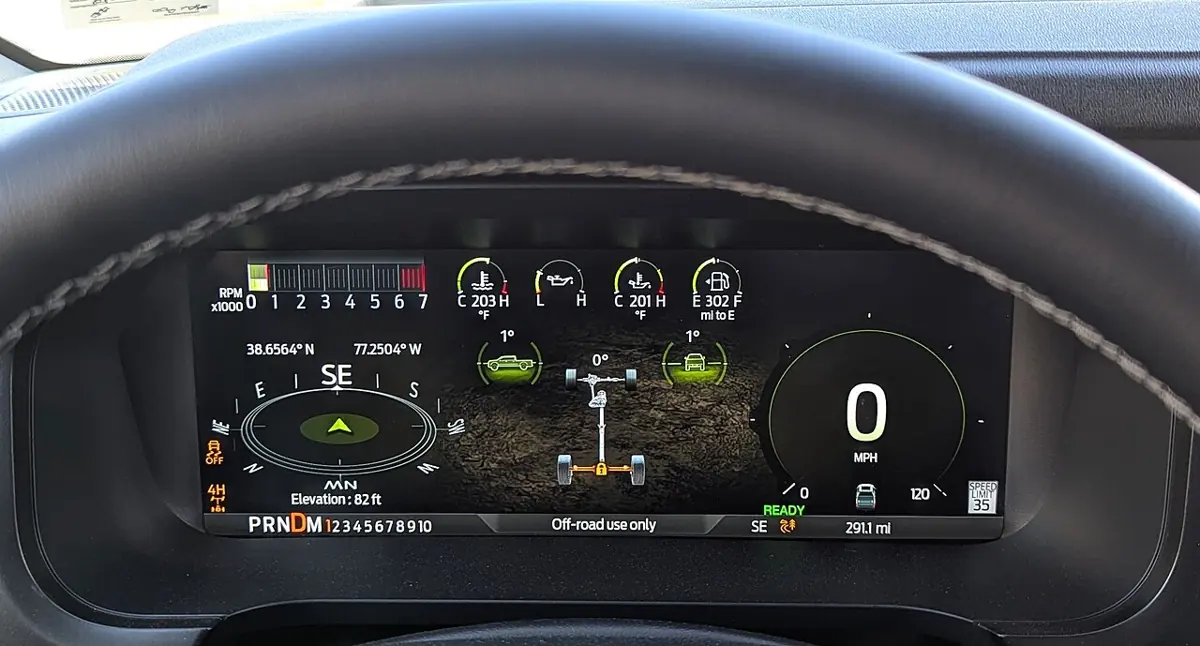
Like every stop-start system, Ford's does not shut the engine off at every stop. It checks a set of conditions first, such as battery charge, engine temperature, climate demand and whether doors or the hood are closed. If any of them is out of range, the engine keeps running. That is why the truck may stop at one light and not the next.
Why the setting resets
There is a simple reason Ford returns the system to ON at every start. Fuel economy ratings are earned with it on, and the savings only happen if it runs. The savings are real but modest: fueleconomy.gov puts the potential improvement from stop-start at about 2 percent (fueleconomy.gov), and the EPA says start-stop "can improve fuel economy by 4%–5%," with the most benefit in stop-and-go city traffic (EPA). On the highway or while towing, a truck idles at stops far less, and the gain is small.
Where F-150 owners notice it
The complaints we hear from F-150 owners fall into a few groups, and they are worth naming because they explain why so many people want the system off.
- Pulling out into traffic. The engine has to restart before the truck can move. It is a short pause, but it is the moment you want instant response, such as a left turn across oncoming traffic.
- Towing and hauling. Owners towing a camper or a loaded trailer often prefer the engine running at every stop, especially in traffic or on a grade.
- Hot and cold days. With the engine off, the air conditioning compressor stops, and cabin air slowly warms up at a long light. In winter, heat output drops.
- Work stops. Job sites, gates and drive-thrus mean dozens of short stops a day, each one a shutdown and restart.
None of this is a fault. It is how the system is meant to work. Some owners simply prefer a truck that idles until they turn it off.
What F-150 owners report to NHTSA
NHTSA files F-150 complaints by cab style. We read every complaint under the 2021 and 2022 F-150 SuperCrew listing and counted the ones that mention Auto-Start-Stop, leaving out reports that only mention the push-button start/stop ignition.
That is a very small share, which fits what we hear: most owners who switch the system off do it because they dislike the pause, not because anything is broken. The few reports are still worth reading, because they show the difference between a preference and a fault. All are owner statements that NHTSA has not verified.
- A 2021 owner wrote that the truck shut down while rolling slowly to a light and showed the alert "auto start stop shift to P, then restart engine" (ODI 11584425, NHTSA).
- Another 2021 owner described the truck failing to move after an Auto-Start-Stop restart at a red light and having to switch it off completely before it would drive again, more than once (ODI 11629600, NHTSA).
- A third 2021 owner reported a rough idle and two stalls at traffic lights with the system already disabled (ODI 11425772, NHTSA). Not every stall at a light is Auto-Start-Stop.
If your truck does anything in that list, it needs a diagnosis before anything else is plugged in. Keeping the system off would hide the restart fault without curing whatever is behind it.
Your three options
There are three realistic ways to deal with a system that turns itself back on. Each has trade-offs.
| Option | What it involves | Good points | Drawbacks |
|---|---|---|---|
| Press the button every drive | The factory Auto-Start-Stop button | Free, no changes to the truck | Lasts one key cycle; easy to forget; other drivers get the default |
| Change the truck's configuration with software | A dealer or a third-party configuration tool | No hardware in the cab | Options vary by year and setup; mistakes can affect other functions; may need reprogramming to undo |
| Fit a plug-in eliminator | A vehicle-specific harness at the gateway connector | Keeps the OFF state every start; no programming; unplugs to undo | Costs money; you need to remove the glove box to fit it |
Option 1: the factory button
If you only want the system off now and then, the button is all you need. Press it, the switch shows OFF, and the system stays off until the truck is shut down. The catch is in Ford's own words: it "lasts only one key cycle." For owners who want it off every time, that is the whole problem.
Option 2: software configuration
Some owners look at changing the truck's module configuration, either through a dealer or with a third-party tool. What can be changed depends on the model year, the software level and the equipment, and not every tool supports every truck. An incorrect change can affect other functions, and undoing it can mean another programming session.
Ford's 2026 F-150 owner's manual has a direct warning about anything plugged into the diagnostic port: "Do not connect wireless plug-in devices to the data link connector. Unauthorized third parties could gain access to vehicle data and impair the performance of safety related systems" (2026 F-150 owner's manual). If you go the software route, use a reputable technician who knows your truck, and make sure you know exactly which settings will change and how to restore them.
Option 3: a plug-in eliminator
The third option is a vehicle-specific harness that plugs in at an existing factory connector and keeps the system in the OFF state each time you start the truck. Our 2021-2026 F-150 Auto Start Stop Eliminator works this way. It does not use the diagnostic port and does not reprogram anything. The rest of this guide explains how it works and what to check before you buy.
How our F-150 eliminator works
On the 2021-2026 F-150 and Raptor, our harness connects inline at the factory gateway module connector behind the glove box. The gateway module is part of the truck's electronic network. Plugging in at that connector lets the harness keep Auto-Start-Stop in the OFF state every time you start the truck, so your choice is remembered from one drive to the next.
| Detail | What the product page says |
|---|---|
| Fits | 2021-2026 Ford F-150 and F-150 Raptor with factory Auto-Start-Stop |
| Connection | Inline at the factory gateway module connector, behind the glove box |
| Programming or coding | None required |
| Wire cutting, splicing or drilling | None |
| Reversible | Yes; reconnect the factory gateway connector to return to stock |
| In the box | One harness with factory-style connectors |
| Price | $104.99 |
| Our warranty | 3-year limited warranty; defective units replaced free |
What it does not do matters just as much. It does not remove the factory system, rewrite the engine calibration, or change how the truck charges its battery. Unplug it, and the truck behaves exactly as Ford delivered it, with Auto-Start-Stop on at every start.
Installing it behind the glove box
The install follows the steps on the product page. Most owners are done in a few minutes. The only part that takes care is lowering the glove box without straining it.

- Park the truck, shift to Park, set the parking brake and turn the ignition fully off.
- Open the glove box all the way.
- Press the stop tabs on each side inward so the glove box can lower, then lower it fully and remove it.
- Find the factory gateway connector behind it. Compare it with the installation photos on the product page before you unplug anything.
- Unplug the gateway connector.
- Plug the eliminator in between the vehicle harness and the gateway, and make sure both ends lock. Do not force a connector that does not line up.
- Route the harness clear of the glove box hinge and any moving parts, then refit the glove box.
- Start the truck and confirm the system behaves as expected.
If you see an unexpected warning light or anything else unusual after the install, turn the truck off, check that both connectors are fully seated, and contact us before going further. To return to stock, remove the harness and reconnect the factory gateway connector.
Tips that save a call
- Work in daylight or with a good light. The connector sits in a dark corner behind the dash.
- Listen for the click. A connector that is not fully latched is the most common reason a harness seems not to work.
- Keep the factory connector clean. You may want to put the truck back to stock one day.
- Test on a warm engine. The system may not stop a cold engine anyway, so a test right after a cold start proves nothing.
Checking compatibility before you order
Not every F-150 is set up the same way, even within 2021-2026. Work through these checks before you order.
- Confirm the year. Use the model year on your registration or VIN record. For a 2015-2020 truck, see the 2015-2020 F-150 eliminator instead.
- Confirm the truck has factory Auto-Start-Stop. Look for the Auto-Start-Stop button and the OFF light in the switch.
- Check your powertrain. On the PowerBoost hybrid, the engine shutting off at stops is part of how the hybrid system works. Ford's manual covers hybrid operation in its own section. Send us the VIN before ordering for a hybrid.
- Compare the connector. Look at the connector behind your glove box and compare it with the product photos.
- Note any previous electrical work. Aftermarket remote starters, upfitter wiring or past module repairs can change what you find behind the dash.
If anything does not match, or you are not sure, send us the VIN. We confirm fitment before you pay, and our Ford vehicle compatibility guide lists the Ford applications we cover.
A five-minute check before you order
Match what your truck does to the right column before you buy anything.
| What happens | What it most likely means | What to do |
|---|---|---|
| The engine stops at lights and restarts with a short pause | The system is working as Ford designed it | Your choice: press the button each trip or use the eliminator |
| A message to shift to P and restart the engine | A restart fault | Have it diagnosed; do not install anything yet |
| The engine stalls even with the system switched off | Something other than Auto-Start-Stop | Diagnose the idle or fuel problem |
| Auto-Start-Stop stopped working by itself | Ford says the system turns off if it detects a malfunction | Have the truck checked, starting with the battery |
| Slow cranking or a battery warning | Battery or charging trouble | Test the battery and charging system |
If you do book a diagnosis, go in with notes. Restart faults tend to be intermittent, and a technician who cannot reproduce one has little to work with. Write down the date, the outside temperature, whether the air conditioning or heat was on, how long the engine had been running, and the exact wording of any message on the cluster. A short phone video of the cluster during the event helps even more.
Also enter the VIN in NHTSA's recall lookup. An open recall is free to fix at the dealer and is worth clearing before any accessory goes in.
Towing, idling and comfort
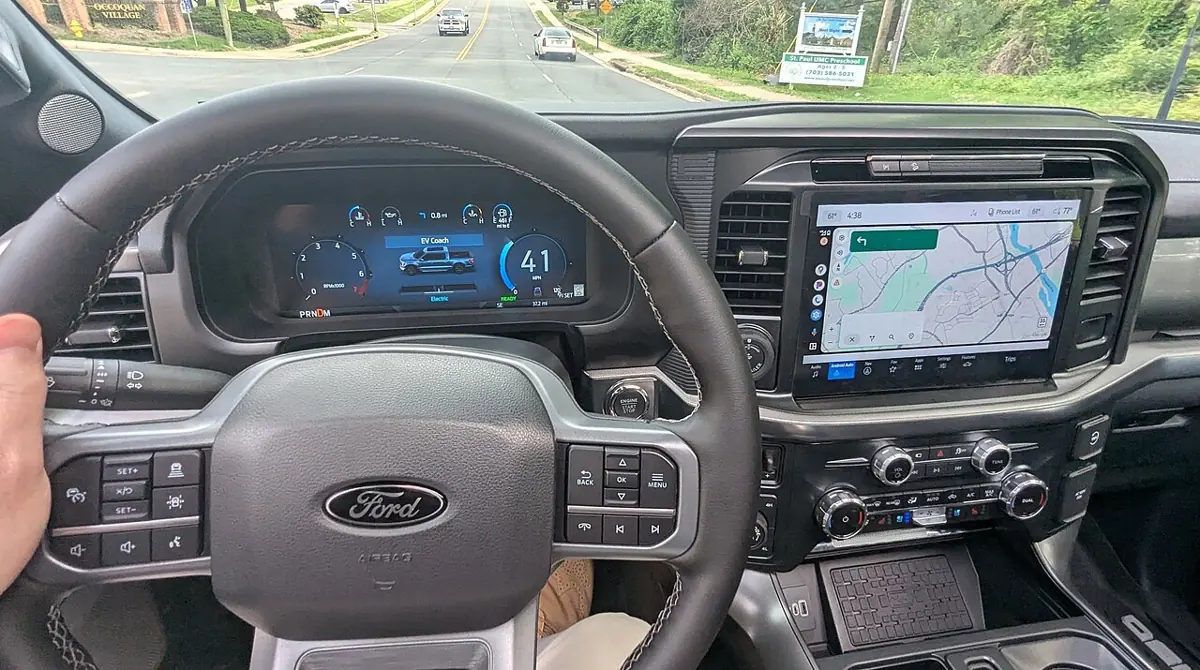
For many F-150 owners, towing is the main reason to want the engine running at every stop. With the eliminator installed, the engine stays on at lights and in traffic whether or not you have a trailer hooked up, and there is no restart pause when you pull away with a load.
The eliminator does not change the towing features, the transmission or the trailer brake controller. It only keeps Auto-Start-Stop off.
The same goes for comfort. With the engine running at a stop, the air conditioning compressor keeps running, so the cabin stays cool in summer, and the heater keeps full output in winter. That is the reason a lot of owners who do not tow still choose to keep the system off.
The battery and the starter
Stop-start trucks use a heavier-duty battery and starter because they restart the engine many more times than a truck without the system. When you keep the system off, those restarts at stops go away, but nothing about the battery requirement changes. Replace the battery with the type and size Ford specifies for your truck.
Two points come up often:
- If the system has stopped working by itself, check the battery before anything else. Stop-start systems stay off when battery charge is low, and Ford's manual says the system turns off if it detects a malfunction.
- If the truck is slow to crank, shows a battery warning or stalls, have it diagnosed. An eliminator is not a repair for a battery, starter or charging fault, and installing one on a truck with a problem only makes the diagnosis harder.
Our Auto Stop battery cost ledger goes through what stop-start batteries cost and how long they tend to last.
Warranty and dealer visits
This is the question we get most, so here is a careful answer. This section is general information, not legal advice. For your specific situation, read your warranty and talk to a qualified professional.
Under the federal Magnuson-Moss Warranty Act, a warrantor generally may not condition a warranty on your use of a specific brand of part or service, unless it is provided free of charge or the Federal Trade Commission grants a waiver (15 U.S.C. § 2302(c)). The FTC's consumer guidance puts it plainly: "Simply using an aftermarket or recycled part does not void your warranty." It also says that if an aftermarket part "was itself defective or wasn't installed correctly, and it causes damage to another part that is covered under the warranty," the manufacturer or dealer may deny coverage for that part, but "must show that the aftermarket or recycled part caused the need for repairs before denying warranty coverage" (FTC consumer alert).
Ford's side is stated in its manual: "Unapproved modifications may affect your vehicle warranty, performance, safety, or durability" (2026 F-150 owner's manual). Both statements can be true at once. A part that causes a problem can affect coverage for that problem. A part that did not cause it should not.
In practice, the plug-in design keeps this simple. Tell your service advisor the harness is installed, especially for any electrical diagnosis, and remove it if they ask. It takes a few minutes, and the factory connector goes back exactly as it was. Our own return and warranty policy covers the harness itself.
After the install: what to expect
Most owners notice the change at the first light. The engine keeps idling, the switch no longer needs pressing, and pulling away has no pause. A few other questions come up in the first week.
| What you notice | What it means | What to do |
|---|---|---|
| Engine still stops at lights | The harness may not be fully seated, or the truck may not match the listing | Reseat both connectors; if it continues, send us the VIN and a photo |
| A new warning light after install | Something is not connected correctly | Turn the truck off, check the connectors, and contact us before driving far |
| Auto-Start-Stop stopped working before you installed anything | Ford says the system turns off if it detects a malfunction | Have the truck checked; this is not something a harness fixes |
Leases, resale and other drivers
Because the harness unplugs and leaves no marks, lease returns are simple: remove it before the inspection and keep it for your next truck if the fitment matches. When you sell the truck, either remove it or tell the buyer what it is and where it sits. And if other people drive your truck, it is worth a word that the engine will now idle at stops, so a family member used to Auto-Start-Stop is not surprised.
What you give up in fuel
Keeping Auto-Start-Stop off means burning fuel at idle that the system would have saved. Using the federal figures above, the potential gain from stop-start is roughly 2 to 5 percent, mostly in city driving. As an illustration only, a truck averaging 18 mpg in town would give up somewhere between about 0.4 and 0.9 mpg in that kind of driving. On the highway the difference is close to nothing, because the engine rarely stops anyway.
If you split your driving between city and highway, the honest summary is: you will probably notice it over a year of city miles, and you probably will not see it on any one tank.
Checking the cost with idle fuel figures
There is a second way to estimate the cost, and it suits trucks better than a percentage. Fueleconomy.gov says idling can use a quarter to a half gallon of fuel per hour, depending on engine size and air conditioner use, and that restarting takes about 10 seconds' worth of fuel (fueleconomy.gov). A V8 or twin-turbo V6 F-150 with the air on sits toward the half-gallon end.
| Example driver (our assumptions) | Engine-off time a day | Days a year | Hours a year | Fuel at 0.25-0.5 gal/hr | Cost at $3.50/gal |
|---|---|---|---|---|---|
| Mostly highway commute | 3 minutes | 250 | about 12.5 | about 3-6 gal | about $11-$22 |
| Mixed suburban driving | 8 minutes | 250 | about 33 | about 8-17 gal | about $29-$58 |
| Heavy city or school-run driving | 20 minutes | 250 | about 83 | about 21-42 gal | about $73-$146 |
The minutes of engine-off time are our assumptions, not measurements. They count only stops where Auto-Start-Stop would actually have shut the engine off, which it skips when the battery is low, the engine is cold or the cabin needs heat or cooling. For most mixed drivers the yearly cost of keeping the system off is a tank or two of fuel.
Frequently asked questions
Can I permanently turn off Auto-Start-Stop in Ford's settings?
Not with the factory button. Ford's manual says the system turns on with the ignition and that turning it off "lasts only one key cycle."
Does the eliminator need programming?
No. It plugs in inline at the factory gateway connector behind the glove box. No coding or software changes are needed.
Do I have to cut or splice wires?
No. It uses factory-style connectors. No cutting, splicing, soldering or drilling.
Can I return the truck to stock?
Yes. Remove the harness and reconnect the factory gateway connector.
Does it fit every 2021-2026 F-150?
It is built for 2021-2026 F-150 and Raptor trucks with factory Auto-Start-Stop. For the PowerBoost hybrid, or if your connector looks different, send us the VIN first.
Does it fit a 2015-2020 F-150?
No, those trucks use a different connection. See the 2015-2020 F-150 Auto Start Stop Eliminator listing.
Will it void my Ford warranty?
Federal law says using an aftermarket part does not by itself void a warranty, but a part that causes damage can affect coverage for that damage. This is general information, not legal advice.
Does keeping Auto-Start-Stop off use more fuel?
A little, mostly in city traffic. Federal estimates put stop-start's benefit at roughly 2 to 5 percent.
Do many F-150 owners complain to NHTSA about Auto-Start-Stop?
Very few. Under the 2021 and 2022 F-150 SuperCrew listings we found three and two reports that mention the system, out of more than 1,600 complaints in total.
My truck says to shift to P and restart the engine after an auto stop. Will the eliminator fix it?
No. That message points to a restart fault. Have the truck diagnosed and check for open recalls by VIN before you install anything.
How much fuel does an idling F-150 use?
Fueleconomy.gov says idling can use a quarter to a half gallon an hour, depending on engine size and air conditioner use. A full-size pickup sits toward the higher end.
Should I check for recalls first?
Yes. Enter your VIN on NHTSA's recall lookup. Open recalls are fixed free at the dealer.
Sources
Every outside figure in this article links to one of these sources. Store experience is described in general terms only.
- Ford F-150 owner's manual (online), Switching Auto-Start-Stop On and Off · Turns on with ignition; button lasts one key cycle; turns off on malfunction
- 2026 Ford F-150 owner's manual (Ford) · Data link connector warning; unapproved modifications
- 15 U.S.C. § 2302 (Cornell LII) · Magnuson-Moss prohibition on tie-in conditions
- FTC consumer alert: Auto Warranties, Routine Maintenance, and Repairs · Aftermarket parts and warranty coverage
- Fueleconomy.gov, other fuel-saving technologies · Stop-start potential improvement
- EPA Green Vehicle Guide · Start-stop fuel economy range
- NHTSA complaint data, 2021-2022 F-150 SuperCrew · Owner reports mentioning Auto-Start-Stop
- NHTSA recall lookup · Check open recalls by VIN
- Fueleconomy.gov, driving more efficiently · Idle fuel use and restart fuel
Next steps
Ready to stop pressing the button every drive? Check the 2021-2026 Ford F-150 Auto Start Stop Eliminator and its install photos. Own an older truck? See the 2015-2020 F-150 Auto Start Stop Eliminator. Browse every Ford application in the Ford Auto Start Stop aisle, or read the Auto Start-Stop system guide for the bigger picture.
Not sure it fits? Send us your VIN and we will confirm before you order.