"Is Auto Stop killing my battery?" is one of the questions we get most, usually from someone who has just paid for a replacement and is looking for a reason. It is a fair question. A vehicle with Stop/Start shuts the engine off at lights and restarts it dozens of times a day, and every restart comes from the 12-volt battery. It would be strange if that had no effect at all.
The honest answer is less dramatic than most forum threads. Stop/Start does not destroy batteries. It asks more of them, and carmakers answered that by fitting a more expensive battery type in the first place. What actually costs owners money is usually something else: heat, age, short trips, and the temptation to save money by fitting the wrong battery at replacement time. This article lays out what GM's manuals say, what AAA's figures show about price and lifespan, how to build a realistic six-year cost picture for your own vehicle, and where a plug-in Auto Stop module fits into it. We will also be clear about what a module does not do.
Key Takeaways
If you only have a minute, start here.
| Question | Short answer |
|---|---|
| Does Auto Stop ruin batteries? | No, but it is the reason Stop/Start vehicles use an AGM battery, which costs more. Heat, age and short trips usually decide when it dies. |
| Can I replace the AGM with a cheaper standard battery? | GM says a standard battery "will result in reduced 12-volt battery life." Replace it with the type on the original label. |
| What does an AGM battery cost? | AAA says about $250 and up for a premium AGM, versus about $200 and up for a standard flooded battery, before tax and fees. |
| How long do they last? | AAA puts typical life at three to five years in North America, with some quality AGMs lasting longer. |
| Will an Auto Stop eliminator make my battery last longer? | We do not promise that. It reduces the number of engine restarts. It does not change charging or the battery you need. |
| My Auto Stop stopped working. Is that the module's job? | No. A weak or recently disconnected battery is one of GM's listed reasons Auto Stop will not happen. Test the battery first. |
What Auto Stop asks of a battery
An Auto Stop is a small electrical event. The engine shuts off, but the vehicle stays on. The screens, the blower motor, the lights, the control modules and the safety systems keep running from the battery. When you lift off the brake, the starter cranks the engine using battery power, and once the engine runs, the alternator recharges what was used.
So each stop involves three things: the load the battery carries while the engine is off, the current the starter draws to restart it, and the recharge afterward. None of them is large on its own. The difference from an older vehicle is how often it happens. A city commute with a dozen red lights can mean a dozen extra starts on top of the one in the driveway.
GM designed for that. Its 2021 Tahoe and Suburban manual says the Stop/Start system "has components designed for the increased number of starts" (2021 Tahoe/Suburban owner's manual). The controller also protects the battery on its own: GM lists "the vehicle battery charge is low" and "the vehicle battery has recently been disconnected" among the conditions under which Auto Stop will not happen at all. When the battery is weak, the system backs off before it can make things worse.
What this means in practice
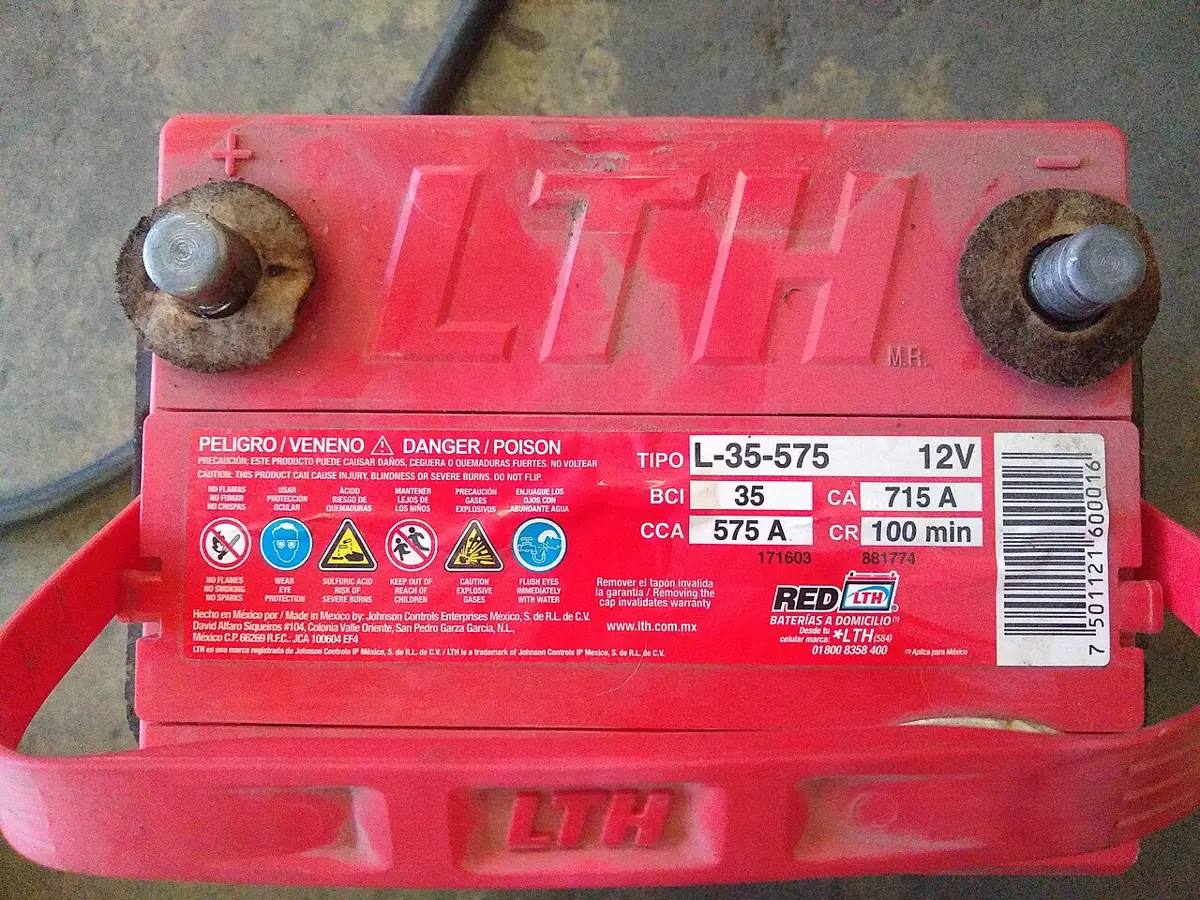
The battery in a Stop/Start vehicle works harder than the battery in a vehicle without it, especially in city driving. It is also a stronger type of battery, and the system stops using it for Auto Stop when it detects low charge. That combination is why the outcome for most owners is a normal battery life rather than a short one, provided the right battery is in the vehicle.
What federal research says about extra starts
The question of whether frequent restarts wear out batteries and starters has been studied. In 2015 Energetics Incorporated ran a study for Argonne National Laboratory on starter and battery wear from turning a vehicle off and on to cut idling (Alternative Fuels Data Center). Its summary makes two findings that matter here (Argonne report via OSTI):
- For a typical motorist, the damage to starting system components from additional daily start cycles will be negligible.
- Starter life depends mostly on the total number of start cycles, while battery life depends more on getting back to a full charge between starts.
Fueleconomy.gov turns that research into practical tips: drive at least 5 miles between start cycles to fully recharge the battery, and limit electric accessory use while the engine is off. It also suggests limiting manual engine starts to about 10 a day, but makes an exception for vehicles with a start-stop system, which are built for many more (fueleconomy.gov).
The study looked at drivers switching off ordinary vehicles by hand, not at factory Stop/Start, so it is not a direct test of GM's system. Its main point still carries over. What shortens battery life is the battery never getting back to full charge, and that has more to do with short trips, heat and accessories running at a stop than with the number of restarts.
AGM, EFB and flooded: what your vehicle expects
There are three common types of 12-volt starting battery. The one your vehicle needs is printed on the original battery label and stated in the owner's manual.
| Type | What it is | Where it is used |
|---|---|---|
| Flooded lead-acid | The traditional design, with liquid electrolyte around the plates | Most vehicles without Stop/Start |
| EFB (enhanced flooded) | A flooded battery built to handle more charge cycles | Some lighter Stop/Start vehicles |
| AGM (absorbed glass mat) | The electrolyte is held in glass mat separators; sealed and spill-proof | GM trucks, SUVs and crossovers with Stop/Start |
For GM, the manuals leave no room for doubt. The 2021 Tahoe and Suburban manual says: "The vehicle has an Absorbed Glass Mat (AGM) 12-volt battery. Installation of a standard 12-volt battery will result in reduced 12-volt battery life." The same wording appears in the 2021 owner's manual insert for the Silverado 1500, Sierra 1500 and full-size SUVs (GM 2021 manual insert). Both say that if you use a charger with an AGM setting, use it, to limit charge voltage to 14.8 volts.
AAA explains why the AGM design suits this work. It is sealed and maintenance-free, has lower internal resistance, recharges faster and recovers better from deep discharges. AAA also notes that AGM handles heat better, recommending AGM for climates consistently above 80 degrees Fahrenheit, because heat speeds up electrolyte loss and plate damage (AAA).
The one mistake that costs real money
The most expensive battery decision is usually the one that looks cheapest at the counter: replacing a factory AGM with a standard flooded battery to save the difference. GM states plainly that it will shorten battery life, and a battery that dies early means paying for a second battery sooner than you would have. It can also make the Stop/Start system act oddly, because the system reacts to battery state.
One detail from GM's own paperwork makes the point well. When GM built many 2021 and 2022 V8 trucks and SUVs without Stop/Start (option code NSS), its service bulletin noted that the starter motor, the battery and the power supply converter stayed the same as on vehicles with the system (GM bulletin 21-NA-132). Even on vehicles with no Auto Stop at all, GM kept the battery the same. Turning the system off does not mean you can downgrade it.
What batteries cost and how long they last
Prices vary by vehicle, battery size, region and who installs it, so treat any single number with caution. AAA's battery service page gives a reasonable starting point: "around $200+ for a standard flooded lead acid car battery and around $250+ for a premium AGM," before tax and environmental fees (AAA battery service). AAA's comparison article puts the AGM premium at "as much as 40 to 100% more than the cost of a regular lead battery" (AAA).
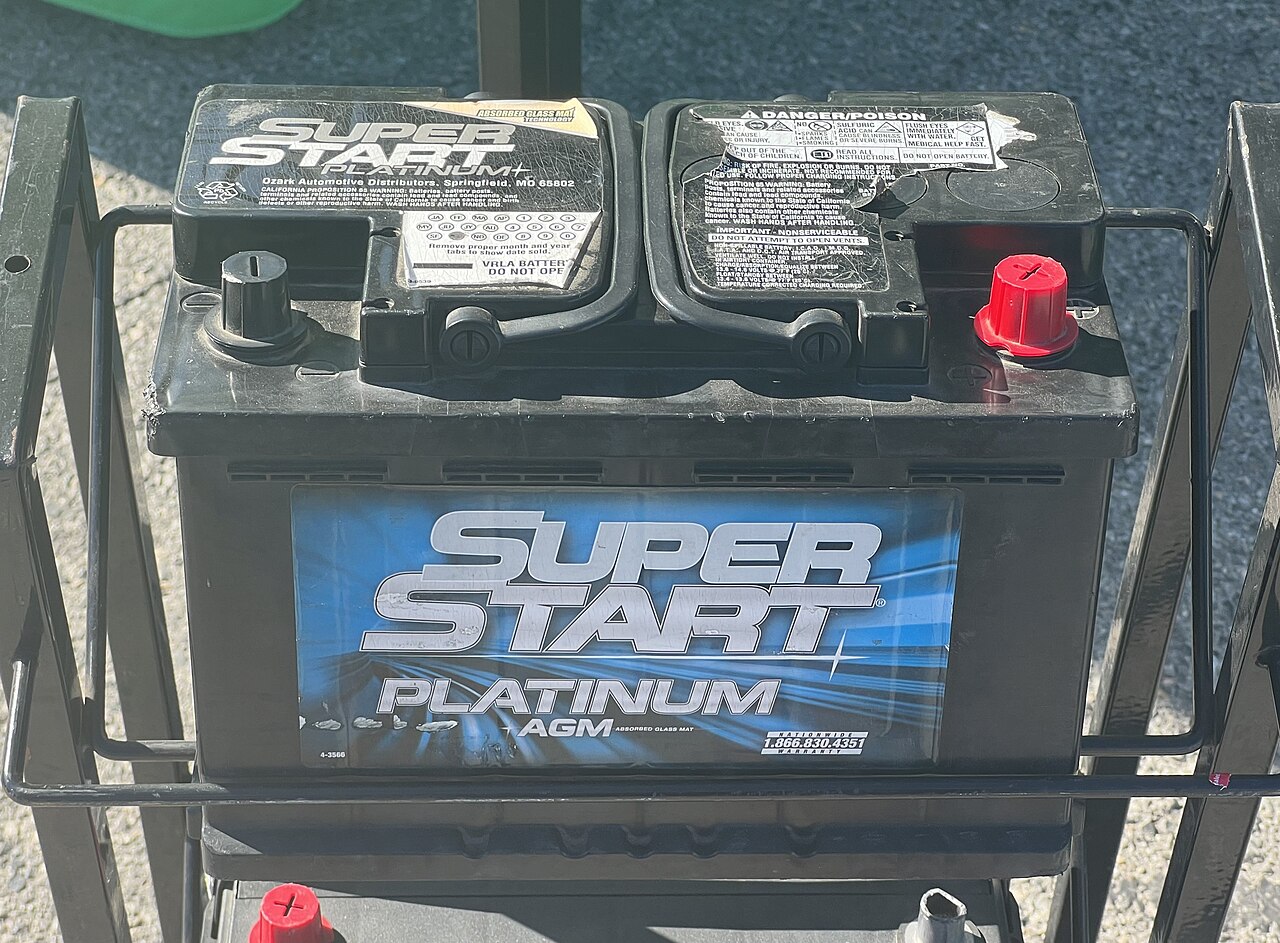
For lifespan, AAA says "an automotive battery typically lasts 3-5 years" in North America (AAA). For AGM specifically, AAA says owners "can expect an AGM car battery to typically last between three and five years with proper usage," and that some higher-quality AGM batteries "may last up to 10 years, depending on the application and environmental conditions" (AAA). AAA's Northway club adds that with the increase in vehicle electronics, the average "may skew closer to three years" (AAA Northway).
| Figure | Value | Source |
|---|---|---|
| Standard flooded battery | About $200 and up | AAA |
| Premium AGM battery | About $250 and up | AAA |
| AGM premium over flooded | 40 to 100 percent | AAA |
| Typical battery life, North America | 3 to 5 years | AAA |
| Higher-quality AGM, best case | Up to 10 years | AAA |
| Suggested testing | At 3 years old, then every year | AAA |
There can also be labor on top of the battery itself. AAA notes that some vehicles need a battery management system reset with a diagnostic tool after a replacement, and that some batteries take more time to reach because of where they are mounted (AAA). Check your service information or ask the installer before you assume a battery swap is a ten-minute job.
Build your six-year ledger
Nobody can tell you from a blog how long your battery will last. What we can do is lay out the costs honestly so you can fill in your own numbers. We use six years because it covers at least one battery replacement for most owners and is a typical length of ownership for a vehicle bought new.
Step 1: count the batteries
Using AAA's three-to-five-year range, a vehicle kept for six years will usually need one replacement battery, and two if the original fails near the three-year mark and the replacement does the same. Hot climates, lots of short trips and long periods parked push you toward the shorter end. Mild climates and regular longer drives push you toward the longer end.
Step 2: price them correctly
Price the AGM, not the flooded battery, because that is what the vehicle needs. Using AAA's starting figures as an illustration:
| Scenario over six years | Replacements | Battery cost (illustration) |
|---|---|---|
| Long-lived original, one replacement | 1 AGM | About $250 and up |
| Short-lived original, two replacements | 2 AGM | About $500 and up |
| Flooded fitted in place of AGM | 1 flooded, then likely another sooner | Saves about $50 up front; GM says battery life will be reduced |
These are illustrations built from AAA's published starting prices, not quotes. Your own numbers will depend on the battery size and where you buy it. Add installation and any reset charges if you do not fit it yourself.
Step 3: add the fuel side
Stop/Start saves fuel, and turning it off gives some of that back. Fueleconomy.gov estimates a potential improvement of about 2 percent (fueleconomy.gov), and the EPA says start-stop "can improve fuel economy by 4%–5%," mostly in stop-and-go city driving (EPA). If you drive mostly in town, put a few percent of your yearly fuel bill on this line. If you drive mostly on the highway, it is close to zero.
Step 4: decide what the module is worth to you
An Auto Stop eliminator for most of the GM vehicles we carry is $79.99, once. It removes the engine restarts at stops, which is the extra work the battery does in city driving. It does not change how the battery is charged, and it does not change which battery the vehicle needs. We do not claim it will add a set number of months to a battery's life, because nobody can measure that for your vehicle and climate. What it changes for certain is how the vehicle drives: no shutdowns at lights, no pause on the restart, and no button to press every time you start.
That is the honest version of the ledger. The battery line is mostly set by the type of battery, the climate and your driving. The fuel line moves a little in the direction of the factory system. The module line is a small, one-time cost for a driving preference.
Cold weather: where batteries get found out
Winter is when weak batteries are exposed. AAA's Automotive Research Center figures, as reported by AAA Northway, say that "at 32°F, a car's battery loses about 35 percent of its strength" and "when temperatures plummet to 0°F, it loses about 60 percent of its power." Starting an engine in cold weather can need "up to twice the amount of current than normal" (AAA Northway).
Stop/Start adds less to that strain than people expect, because GM's system will not do an Auto Stop when the engine or transmission is not at operating temperature, or when the outside temperature is out of range. On a frigid morning the system often stays out of the way until the engine is warm. The starts that do happen, though, fall on the battery's hardest days. A battery that barely gets through a cold start may still be fine in July, then leave you stuck in January.
AAA's practical advice is to have the battery tested when it reaches three years old and every year after that (AAA). Autumn is the right time. A test result tells you more than the date sticker on top of the battery.
Heat and short trips: the quieter battery killers
Heat does more long-term damage than cold, even though cold is when the failure shows up. AAA says heat increases electrolyte evaporation and causes corrosion and sulfation on the plates, all of which shorten life (AAA). Its battery service page lists climate among the common causes of failure: "Heat shortens the life of the battery and severe cold can put additional strain on your battery" (AAA).
Short trips are the other problem. The alternator needs time to replace what the start used. A vehicle that only makes five-minute trips may never fully recharge, and the battery slowly loses ground. Stop/Start adds to that in city driving, which is one more reason the system steps back when it reads low charge.
Vehicles that sit are the third. AAA says that not driving for long periods "will cause the battery to discharge and shorten its life," and recommends a battery maintainer for a vehicle that will sit more than three weeks (AAA). GM's Tahoe manual gives two options for extended storage: remove the black negative cable, or use a trickle charger (2021 Tahoe/Suburban owner's manual).
Repeat batteries: what owners report
NHTSA's complaint files include a handful of owners who say Stop/Start went through batteries. Three of the clearest are on 2018 crossovers. These are owner statements that NHTSA has not verified.
| Vehicle | What the owner reported | Source |
|---|---|---|
| 2018 Chevrolet Equinox | Battery replaced four times in four years, about every 17,000 miles; the dealer blamed local climate and road conditions | ODI 11497355, NHTSA |
| 2018 Chevrolet Equinox | Brake assist, steering assist and StabiliTrak messages after Auto Stop restarts; the dealer found a communication error caused by low battery voltage; third battery in four years | ODI 11458742, NHTSA |
| 2018 GMC Terrain Denali | On its third battery; the owner also wanted a way to turn Auto Stop off | ODI 11559359, NHTSA |
Three reports do not make a trend, and none of them gives the trip pattern or battery type. They do match the research above: a battery that keeps falling short of full charge fails early, and Stop/Start in short-trip city driving adds to that. If you are on a second or third battery, three checks come before any module: confirm that the replacement is the AGM type and size the label calls for, have the charging system tested, and have a technician look for a parasitic drain when the vehicle is off.
Starters and alternators
Every restart is work for the starter, and every recharge is work for the alternator. GM built the Stop/Start vehicles with parts meant for that, as the manual says, and we do not suggest buying a module out of fear that the starter will wear out. Parts wear at their own pace, and a module is not a way to protect a starter.
What we do suggest is paying attention to the signs AAA lists for a weak battery or charging problem: slow cranking, dim headlights at idle, and a battery or charging warning light (AAA). A rough or failed restart after an Auto Stop belongs on that list too. Any of those calls for a test of the battery and charging system, not a module. Installing a module on a vehicle with an existing fault only hides one of the symptoms a technician would use to find it.
After a battery replacement
Two things surprise owners after a new battery goes in.
The first is that Auto Stop may stop working for a while. That is expected. GM lists "the vehicle battery has recently been disconnected" among the reasons Auto Stop will not happen (GM). Drive normally and it comes back on its own. It is not a sign that the new battery is bad, and it is not a reason to buy anything.
The second is setup. AAA notes that after a replacement "some vehicles need program resets for clocks, radio presets, power windows, and even a vehicle's computer system," and that some require a battery management system reset with a diagnostic tool (AAA). Follow the service information for your vehicle. If you have one of our modules installed, it plays no part in that procedure, and it does not need to be removed for a battery swap unless your installer asks.
When you buy the battery, match the replacement number on the original battery label, as GM's manual instructs, and confirm it is an AGM if the original was.
A battery habit list for the year
Whatever you decide about Auto Stop, these habits do the most for battery life.
| When | What to do | Why |
|---|---|---|
| Every oil change | Look at the terminals for corrosion and check the hold-down is tight | Corrosion adds resistance and a loose battery vibrates |
| Every autumn after year three | Have the battery tested | AAA recommends a test at three years, then yearly |
| First cold morning | Listen to how the engine cranks | A slow crank is the earliest warning |
| When fitting accessories | Keep dash cams, chargers and lights off when the vehicle is off | Constant small drains add up |
| Before storage over three weeks | Use a maintainer or disconnect the negative cable | AAA and GM both advise it |
| At replacement | Match the original label and battery type | GM says a standard battery reduces life on these vehicles |
Where an Auto Stop module fits
Our eliminators and memory modules act on one thing: whether Auto Stop is on or off when you start the vehicle. On the 2019-2021 Silverado 1500 eliminator and the Silverado memory module, the part plugs in behind the factory switch and the button still works. On the 2021-2026 Tahoe and its Suburban and Yukon siblings, it plugs in at the body control module. On crossovers like the 2019-2024 Equinox, it connects at the hood switch.
None of them reprograms the battery management, the alternator or the charging strategy, and all of them unplug to return the vehicle to stock. That is deliberate. The vehicle stays exactly as GM designed it in every respect except the default Auto Stop setting, and it stays serviceable with the battery type GM specifies.
If your reason for wanting Auto Stop off is the battery, sort out the battery first. If your reason is how the vehicle drives, the module is the simple fix, and the battery facts above still apply.
Frequently asked questions
Will an eliminator make my battery last longer?
We do not promise that. It removes the restarts at stops, but battery life depends mostly on battery type, heat, age and driving pattern.
Can I fit a cheaper battery once Auto Stop is off?
No. The module does not change charging. GM says a standard battery in place of the AGM reduces battery life, and GM kept the same battery even on trucks built without Stop/Start.
How much more does an AGM cost?
AAA puts the AGM premium at 40 to 100 percent over a standard flooded battery, with a starting price of about $250 versus about $200.
Why did Auto Stop stop after I replaced the battery?
GM lists a recently disconnected battery as a reason Auto Stop will not happen. Drive normally and it returns.
When should I test my battery?
AAA recommends testing at three years old and every year after that. Autumn is a good time.
Does cold weather make Auto Stop harder on the battery?
The system often stays off until the engine is warm, but the starts that do happen land on the battery's weakest days. AAA says a battery loses about 60 percent of its strength at 0°F.
Does the memory module store anything in the vehicle computer?
No. It keeps your OFF choice at startup while installed. Unplug it and the vehicle goes back to factory behavior.
Do I need a battery reset after replacement?
Some vehicles need one. Follow the service information for your vehicle. Our modules play no part in that procedure.
Do frequent restarts wear out the battery?
Federal research found the effect of extra daily starts negligible for a typical driver. Battery life depends more on getting back to a full charge between starts, which short trips and accessory use make harder.
How far should I drive to recharge the battery?
Fueleconomy.gov suggests at least 5 miles between start cycles. Longer drives with fewer accessories running help more.
My crossover is on its third battery. Is Stop/Start the cause?
Possibly part of it, but check the basics first: the correct AGM battery, a charging system test and a parasitic drain test. An Auto Stop module will not fix a charging fault.
Sources
Every outside figure in this article links to one of these sources. Store experience is described in general terms only.
- 2021 Chevrolet Tahoe/Suburban owner's manual (GM) · Stop/Start components, battery conditions, AGM requirement, 14.8 V charging, storage
- GM 2021 owner's manual insert (trucks and SUVs) · AGM requirement and charging advice
- GM Service Bulletin 21-NA-132 (via NHTSA) · Battery and starter unchanged on NSS vehicles
- AAA, AGM battery vs. lead acid battery · AGM cost premium, lifespan, heat
- AAA battery replacement service · Prices, typical life, BMS resets, storage
- AAA Northway, cold weather and batteries · Strength loss at 32°F and 0°F
- AAA, October is Car Care Month · Testing at three years; warning signs
- Fueleconomy.gov, other fuel-saving technologies · Stop-start potential improvement
- EPA Green Vehicle Guide · Start-stop fuel economy range
- Argonne National Laboratory, Stop and Restart Effects on Modern Vehicle Starting System Components (2015), via OSTI · Starter and battery wear from extra starts
- Alternative Fuels Data Center, idle reduction research · Summary of the Argonne study
- Fueleconomy.gov, driving more efficiently · Five miles between starts; accessory use; start-stop exception
- NHTSA complaint data, 2018 Equinox and Terrain · Owner reports of repeat battery replacement
Next steps
If you have decided you want Auto Stop off by default, find your vehicle in the Auto Start Stop Eliminator aisle, or go straight to the Chevrolet or GMC listings.
For vehicle-specific detail, read our Silverado and Sierra guide, our Tahoe, Suburban and Yukon guide or our Terrain, Equinox and Acadia guide. Not sure which part fits? Send us the VIN.