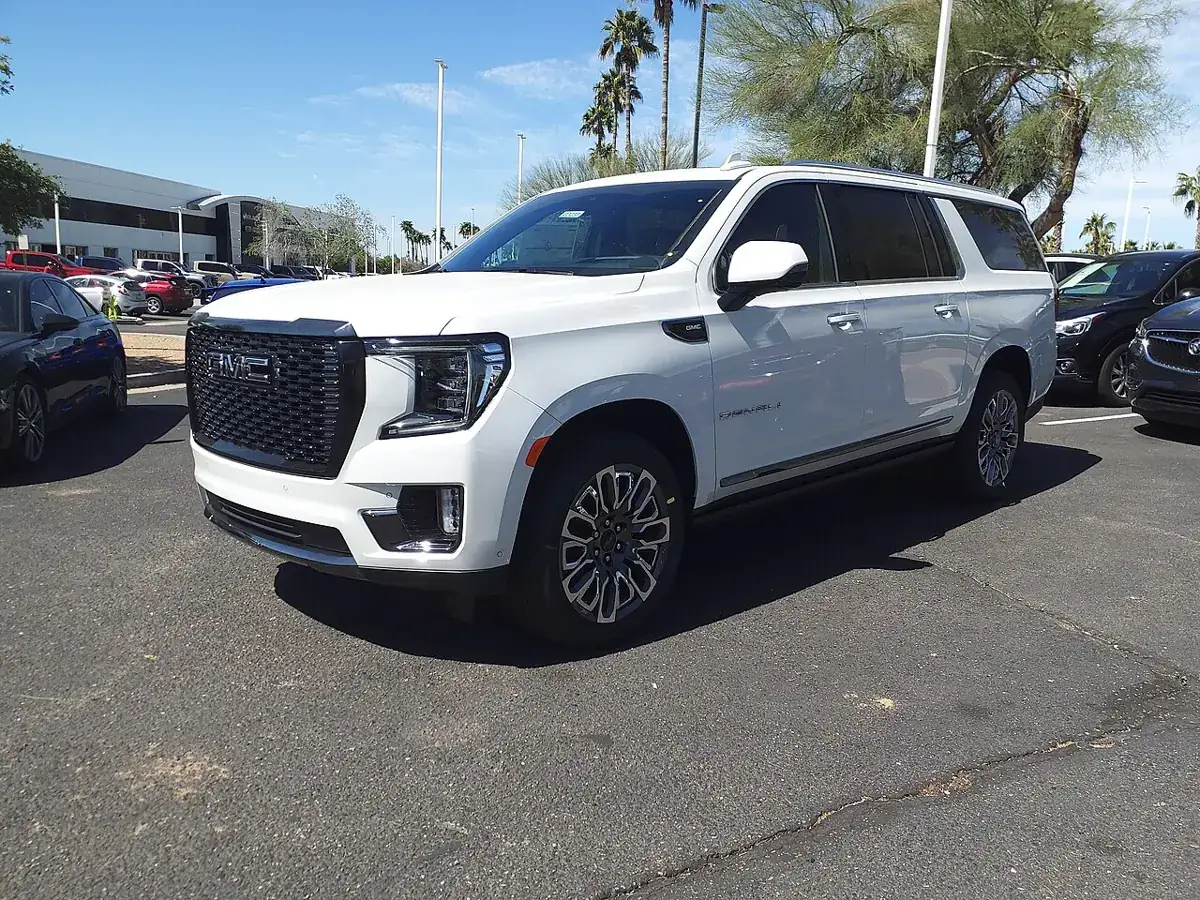
A full-size GM SUV spends a lot of its life barely moving. It waits in the school pickup line, creeps through a drive-thru with three kids in the back, sits at a light with the rear air running, and backs a boat trailer down a ramp on Saturday. Those are exactly the moments when the Stop/Start system on the 2021-2026 Tahoe, Suburban and Yukon is most likely to shut the V8 off, and they are the moments when owners notice it most.
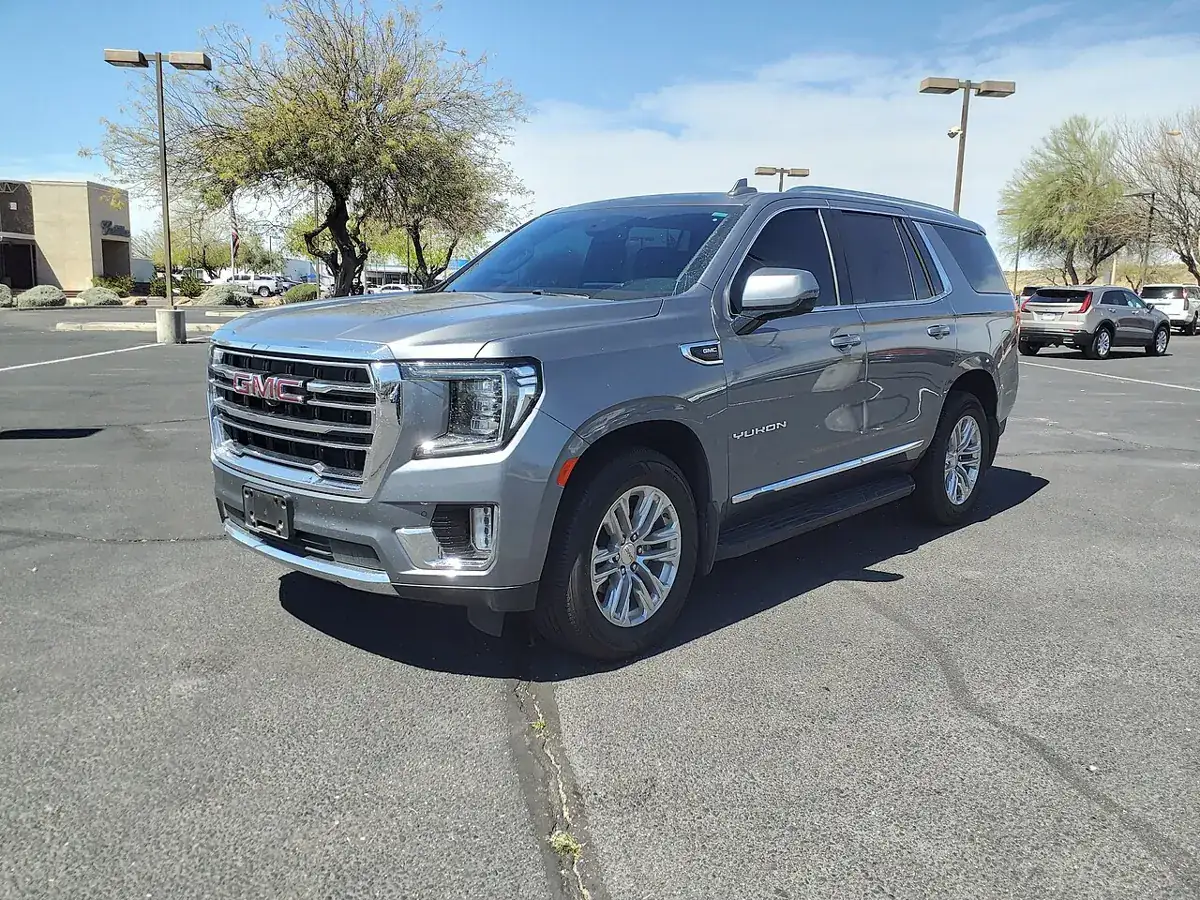
This guide is for owners of the current-generation Chevrolet Tahoe and Suburban and the GMC Yukon and Yukon XL. It covers what GM's own manuals say the system does, why the button on the dash never seems to stay off, why some 2021 and 2022 SUVs were built without the feature at all, and how our plug-in eliminator installs at the body control module. It also covers the parts that are easy to skip: the safety warnings that come with Stop/Start, the battery these SUVs need, and how much fuel the system actually saves.
Key Takeaways
The short version, for owners who want the answer before the detail.
| Question | Short answer |
|---|---|
| Which SUVs does this cover? | 2021-2026 Chevrolet Tahoe, 2021-2026 Chevrolet Suburban, and 2021-2026 GMC Yukon and Yukon XL. The Yukon listing covers the XL. |
| Does the factory button stay off? | No. GM's manuals say Auto Stop "is enabled each time you start the vehicle." |
| Where does the eliminator install? | Inline at the dark blue connector on the K9 body control module, behind the driver-side lower dash panel. The light blue connector next to it is the wrong one. |
| Does every 2021 or 2022 SUV have Auto Stop? | No. GM built most V8 Tahoe, Suburban and Yukon models from June 2021 without it (RPO NSS). No button, no AUTO STOP on the gauge, nothing to fix. |
| What about towing? | GM lists Tow/Haul mode among the conditions that prevent an Auto Stop, so the system already stays out of the way with Tow/Haul selected. |
| Price and tools? | $79.99. A trim tool and a flashlight. No cutting, splicing or programming. |
What GM says the system does
The 2021 Tahoe and Suburban owner's manual describes the feature in plain terms. When the brakes are applied and the vehicle is at a complete stop, the engine may turn off, and the tachometer reads AUTO STOP. Release the brake or press the accelerator and the engine restarts. GM adds that "other conditions may cause the engine to automatically restart before the brake pedal is released," and that the system "has components designed for the increased number of starts" (2021 Tahoe/Suburban owner's manual).
The 2024 Yukon manual uses almost the same wording with one telling change at the start: "If equipped and enabled, the Stop/Start system will shut off the engine to help conserve fuel" (2024 Yukon owner's manual). The words "if equipped" are there for a reason, which we cover in the section on SUVs built without the feature.
Why it stops at some lights and not others
Owners often think the system is acting up because it shuts the engine off at one light and leaves it running at the next. The manual lists the reasons an Auto Stop may not happen, or may end early. On the 2021 Tahoe and Suburban they include:
- The climate control needs the engine running to heat or cool the cabin.
- The battery charge is low, or the battery has recently been disconnected.
- The vehicle has not reached a minimum speed since the last Auto Stop.
- The accelerator pedal is pressed.
- The engine or transmission is not at operating temperature, or the outside temperature is out of range.
- The shifter has been moved out of D to any gear other than P.
- Tow/Haul Mode or another driver mode has been selected.
- The vehicle is on a steep hill or grade.
- The driver door has been opened or the driver seat belt has been unbuckled.
- The hood has been opened.
- The Auto Stop has reached the maximum allowed time.
The same manual notes that "Stop/Start and cruise control are disabled in Terrain Mode" on vehicles that have it (2021 Tahoe/Suburban owner's manual). Put together, the list explains most of the "it only works sometimes" reports we hear. A Suburban on a 95-degree afternoon with the rear air on high may never stop the engine. Turn the fan down at a long light and it shuts off a few seconds later. That is the controller doing what it was designed to do.
Where full-size SUV owners feel it
Nothing about the SUV system is harsher than the system in GM's pickups. What is different is how these vehicles get used. Three situations come up again and again when owners write to us.
The pickup line and the drive-thru
Crawling a car length at a time with the brake held is the textbook condition for an Auto Stop. Every full stop is a chance for the engine to shut off, and every creep forward is a restart. In a long line that can be dozens of cycles in a few minutes. Owners describe it less as a fault and more as a constant distraction, especially with a full cabin and the climate control working hard.
Pulling out into traffic
The other complaint is the pause. Stopped at a stop sign, waiting for a gap, the driver sees the opening, lifts off the brake and presses the gas, and the engine has to restart before the SUV moves. It is a short delay, but in a 5,000-plus pound vehicle making a left turn across traffic it is the delay people remember.
Cold mornings
In winter the system often stays out of the way on its own, because the engine is not yet warm and the outside temperature may be outside its range. Owners who live in cold climates sometimes find that Auto Stop is quiet for the first part of every drive and then starts working once the engine is warm, right as they reach town traffic. GM's manuals list engine temperature and outside temperature among the conditions for exactly this reason.
What reaches NHTSA
Annoyance rarely turns into a federal complaint. We counted the NHTSA complaints for 2021 to 2023 Tahoe, Suburban and Yukon models that mention Auto Stop or the Stop/Start system, leaving out reports that only mention the push-button "start/stop" ignition.
| Model year and vehicle | All NHTSA complaints | Mention Auto Stop or Stop/Start |
|---|---|---|
| 2021 Tahoe | 468 | 2 |
| 2022 Tahoe | 198 | 1 |
| 2023 Tahoe | 236 | 0 |
| 2021 Suburban | 208 | 1 |
| 2022 Suburban | 127 | 3 |
| 2023 Suburban | 134 | 0 |
| 2021 Yukon | 350 | 1 |
| 2022 Yukon | 186 | 2 |
| 2023 Yukon | 249 | 0 |
The few reports that do exist are mostly about restarts, not preference. A 2022 Suburban owner described the engine intermittently shutting off when pulling away from a light and not restarting right away (ODI 11672006, NHTSA). A 2022 Yukon owner reported that the engine would not turn back on after an Auto Stop at a stop sign and took several minutes to restart (ODI 11502273, NHTSA). Both are owner statements that NHTSA has not verified. If your SUV does anything like that, have it diagnosed and check NHTSA's recall lookup with your VIN before you think about an eliminator, which is for a system that works and that you would rather keep off.
The button that resets every start
Every equipped 2021-2026 Tahoe, Suburban and Yukon has an Auto Stop disable switch with the A-in-a-circle symbol. GM's instructions for it are short: "The automatic engine Stop/Start feature can be disabled and enabled by pressing" the switch, and "Auto Stop is enabled each time you start the vehicle." When the indicator on the switch is lit, the system is on (2021 Tahoe/Suburban owner's manual). The 2024 Yukon manual repeats it word for word, with "Auto Stop/Start is enabled each time you start the vehicle" (2024 Yukon owner's manual).
So the button works. It just does not remember. If you prefer the system off, you press it every time you start the engine. For a family SUV that is started six or eight times a day for school, errands and practice, that is a lot of button presses over a year. And because the default is on, anyone else who drives the vehicle gets Auto Stop whether they expect it or not.
The eliminator does one thing. It keeps the system in the OFF state by default at each start, so you do not have to press the button. It does not change the engine, the transmission or any software, and it unplugs to return the vehicle to stock.
SUVs built without Auto Stop (RPO NSS)
Before ordering anything, make sure your SUV actually has the feature. Many 2021 and 2022 models do not.
GM's service bulletin 21-NA-132 explains what happened. "Beginning in June 2021, most 2021 Escalade models, Cheyenne, Silverado 1500, Suburban, Tahoe, Sierra 1500, Yukon models equipped with L84 or L87 with MQB or MQC 10-speed transmissions will be produced without the Automatic Stop/Start feature." Those vehicles carry the option code RPO NSS, "Not Equipped with Automatic Stop/Start." The bulletin lists the SUVs as 2021-2022 Tahoe, Suburban and Yukon models with the 5.3L L84 or 6.2L L87 and the 10-speed MQC transmission (GM bulletin 21-NA-132). GM Authority reported the change at the time, along with a $50 credit off the sticker for the affected trucks (GM Authority, June 2021).
The bulletin also tells you how to recognize an NSS vehicle: "the Automatic Stop/Start disable switch will not be present, the instrument cluster will no longer show 'Auto Stop,' and some internal transmission components have been omitted from the vehicle. The transmission will not be capable of the Automatic Stop/Start function" (GM bulletin 21-NA-132).
| What you see | What it means | What to do |
|---|---|---|
| An A-in-a-circle button on the dash, AUTO STOP on the tachometer at lights | Your SUV has Stop/Start | Our eliminator applies; find your listing below |
| No button, the engine never shuts off at a stop | Likely an NSS build | Nothing to buy; the system is not there |
| Not sure | Check the option code label | Look for NSS or KL9 in the RPO list on the label, or send us the VIN |
Two details are worth knowing. First, an NSS vehicle still has the same starter, battery and power supply converter: the bulletin says the multifunction power supply converter, starter motor, battery, wiring and connectors are unchanged. Second, because the transmission was built without some internal parts, the feature cannot be added back to an NSS vehicle. If you bought a used 2022 Tahoe and it has no button, that is how it left the factory.
Find your listing
Use the model year on the registration or VIN record, then match the badge.
| You drive | Order | Notes |
|---|---|---|
| 2021-2026 Chevrolet Tahoe | 2021-2026 Tahoe Auto Start Stop Eliminator | All years in one listing |
| 2021-2026 Chevrolet Suburban | 2021-2026 Suburban Auto Start Stop Eliminator | Separate listing from the Tahoe |
| 2021-2026 GMC Yukon | 2021-2026 Yukon Auto Start Stop Eliminator | Standard wheelbase |
| 2021-2026 GMC Yukon XL | 2021-2026 Yukon Auto Start Stop Eliminator | The Yukon listing covers the XL |
All of them are $79.99. The Yukon product page lists every year from the 2021 Yukon through the 2026 Yukon XL, so XL owners order the same part as the standard Yukon. Earlier versions of this guide pointed XL owners to a separate page. That listing has been retired, and the Yukon listing now covers both.
The product pages do not separate coverage by trim or engine. If your SUV has had BCM work, an aftermarket remote starter, upfitter wiring or anything else that changes what you see behind the lower dash panel, compare the connector with the install photo before you order, or send us the VIN and a picture. We would rather answer a question than process a return.
Owners of the previous-generation Tahoe, Suburban and Yukon are usually asking about a different system, cylinder deactivation rather than Stop/Start. For those vehicles see the Tahoe AFM disabler, the Suburban AFM disabler and the Yukon AFM disabler.
Installing the eliminator
On these SUVs the job happens inside the cabin at the K9 body control module, which sits behind the lower instrument panel on the driver's side. There is no work under the hood and nothing to program through the OBD-II port.
- Park, shift to P, turn the vehicle off and take the key fob out of the cabin.
- Remove the lower trim panel on the driver's side to reach the BCM connector bank. Work the clips gently with a plastic trim tool.
- Find the dark blue connector shown in the install photo on the product page. A light blue connector sits right next to it. Confirm which is which before you unplug anything.
- Release the lock on the dark blue connector and unplug it.
- Plug the eliminator harness in between the BCM and the vehicle connector. Push each end until the lock clicks.
- Route the harness away from the pedals and steering column, and secure it with a tie.
- Start the vehicle and drive to a stop with the engine warm. The engine should keep running. Then refit the trim panel.
Removal is the reverse: unplug the harness and reconnect the factory plug. Nothing in the vehicle's software changes, so there is nothing to undo.
Tips from owners who called halfway through
- Use a good light. Under the dash the two blue connectors can look nearly the same. A flashlight and the install photo side by side solve it.
- Count on the trim, not the wiring, to take time. The connector takes a minute. Getting the panel off without breaking clips is the slow part.
- Warm the cabin in winter. Cold plastic clips break more easily.
- Test with a warm engine. A cold engine may not Auto Stop anyway, so a test right after a cold start proves nothing. Test after a few miles.
- Reseat before you worry. If the engine still stops after install, the most common cause is a connector that is not fully latched. Unplug both ends and push them home again.
Towing, Tow/Haul and driver modes
Towing comes up in almost every conversation about these SUVs, so it is worth being precise. GM's manual lists "Tow/Haul Mode or other driver modes have been selected" among the reasons an Auto Stop will not occur (2021 Tahoe/Suburban owner's manual). The 2024 Yukon manual says "certain driver modes have been selected" and points to the driver mode and four-wheel-drive sections (2024 Yukon owner's manual). And Terrain Mode, on vehicles that have it, disables Stop/Start outright.
In practice that means:
- If you tow with Tow/Haul selected, the factory system already stays out of the way while it is selected.
- The eliminator matters on the drive to the trailer, the trip home empty, and every day you are not towing.
- If you forget to select Tow/Haul with a light trailer, Auto Stop can still happen. With the eliminator installed, it does not.
None of this changes how the SUV tows. The module does not touch the engine, the transmission or the trailering features. It only keeps Auto Stop off.
Safety points that come with Stop/Start
GM's manuals carry several warnings about Stop/Start that every driver of these SUVs should know, whether or not you install a module.
- AUTO STOP means the vehicle is on. "When pointing to AUTO STOP, the engine is off but the vehicle is on and can move. The engine could auto start at any time."
- Always shift to Park before getting out. "Do not exit the vehicle before shifting to P (Park). The vehicle may restart and move unexpectedly."
- Turn the vehicle off before opening the hood. "For vehicles with auto engine stop/start, turn the vehicle off before opening the hood. If the vehicle is on, the engine will start when the hood is opened."
All three quotes come from the 2021 Tahoe and Suburban owner's manual (GM). The first one is the reason some families prefer the system off. A quiet engine at a light can make a new driver, a grandparent or a valet think the vehicle is off when it is not. With the eliminator installed, a stopped SUV with the engine idling looks and sounds like what it is.
The battery these SUVs need
Every Stop/Start Tahoe, Suburban and Yukon is built around an Absorbed Glass Mat (AGM) battery, and the manual is direct about it: "Installation of a standard 12-volt battery will result in reduced 12-volt battery life." If you charge the battery, GM recommends the charger's AGM setting "to limit charge voltage to 14.8 volts" (2021 Tahoe/Suburban owner's manual; the same wording appears in the 2024 Yukon manual).
The battery also controls the system. Low charge and a recently disconnected battery are both on GM's list of reasons Auto Stop will not happen. That leads to two common misunderstandings:
| What you notice | Likely cause | What to do |
|---|---|---|
| Auto Stop stopped working right after a battery replacement | The battery was recently disconnected | Drive normally for a few days; this is expected |
| Auto Stop rarely happens and the engine cranks slowly in the morning | A weak battery, or a standard flooded battery fitted in place of the AGM | Have the battery tested; replace it with the correct AGM type |
| Battery warning on the dash | A charging system fault | Diagnose it before anything else |
| A rough or failed restart after an Auto Stop | Battery or starter, possibly something else | Get it checked; a module is not a repair |
An eliminator does not change how the vehicle charges the battery and does not make the AGM requirement go away. When the battery is due, replace it with the type on the original label. Our Auto Stop battery cost ledger goes through what an AGM replacement costs and how long they tend to last.
What you give up in fuel
Stop/Start saves fuel, and it is only fair to say how much. Fueleconomy.gov puts the potential improvement from stop-start at about 2 percent (fueleconomy.gov). The EPA says start-stop "can improve fuel economy by 4%–5%," with the largest benefit in stop-and-go city driving (EPA).
To put that range in real terms, take an SUV that averages 16 mpg in town. Two percent of that is about 0.3 mpg, and five percent is about 0.8 mpg. That is an illustration, not a measurement of any particular vehicle, but it shows the scale: noticeable over a year of city driving, hard to see on any single tank, and close to zero for owners who mostly drive on the highway, where the engine rarely stops anyway.
If you split your driving, the factory button is still there. With the eliminator installed you can press it to turn Auto Stop on for a day of heavy city traffic, and the next start goes back to off.
Mistakes we see before and after install
- Buying for an NSS vehicle. If there is no button and no AUTO STOP on the tachometer, the vehicle was built without the system.
- Using the light blue connector. The harness belongs on the dark blue BCM connector only.
- Ordering by the purchase date. A 2021 model bought in late 2020 is still a 2021. Use the registration or VIN record.
- Mixing up Tahoe and Suburban. They are separate listings. Check the badge.
- Expecting it to fix a battery or starter problem. If the vehicle stalls, cranks slowly, shows a warning light or fails to restart, have it diagnosed first. Installing a module on a vehicle with a fault only makes the diagnosis harder.
Dealer visits, leases and resale
The eliminator plugs in inline and unplugs in minutes, and it does not reflash anything. That keeps the ownership questions simple.
For dealer service, tell the service writer it is installed, especially for any electrical diagnosis, and remove it if they ask. Coverage decisions belong to the dealer and the manufacturer, and keeping the factory connector intact makes that conversation easy. For a lease return, unplug it before the inspection. When you sell the vehicle, either remove it or tell the buyer what it is and where it sits.
For the pickups that share these engines, see our Silverado and Sierra Auto Stop guide. If you also own a Cadillac, our Escalade 6.2L AFM guide covers the cylinder deactivation side of the same engine family, and our article on oil change intervals and lifters covers maintenance on those engines.
Frequently asked questions
Is there a separate Yukon XL part?
No. The 2021-2026 Yukon listing covers both the Yukon and the Yukon XL. Its fitment list runs through the 2026 Yukon XL.
Will the Tahoe part fit a Suburban?
Order the listing that matches your vehicle. The Tahoe and Suburban are listed separately, both at $79.99.
My 2022 Tahoe has no Auto Stop button. Which part do I need?
None. GM built most 2021-2022 V8 Tahoe, Suburban and Yukon models from June 2021 without Stop/Start (RPO NSS). The feature cannot be added back.
Can I still turn Auto Stop on after installing it?
Yes. The factory button stays in place. Press it to turn Auto Stop on for that drive.
Does it change towing or Tow/Haul?
No. GM already blocks Auto Stops in Tow/Haul and other driver modes. The module only keeps Auto Stop off the rest of the time.
Will it affect the rear air conditioning?
It does not change the climate system. With Auto Stop off, the engine keeps running at stops, so the compressor keeps running too.
Why does my engine sometimes not stop even with the system on?
GM lists many reasons: climate demand, low battery charge, a recently disconnected battery, temperature, Tow/Haul, a steep grade, an open door or hood and more. That is normal.
Do I need to reset anything after removing it?
No. Unplug it, reconnect the factory connector, and the vehicle behaves exactly as delivered, with Auto Stop on at every start.
My SUV sometimes fails to restart after an Auto Stop. Is the eliminator the fix?
No. A failed restart is a fault to diagnose, often starting with the battery and charging system. Check for open recalls by VIN too. The eliminator is for a working system you prefer off.
Are Auto Stop complaints common on these SUVs?
Not in NHTSA data. For 2021 to 2023 Tahoe, Suburban and Yukon models we found zero to three reports per model year that mention the system.
Sources
Every outside figure in this article links to one of these sources. Store experience is described in general terms only.
- 2021 Chevrolet Tahoe/Suburban owner's manual (GM) · Stop/Start operation, conditions, disable switch, Terrain Mode, AUTO STOP warning, hood warning, AGM battery
- 2024 GMC Yukon/Yukon XL/Denali owner's manual (GM) · If equipped wording, disable switch reset, driver modes, AGM battery
- GM Service Bulletin 21-NA-132 (via NHTSA) · RPO NSS, affected 2021-2022 SUVs, unchanged components
- GM Authority, June 7, 2021 · Stop-start removed from some 2021 models; $50 credit
- Fueleconomy.gov, other fuel-saving technologies · Stop-start potential improvement
- EPA Green Vehicle Guide · Start-stop fuel economy range
- NHTSA complaint data, 2021-2023 Tahoe, Suburban and Yukon · Owner reports mentioning Auto Stop; counts by model year
- NHTSA recall lookup · Check open recalls by VIN
Next steps
Go straight to your listing:
- 2021-2026 Chevy Tahoe Auto Start Stop Eliminator
- 2021-2026 Chevy Suburban Auto Start Stop Eliminator
- 2021-2026 GMC Yukon and Yukon XL Auto Start Stop Eliminator
Or browse the Chevrolet and GMC Auto Stop aisles. Think your SUV might be an NSS build? Send us the VIN and we will check before you order.