The 6.2-liter V8 is the reason a lot of people buy an Escalade. It is also an engine that, under light load, runs on four of its eight cylinders. GM calls that Active Fuel Management, and on a heavy luxury SUV that spends its life between school drop-offs and long highway runs, it is active more often than most owners realize.
This guide is for owners of the 2010-2017 Escalade, Escalade ESV and Escalade EXT. We will go through what AFM does inside the engine, using GM's own service documents, what GM says can go wrong with the lifters, how to tell a drivability preference from a mechanical fault, and where a plug-in disabler fits among the options. We will also be clear about what a disabler cannot do, because that is where most bad advice about these engines starts.
Key Takeaways
The short version for Escalade owners.
| Question | Short answer |
|---|---|
| What does AFM do on the 6.2L? | Under light load the ECM shuts down cylinders 1, 7, 6 and 4. The engine runs on all eight at start-up, idle and medium to heavy throttle, per GM. |
| Which Escalades do our listings cover? | Escalade 2010-2017, Escalade ESV 2010-2017 and Escalade EXT 2010-2013, all 6.2L V8. |
| What does the disabler do? | It plugs into the OBD-II port and keeps the engine in V8 mode while connected. No reflash. Unplug it to return to stock. |
| Will it fix a lifter tick or misfire? | No. GM's bulletin for collapsed or stuck AFM lifters calls for mechanical repair. Diagnose first. |
| Price? | $79.99 per listing. |
| 2018 and newer? | Not covered by these listings. Send us the VIN. |
How AFM works on the 6.2L
GM published a short information bulletin in 2019, PIP5663, to explain AFM and DFM to its own technicians. It covers the 2015-2019 Escalade with the 6.2L L86 and states the strategy directly: "To provide maximum fuel economy under light load driving conditions, the engine control module (ECM) will command the cylinder deactivation system ON to deactivate engine cylinders 1, 7, 6, and 4, switching to a V4 mode. The engine will operate on 8 cylinders, or V8 mode, during engine starting, engine idling, and medium to heavy throttle applications" (GM PIP5663 via NHTSA).
The mechanism is in the lifters. On the deactivated cylinders, special AFM lifters stop transmitting the camshaft's motion to the pushrods, so the valves stay closed. On the L86, GM's chart in the same bulletin shows the oil to those lifters is switched through a valve lifter oil manifold (VLOM, often called LOMA) under the intake. When the ECM wants all eight cylinders back, the oil pressure to those lifters drops and they work as normal lifters again.
AFM and DFM are not the same thing
You will see "AFM/DFM" written together, including on our listings, but GM treats them separately. PIP5663 describes Dynamic Fuel Management as a later technology that can deactivate any combination of cylinders, with fixed and rotating patterns, and notes that it uses oil control valves rather than the manifold. On GM's chart, the Escalade L86 is AFM: four-cylinder deactivation, valve lifter oil manifold, no DFM. That is the system the 2010-2017 listings deal with.
Why it exists
The reason is fuel economy under the federal test cycles and in light-load driving. A V8 cruising on a flat highway needs only a fraction of its power. Shutting down half the cylinders lets the remaining four work at a more efficient load. The trade is that the engine now has a mode change built into ordinary driving, plus extra moving parts in the valvetrain that have to switch reliably for the life of the engine.
When AFM is actually running
GM's description gives a useful picture of when the system is working and when it is not. The engine is in V8 mode "during engine starting, engine idling, and medium to heavy throttle applications" (GM PIP5663). Everything else, light throttle at a steady speed, is where it may switch to V4.
On an Escalade that means:
- Highway cruising on flat ground is prime AFM territory. A steady 65 to 75 mph with a light foot is the condition the system was designed for.
- Gentle suburban driving between lights, at a steady 35 to 45 mph, also sees a lot of four-cylinder operation.
- Idle and pulling away are V8 mode. If you feel something at a stoplight, it is not AFM.
- Climbing, towing and hard acceleration are V8 mode because the load is medium to heavy.
That last point is often misunderstood. AFM does not make the Escalade weaker when you need power; the engine returns to eight cylinders as soon as the load goes up. What owners notice is the transition at light throttle and, in some vehicles, a change in exhaust or cabin sound while in V4 mode.
EPA ratings, and what AFM is worth in fuel
The EPA ratings for these Escalades were all earned with AFM working. They are the baseline any change is measured against.
| Model year and version | Transmission | City / highway / combined mpg |
|---|---|---|
| 2010 Escalade 2WD | 6-speed automatic | 14 / 20 / 16 |
| 2010 Escalade AWD | 6-speed automatic | 13 / 20 / 15 |
| 2010 Escalade ESV 2WD | 6-speed automatic | 14 / 20 / 16 |
| 2015 Escalade 2WD | 6-speed automatic | 15 / 21 / 17 |
| 2015 Escalade 4WD | 6-speed automatic | 14 / 21 / 16 |
| 2015 Escalade 4WD | 8-speed automatic | 15 / 21 / 17 |
| 2015 Escalade ESV 4WD | 8-speed automatic | 14 / 20 / 17 |
One thing the table shows is that drivetrain and transmission move the numbers about as much as AFM does. The 2010 AWD model is rated one mpg lower combined than the 2WD, and in 2015 the 8-speed brought the 4WD model from 16 to 17 combined.
Fueleconomy.gov lists the potential efficiency improvement from cylinder deactivation as up to 5 percent (fueleconomy.gov). Treat that as the most you would give up by keeping the engine in V8 mode. Most of it comes on the highway, at the steady light-throttle cruise described above. In town, where the engine spends more time in V8 mode anyway, the difference is smaller.
| Miles a year | Fuel at 16 mpg | Extra fuel at 5% lower mpg | Extra cost at $3.50/gal |
|---|---|---|---|
| 12,000 | 750 gal | about 39 gal | about $138 |
| 15,000 | about 940 gal | about 49 gal | about $173 |
| 20,000 | 1,250 gal | about 66 gal | about $230 |
Our assumptions are a 16 mpg combined average, which sits in the middle of the EPA figures above, and $3.50 a gallon. These numbers are the worst case. If you drive mostly in town, expect less.
What GM says can go wrong
Owners worry about AFM lifters for a reason, and GM's own bulletins are the clearest description of the problem. Service bulletin 15-06-01-002N, revised in February 2023, covers 2015-2020 Escalades and other GM trucks and SUVs with the 5.3L or 6.2L V8. The customer complaint it addresses is a check engine light and/or "an engine misfire/tick noise," with code P0300 often set or in history (GM bulletin 15-06-01-002N via NHTSA).
The causes it lists are specific:
- An AFM lifter that is mechanically collapsed and/or stuck all the time.
- Internal locking pin damage in the lifter, due to oil aeration.
- A lifter that has collapsed and is stuck in the lifter bore.
- A bent push rod.
The repair GM describes is mechanical: inspect the camshaft and lifters for damage, and if a valve is not moving, replace the valve lifter oil manifold and the affected bank of AFM lifters. If there is excessive wear on the camshaft lobes or lifter rollers, replace the camshaft and lifters. The bulletin also notes that any time a lifter is replaced, the lifter guides must be replaced too.
Two things follow from that. First, a lifter that has already failed is a repair job, not a settings change. Second, the bulletin's note about oil aeration is a reminder that these lifters depend on clean oil at the right level. Our AFM lifter failure symptoms guide goes through the warning signs in detail, and our oil change interval guide covers why oil matters so much on these engines.
What Escalade owners report to NHTSA
We read every NHTSA complaint for the 2010 to 2020 Escalade and counted those that mention lifters or the AFM/DFM system by name. Each total links to that year's complaint data.
| Model year | All complaints | Mention lifters | Mention AFM or DFM |
|---|---|---|---|
| 2010 | 43 | 2 | 0 |
| 2011 | 65 | 0 | 0 |
| 2012 | 26 | 0 | 0 |
| 2013 | 19 | 0 | 0 |
| 2014 | 20 | 0 | 0 |
| 2015 | 106 | 7 | 4 |
| 2016 | 104 | 8 | 3 |
| 2017 | 89 | 14 | 6 |
| 2018 | 22 | 8 | 0 |
| 2019 | 25 | 8 | 4 |
| 2020 | 14 | 4 | 0 |
The pattern is clear even with small numbers. The 2010 to 2014 Escalade has very few lifter reports. They start with the 2015 redesign and the 6.2L L86, the engine GM's bulletin covers, and they run through 2020. Complaint counts are not failure rates. Owners with a problem are the ones who write in, and most never do. Still, the reports describe the failure in the same terms as GM's bulletin.
How the failures are described
- Misfire and shaking first. A 2017 owner reported the vehicle shaking at 40 mph with the check engine and traction control lights on; a mechanic diagnosed a valve lifter at 57,000 miles (ODI 11525672, NHTSA).
- Noise, then lost power. A 2016 owner described an abnormal popping sound at 65 mph and the engine feeling ready to stall; the diagnosis was lifter failure at 137,027 miles (ODI 11720471, NHTSA).
- Repeat failures after a one-bank repair. A 2015 owner had all eight lifters on the driver's bank replaced at about 109,500 miles, then a misfire and low compression on cylinder 1 about 7,000 miles later (ODI 11764891, NHTSA).
- A failure with a lockout fitted. A 2019 owner reported that an AFM lifter failed again even after a device to keep the engine out of four-cylinder mode had been installed (ODI 11745683, NHTSA). We quote this because it matters: keeping AFM off does not repair or protect a lifter that is already damaged.
What owners say the repair cost
| Model year and mileage, as reported | Reported work | Reported cost |
|---|---|---|
| 2015, 59,345 miles | Dealer quote for lifters and camshaft | $12,000 quoted (ODI 11646696, NHTSA) |
| 2016, mileage not stated | Lifter repair | about $5,000 (ODI 11657953, NHTSA) |
| 2018, 84,000 miles | Bent pushrod; lifters and possibly camshaft | $8,000-$13,000 quoted (ODI 11658065, NHTSA) |
| 2019, about 70,000 miles | Lifters and top-end repair | $8,500 (ODI 11658145, NHTSA) |
| 2019, mileage not stated | Lifters on one bank at a dealer | $4,000 (ODI 11712432, NHTSA) |
These are owner figures that NHTSA does not verify, and they vary with what was found once the engine was open. The spread matches GM's bulletin: a lifter caught early can be a one-bank job, while a damaged camshaft takes the repair into five figures. That is the strongest argument for acting on a tick or a misfire code quickly rather than waiting.
A preference or a problem?
Before deciding anything, it helps to sort out which situation you are in. They need very different responses.
| What you notice | More likely | What to do |
|---|---|---|
| A slight change in sound or feel at steady cruise, no warning lights | Normal AFM transitions | A disabler is an option if it bothers you |
| Drone or vibration only at light throttle on the highway | Normal AFM operation, felt more in some vehicles | Same as above |
| A tick from the engine that does not go away | Possible lifter problem | Diagnose before driving far; do not mask it |
| Check engine light, P0300 or a cylinder-specific misfire code | Possible collapsed or stuck lifter, or another misfire cause | Diagnosis; see GM bulletin 15-06-01-002N |
| Rough idle with a misfire on one of cylinders 1, 7, 6 or 4 | Worth checking AFM lifters on that bank | Diagnosis |
If anything in the bottom three rows applies, a disabler is the wrong first purchase. Our P0300 random misfire guide walks through the diagnosis order, starting with the cheap checks. If the engine is healthy and the only issue is the way it feels and sounds in four-cylinder mode, the rest of this guide is for you.
Which Escalade listing is yours
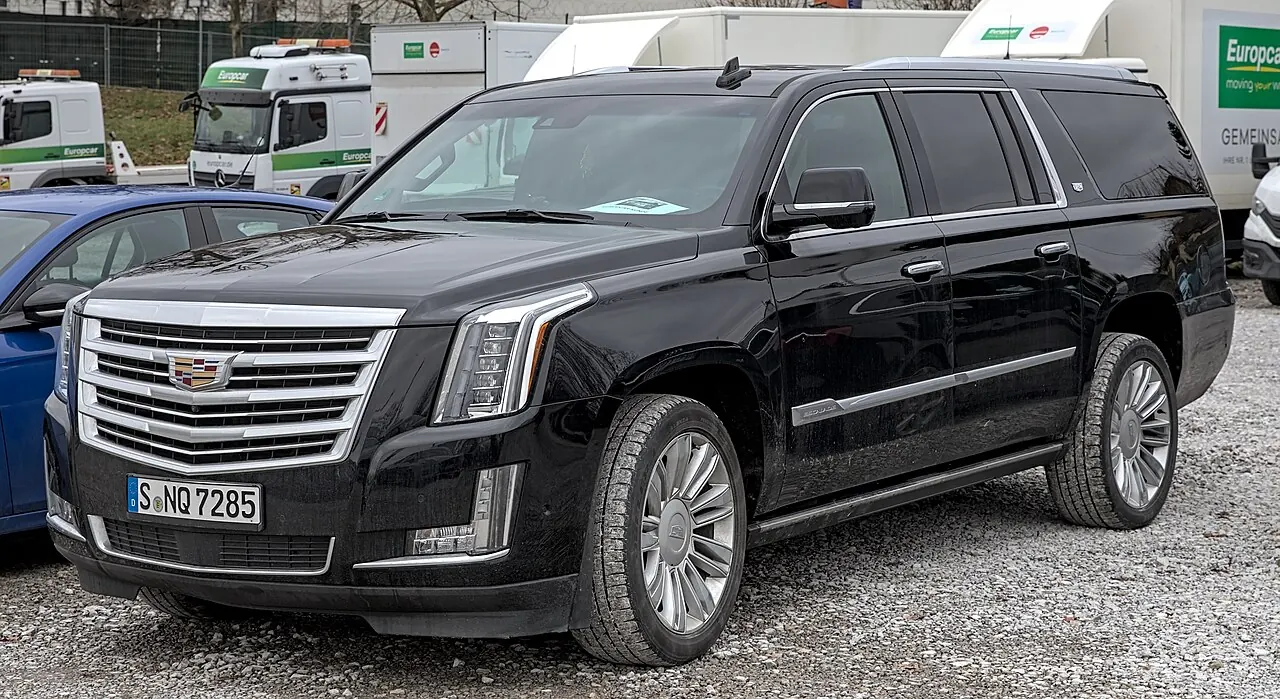
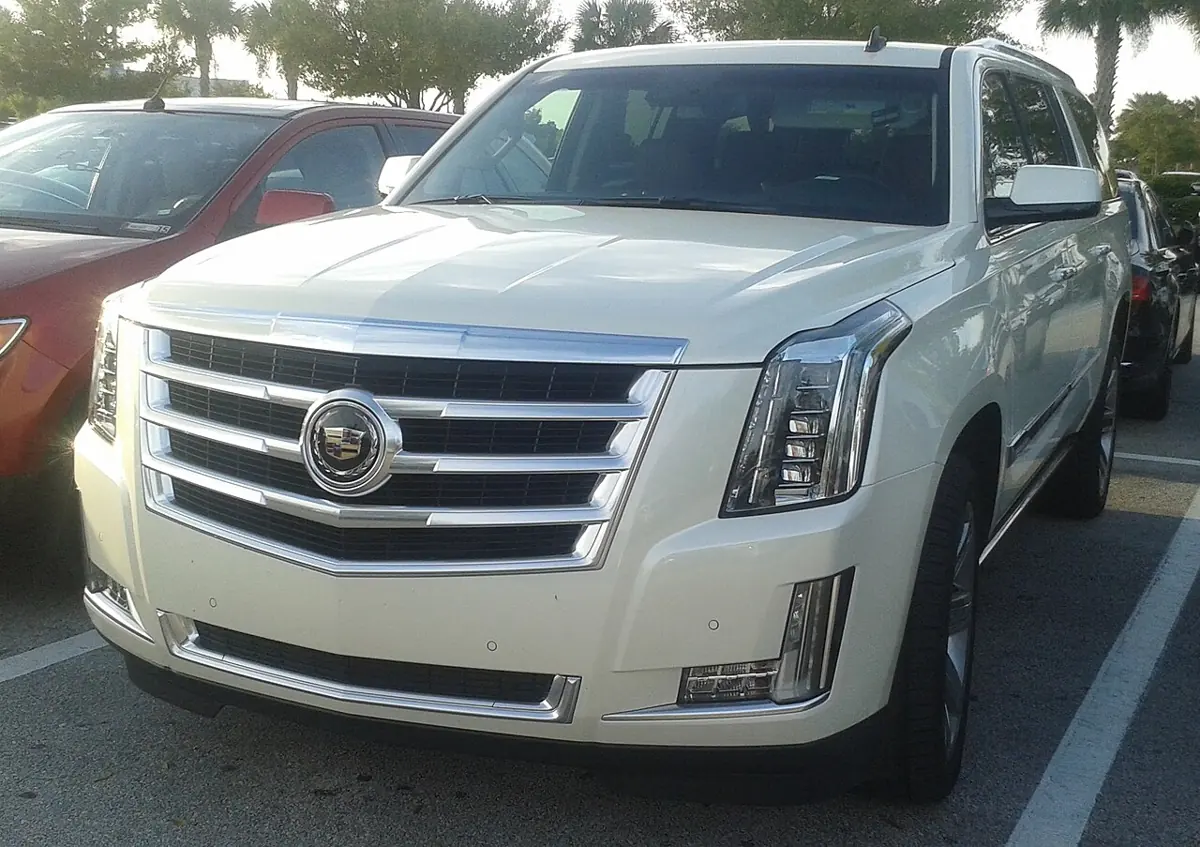
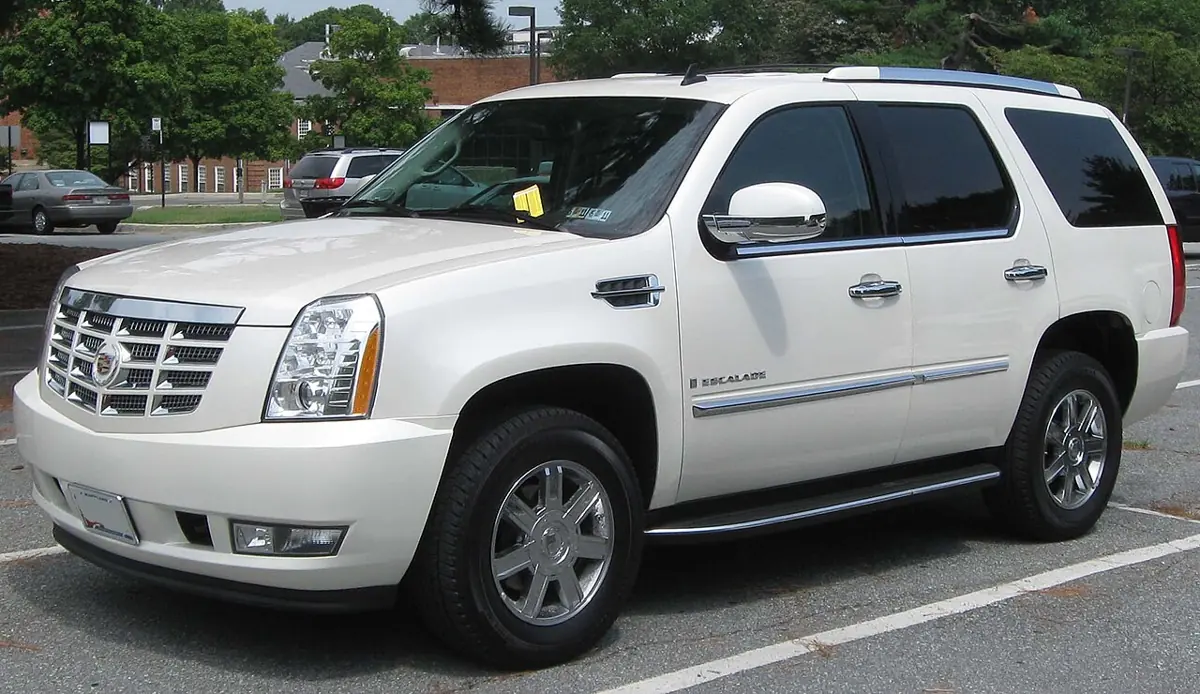
Our three Escalade listings each cover the 6.2L V8. Choose by body style and year, then confirm the engine.
| Listing | Years | Body |
|---|---|---|
| Cadillac Escalade 6.2L AFM/DFM Disabler | 2010-2017 | Standard wheelbase SUV |
| Cadillac Escalade ESV 6.2L AFM/DFM Disabler | 2010-2017 | Long wheelbase SUV |
| Cadillac Escalade EXT 6.2L AFM/DFM Disabler | 2010-2013 | Pickup body (the EXT ended after 2013) |
Each product page asks you to "confirm the listed engine and AFM/DFM configuration before ordering." The easiest way to do that is the vehicle's option label. GM's manuals explain that production options are encoded in the barcode on the certification label on the driver's door pillar, and if there is no large barcode there, the same information is on a label inside the glove box (GM owner's manual insert). Your engine RPO code is on that list. If you are unsure what you are looking at, send us a photo or the VIN.
2018 and newer
These listings stop at 2017. Later Escalades changed transmissions, and GM's service bulletin 21-NA-132 lists the 2021 Escalade with the 6.2L L87 (GM bulletin 21-NA-132), the engine GM's PIP5663 chart shows with Dynamic Fuel Management rather than AFM. Our current Escalade listings do not cover those years. Send us your VIN if you have a later model and we will tell you plainly what, if anything, applies.
Your options, compared
There are four realistic ways to deal with AFM on a 6.2L Escalade. Each one suits a different owner, and the right one depends mostly on whether the engine is healthy.
| Option | What it changes | Reversible | Rough cost | Good fit |
|---|---|---|---|---|
| Leave it stock | Nothing | n/a | None | Healthy engine, owner does not notice AFM |
| Plug-in disabler | Keeps the engine in V8 mode while connected | Unplug | $79.99 | Healthy engine, owner wants V8 mode all the time |
| ECU tune | Can disable AFM in software along with other calibration changes | Only with the stock file saved | Varies by tuner | Owner already planning a tune |
| Mechanical AFM delete | Replaces AFM lifters and related parts with non-AFM hardware, plus a tune | No | A major engine job | Engine already opened up for lifter repair |
The mechanical delete is often discussed as the "permanent fix," and on an engine that already needs lifters it can make sense, because the engine is apart anyway. On a healthy engine, it is a large job to solve a drivability preference. That is the gap a plug-in disabler fills: it changes the behavior without changing hardware.
For a longer comparison of the same choices across GM V8s, see our disabler vs delete vs tune guide.
What the disabler does, and does not
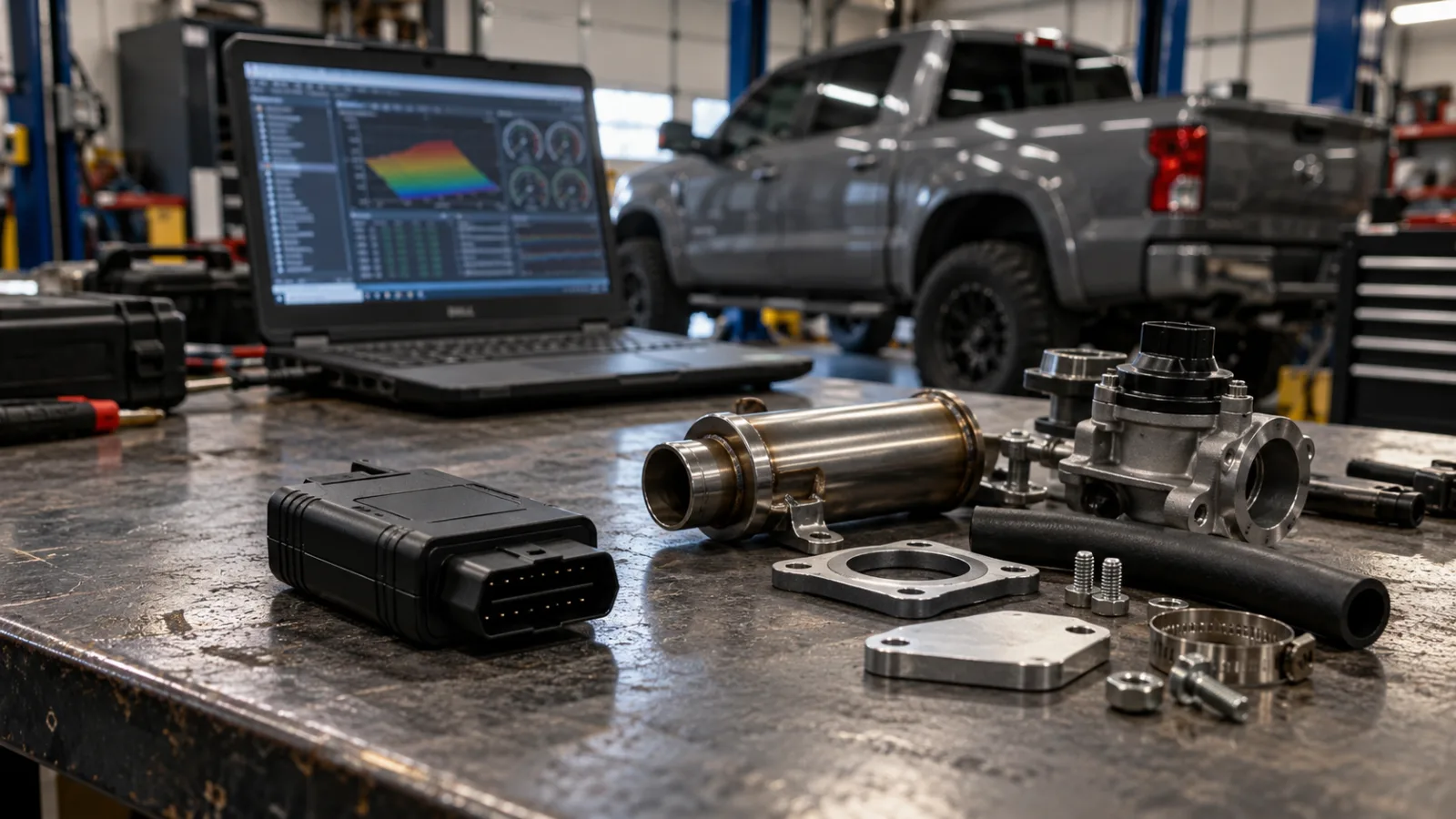
Our Escalade disablers are electronic modules that plug into the factory OBD-II port. While connected, they are designed to prevent AFM cylinder deactivation, so the engine stays in V8 mode. The product pages spell out the limits, and they are worth repeating:
- It does not permanently reflash the factory ECU.
- It is an electronic disabler, not a mechanical AFM delete kit or a performance tuner.
- It does not replace lifters, camshafts, the lifter oil manifold or any other internal engine part.
- Unplugging it returns the engine to factory AFM behavior.
What you notice after installing it
The engine stays on all eight cylinders. At steady highway speed, the four-cylinder mode no longer happens, so any change in sound or feel that came with it goes away. Fuel economy drops somewhat, mainly on the highway, because the engine no longer has its light-load mode. How much depends on how you drive; light-throttle highway cruising is where AFM does most of its work, so it is where you give up the most.
What it will not do
It will not repair a lifter that has already collapsed, stop a tick that is already there, or clear a misfire code caused by a mechanical fault. Owners sometimes hope a disabler will "protect" a failing lifter. We are not going to promise that. GM's bulletin describes the failures as mechanical, and our advice is the same as a good technician's: if there is a symptom, diagnose it.
Buying a used 2010-2017 Escalade
Many of our Escalade customers bought the vehicle used. If you are shopping for one now, a little homework on the engine is worth more than any accessory.
- Listen to a cold start. Ask the seller not to warm the engine before you arrive. A tick that fades as the engine warms is still worth asking about.
- Scan for codes, including history. A P0300 or a single-cylinder misfire code in history on cylinders 1, 7, 6 or 4 is a reason to look closer.
- Ask for the oil change records. Regular changes on time count for more on an AFM engine than a fresh detail job.
- Ask whether the lifters or camshaft have been replaced. A documented repair under GM's bulletin is not a bad sign. It means the known issue was dealt with properly.
- Drive it on the highway. At a steady light throttle, the engine should switch modes smoothly. Shaking, a misfire or a check engine light during that drive tells you a lot.
If the engine passes those checks and you want it in V8 mode all the time, the disabler is a simple add-on after purchase. If it fails them, price the repair into the deal.
If a lifter has already failed
It helps to know what a lifter repair involves, so you can judge a quote. GM's bulletin calls for replacing the valve lifter oil manifold and the affected bank of AFM lifters when a valve is not moving, replacing the lifter guides any time a lifter is replaced, and replacing the camshaft and lifters if there is excessive wear on the lobes or rollers (GM bulletin 15-06-01-002N). On these small-block V8s, getting to the lifters typically means removing the intake and the cylinder heads, so it is a significant labor job even when the parts are not expensive.
That is also the point at which some owners choose a mechanical AFM delete, since the engine is already apart. Others replace the AFM parts with new factory parts and keep the system. Either is a valid repair. A plug-in disabler is not a substitute for either one once a part has failed.
Installation and removal
- With the vehicle off, find the OBD-II port under the driver's side of the dash.
- Plug the module in firmly.
- Start the engine. Some listings note the module needs a short time to initialize; follow the instructions in the box.
- Drive normally.
To remove it, switch the vehicle off and unplug it. Do that before any dealer visit, diagnostic work or emissions inspection, because those all use the same port. It is also good practice to unplug it if you sell the vehicle, or to tell the buyer what it is.
Long-term ownership notes
Escalades of this generation are often on their second or third owner and well into six-figure mileage. A few habits matter more on these engines than the AFM question itself.
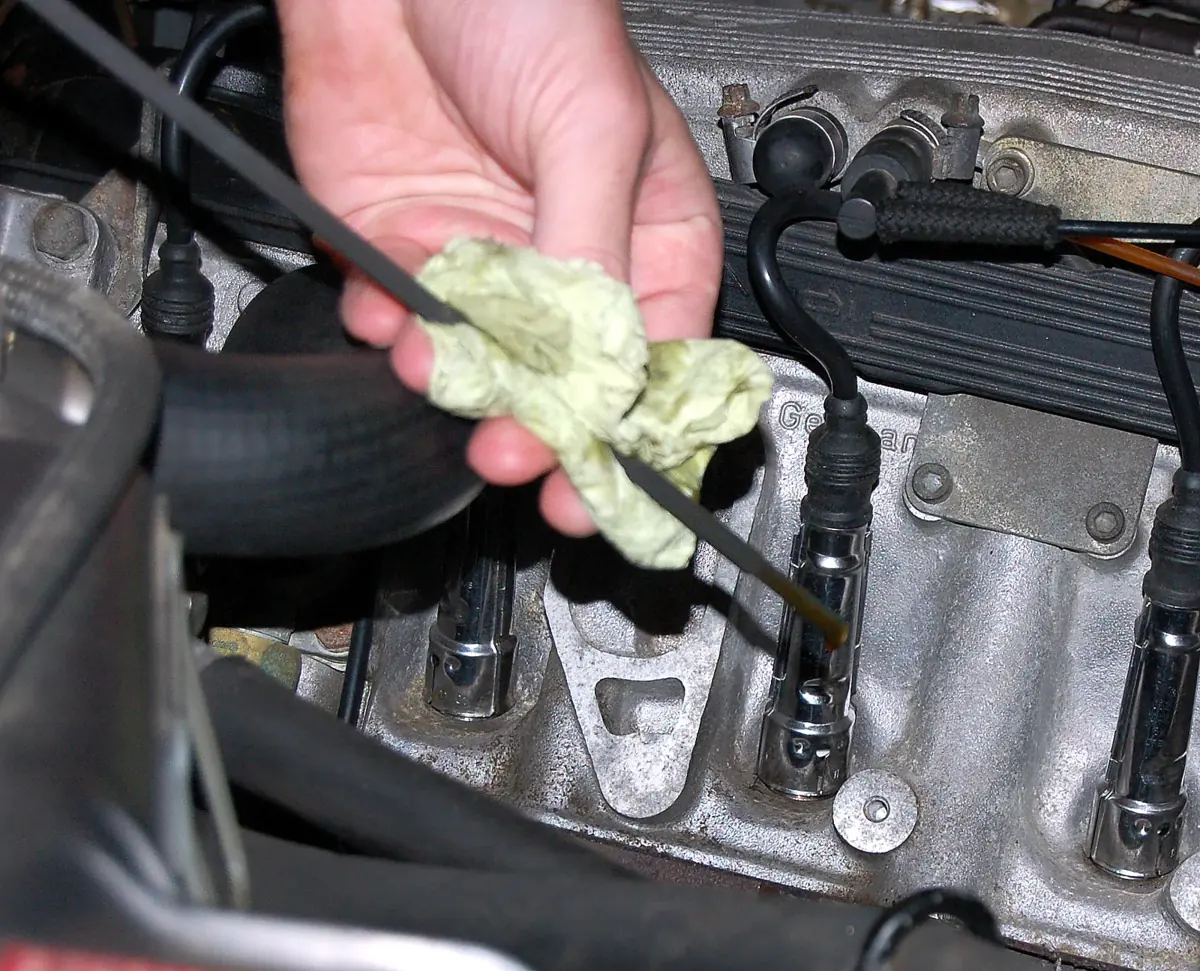
- Oil quality and level. GM's bulletin names oil aeration as a cause of lifter locking pin damage. Keep the level correct and change oil on time, more often if the vehicle tows or does mostly short trips.
- Listen to the engine. A new tick is worth investigating early. Caught early, a lifter problem is still a repair; ignored, it can damage the camshaft.
- Keep records. Oil change receipts and any diagnosis reports help if you ever need to discuss a repair, and help the next owner.
- Unplug before service. Any plug-in device should come out before a technician connects a scan tool.
General information, not legal advice. Warranty coverage on any vehicle depends on its terms and the facts of a claim. If your Escalade is still under any warranty or service contract, ask the provider directly before installing aftermarket devices.
Frequently asked questions
Which cylinders does AFM shut down on the Escalade 6.2L?
Cylinders 1, 7, 6 and 4, according to GM's PIP5663. The engine runs on all eight at start-up, idle and medium to heavy throttle.
Is the Escalade 6.2L AFM or DFM?
For the 2015-2019 L86, GM's own chart lists AFM with four-cylinder deactivation and a valve lifter oil manifold, and no DFM.
Will a disabler stop lifter failure?
We do not claim that. GM describes collapsed, stuck and pin-damaged lifters as mechanical faults that need mechanical repair. A disabler changes how often AFM runs; it does not repair hardware.
My Escalade ticks and has a P0300. Should I install a disabler?
No. Diagnose first. GM bulletin 15-06-01-002N links that symptom to AFM lifter problems among other causes, and the repair is mechanical.
Does it change horsepower?
No. It keeps the engine in V8 mode. It is not a tuner and does not change the calibration.
Which listing for an ESV?
The Escalade ESV 2010-2017 listing. The standard Escalade and the EXT each have their own listing.
Does it fit a 2018 or 2021 Escalade?
Not our current listings, which stop at 2017. The 2021 generation uses Dynamic Fuel Management. Send us the VIN.
Should I remove it for an emissions test?
Yes. Inspection equipment connects to the OBD-II port, so unplug the module first.
Do 2010 to 2014 Escalades have the same lifter problem?
NHTSA holds very few lifter reports for those years. The AFM lifters work the same way, so the same care applies: correct oil, changed on time, and a quick diagnosis for any new tick or misfire code.
How much fuel does keeping an Escalade in V8 mode cost?
Fueleconomy.gov puts cylinder deactivation at up to 5 percent. At 15,000 miles a year and 16 mpg, that worst case is about 49 gallons, or roughly $173 at $3.50 a gallon.
Which Escalade years have the most lifter complaints?
In NHTSA data, lifter reports are rare for 2010 to 2014 and start with the 2015 model year, the first year of the 6.2L L86 that GM's bulletin covers.
What does an Escalade lifter repair cost?
Owners report anywhere from about $4,000 for one bank to $12,000 or more when the camshaft is involved. The amount depends on what is found once the engine is opened.
Sources
Every outside figure in this article links to one of these sources. Store experience is described in general terms only.
- GM PIP5663, Information on AFM DFM usage (via NHTSA) · Cylinders 1, 7, 6, 4; AFM vs DFM; Escalade L86 chart
- GM Service Bulletin 15-06-01-002N (via NHTSA) · AFM lifter faults, P0300, repair guidance
- GM Service Bulletin 21-NA-132 (via NHTSA) · 2021 Escalade 6.2L L87
- GM 2021 owner's manual insert (trucks and SUVs) · Option label location
- NHTSA complaint data, 2010-2020 Cadillac Escalade · Lifter and AFM reports, owner-reported costs
- Fueleconomy.gov, advanced engine technologies · Cylinder deactivation up to 5 percent
- Fueleconomy.gov, 2010 and 2015 Escalade ratings · EPA city, highway and combined mpg
Next steps
Healthy engine and ready to order?
- 2010-2017 Cadillac Escalade 6.2L disabler
- 2010-2017 Cadillac Escalade ESV 6.2L disabler
- 2010-2013 Cadillac Escalade EXT 6.2L disabler
- All Cadillac AFM and DFM disablers
Have a tick, a misfire or a check engine light? Start with our lifter failure symptoms guide before buying anything.