P0300 is one of the most frustrating codes a GM V8 owner can get, because it does not point anywhere. It means the engine computer has seen misfires, but not consistently on one cylinder. The obvious next question is "which part do I replace?", and the honest answer is that nobody can tell you that from the code alone.
What you can do is work through the possible causes in a sensible order, cheapest and most likely first, and stop as soon as the evidence points somewhere. This guide sets out that order for GM's 5.3L and 6.2L V8s with Active Fuel Management, where one of the possible causes is a failed AFM lifter. It uses GM's own service bulletin for that failure, GM's owner's manual advice for the check engine light and fuel, and the practical tests a good technician runs before buying parts. It also explains where an AFM disabler fits, and why it is not a cure for a misfire that is already there.
Key Takeaways
The short version, before the detail.
| Question | Short answer |
|---|---|
| What does P0300 mean? | Random or multiple-cylinder misfire. The engine computer has detected misfires that are not confined to a single cylinder. |
| Is it safe to drive? | A steady light means get it diagnosed soon. A flashing light means a misfire that could damage the emission system: GM says reduce speed, avoid hard acceleration, and if it keeps flashing, park and get service. |
| Can AFM cause P0300? | Yes. GM bulletin 15-06-01-002N lists a collapsed or stuck AFM lifter as a cause of P0300 with a tick noise on 2014-2020 5.3L and 6.2L V8s. |
| What should I check first? | Per-cylinder misfire counts, then spark plugs and coils, then fuel and vacuum leaks, then mechanical tests. |
| Does an AFM disabler fix a misfire? | No. It keeps the engine in V8 mode. It does not repair a lifter, coil or injector that has already failed. |
| When is it a shop job? | Once ignition and fuel are ruled out and the evidence points to the valvetrain. Lifter replacement on these engines means removing the cylinder heads. |
What P0300 is telling you
Every gasoline engine sold in the US has an on-board diagnostic system that watches for misfires, because a misfiring cylinder sends unburned fuel into the exhaust and the catalytic converter. When the engine computer sees misfires on one cylinder, it sets a code that names it: P0301 for cylinder 1, P0302 for cylinder 2, and so on up to P0308 on a V8. When it sees misfires spread across more than one cylinder, or cannot pin them to one, it sets P0300.
That difference changes how you diagnose it. A code that names one cylinder sends you to that cylinder: its plug, its coil, its injector, its valves. A code that names no cylinder usually points to something shared, such as fuel quality, fuel pressure, a vacuum leak, or a mechanical problem that moves around. It can also be several individual problems at once, or a single failing cylinder that the computer has trouble identifying.
The steady light and the flashing light
GM's owner's manuals draw a clear line between the two. If the check engine light is on steady, "a malfunction has been detected. Diagnosis and service may be required." If it is flashing, "a malfunction has been detected that could damage the emission control system and increase vehicle emissions." GM's instructions for a flashing light are to "reduce vehicle speed and avoid hard accelerations and uphill grades," reduce any trailer load as soon as possible, and if it keeps flashing, "find a safe place to park," turn the vehicle off, wait at least 10 seconds and restart. If it is still flashing, see a dealer as soon as possible (2021 Tahoe/Suburban owner's manual).
A flashing light on a P0300 is the engine telling you the misfire is bad enough to hurt the converter. Do not keep towing or climbing on it, and do not keep clearing the code to make the light go away.
The diagnosis order
Here is the order we suggest, and the reason for it. Each step is cheaper and more likely than the next, and each one either finds the problem or rules out a whole group of causes.
| Step | What you check | What it rules in or out | Who can do it |
|---|---|---|---|
| 1 | Read the codes, freeze frame and per-cylinder misfire counts | Which cylinders are actually misfiring, and when | Owner with a capable scan tool |
| 2 | Spark plugs and ignition coils | The ignition side | Owner, usually |
| 3 | Fuel quality, fuel trims and vacuum leaks | Fuel and air delivery | Owner with a scan tool, or a shop |
| 4 | Injectors and fuel pressure | Fuel delivery under load | Shop, usually |
| 5 | Compression, leak-down and valve movement | Mechanical causes, including AFM lifters | Shop |
The common mistake is to skip to step 5 because the engine has AFM and the internet says AFM lifters fail. They do fail, and GM has a bulletin for it, but a $15 spark plug or a cracked vacuum hose can set the same code. Ruling those out first costs very little and saves a lot of money when the answer turns out to be simple.
Step 1: get the real data
The code alone is not enough. Before touching any parts, collect three things.
- Every stored code, not just P0300. A P0300 alongside a single-cylinder code such as P0304 is a much stronger lead. Lean codes, fuel system codes or camshaft and crankshaft sensor codes change the direction completely.
- The freeze frame data. This is a snapshot of conditions when the code set: engine speed, load, coolant temperature, vehicle speed. A misfire that set at idle on a cold engine is a different story from one that set at 70 mph uphill.
- Per-cylinder misfire counts. Many scan tools, and some phone apps paired with an OBD-II adapter, can show how many misfires each cylinder has logged. This is the most useful number in the whole diagnosis, because it turns a random code into a list of specific cylinders.
Write it all down before you clear anything. Once the codes are cleared, the freeze frame goes with them, and the next technician has to start from scratch.
Reading the cylinder pattern
On these engines the cylinder numbers matter. GM's information bulletin PIP5663 explains that in light-load driving the engine control module turns the cylinder deactivation system on "to deactivate engine cylinders 1, 7, 6, and 4, switching to a V4 mode" (GM PIP5663). Those four are the cylinders with AFM lifters. That gives you a useful filter:
| Misfire counts mostly on | Points toward |
|---|---|
| One or more of cylinders 1, 4, 6 and 7, plus a tick | The AFM lifters are worth a closer look, but rule out ignition first |
| Cylinders 2, 3, 5 or 8 | Not the AFM lifters, which are not in those cylinders |
| All eight, fairly evenly | Something shared: fuel quality, fuel pressure, a vacuum leak, a sensor |
| One cylinder, much higher than the rest | A problem specific to that cylinder: plug, coil, injector or valve |
This is a filter, not a verdict. An AFM cylinder can still misfire because of a bad plug. But a P0300 whose counts sit entirely on cylinders 3 and 5 is not an AFM lifter problem, and that alone can save an owner from an expensive mistake.
Step 2: spark plugs and coils
Ignition parts are the cheapest place to start and a very common cause. Plugs wear, coils crack and fail with heat, and boots get damaged when plugs are changed.
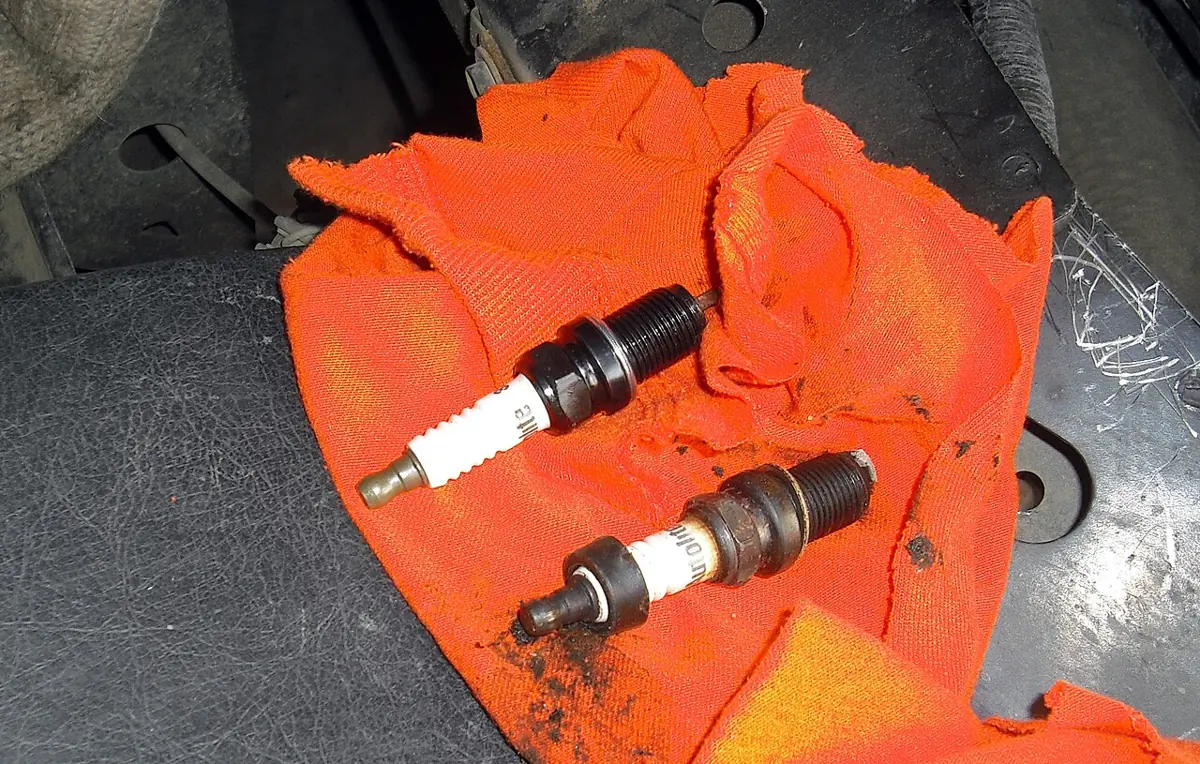
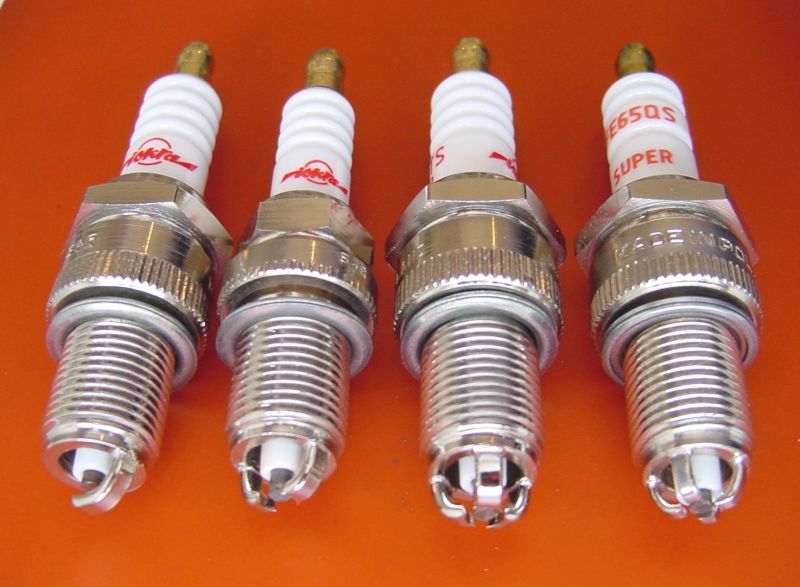
Read the plugs
Pull the plugs from the misfiring cylinders, and a couple from cylinders that are not misfiring for comparison. What they look like tells you a lot:
- Worn electrodes or a widened gap point to plugs that are simply due. GM's maintenance schedule lists a spark plug replacement interval for these engines; check where your vehicle is against it.
- Wet, oily deposits point to oil getting into the cylinder. Tell your technician, because oil getting past the rings or valve seals is a separate problem with its own tests.
- Heavy black, dry soot points to a rich mixture.
- Blistered or very white insulators point to overheating or a lean mixture.
- A cracked insulator or a carbon track on the boot points to a spark leaking to ground.
As an example of how specific GM is, the 2021 Tahoe manual gives the spark plug gap for its 5.3L L84 and 6.2L L87 as 0.95 to 1.10 mm (0.037 to 0.043 in), and GM notes that "re-gapping the spark plug is not recommended and can damage the spark plug" (2021 Tahoe/Suburban owner's manual). Use the plug listed for your engine and check the gap without bending the electrode. Photograph the old plugs in cylinder order before you clean or discard them.
The coil swap test
If the counts point at one or two cylinders, move the coil from a misfiring cylinder to a cylinder with no misfires. Clear the counts, drive the vehicle under the same conditions that caused the misfire, and check again.
- If the misfire moves with the coil, the coil is the problem.
- If the misfire stays in the same cylinder, the coil is fine. Stop buying coils and move on.
- If you replaced plugs and the misfire stays, the plug was not it either.
This test costs nothing but time, and it is the single most useful thing an owner can do before spending money. It works the same way with plugs, and on many engines with injectors, though injector swapping is more work.
Step 3: fuel quality, fuel trims and vacuum leaks
If the misfires are spread across most cylinders, look at what all the cylinders share.
Fuel quality
GM's manual says that "poor fuel quality can cause inefficient engine operation and poor driveability, which may go away once the engine is warmed up. If this occurs, change the fuel brand. It may require at least one full tank of the proper fuel to turn the light off" (2021 Tahoe/Suburban owner's manual). If the misfire started right after a fill-up, especially somewhere unfamiliar, the cheapest test is to run the tank low and refill with a good brand.
GM also recommends TOP TIER detergent gasoline "to keep the engine clean, reduce engine deposits, and maintain optimal vehicle performance" (GM; list of brands at toptiergas.com). Deposits on injectors and intake valves build slowly and can contribute to misfires on high-mileage engines.
Fuel trims
Short-term and long-term fuel trims show how much the engine computer is adding or removing fuel to keep the mixture right. Large positive trims on both banks mean the engine is lean, which points to unmetered air (a vacuum leak), low fuel pressure, or a dirty mass airflow sensor. Large positive trims on only one bank point to something on that side, such as an intake gasket or injector problem. Note the trims at idle and at a steady 2,500 rpm. A vacuum leak usually shows larger trims at idle that shrink as engine speed rises.
Vacuum leaks
A cracked PCV hose, a split intake boot, a leaking intake manifold gasket or a brake booster hose can let in enough air to cause lean misfires on several cylinders. A smoke test is the reliable way to find one, and most shops can do it quickly. Listening for a hiss with the engine idling sometimes finds the obvious ones.
Step 4: injectors and fuel pressure
If the trims point to fuel delivery, or the misfire gets worse under load and heat, the next checks are fuel pressure and injector function. These are usually shop tests on the direct-injected 5.3L and 6.2L engines, because they run very high fuel pressure and need the right equipment.
A technician will look at fuel rail pressure against the commanded value, especially under load, and test or compare injectors on the misfiring cylinders. A weak or sticking injector usually causes a misfire on one cylinder rather than a random pattern, but low pressure affects all of them. GM's lifter bulletin lists new high-pressure fuel feed pipes among the parts for the lifter repair, because they have to be removed to get the job done (GM bulletin 15-06-01-002N). That is a reminder of how much of the top of the engine comes off for a lifter job, which is the subject of the next step.
Step 5: the mechanical layer and AFM lifters
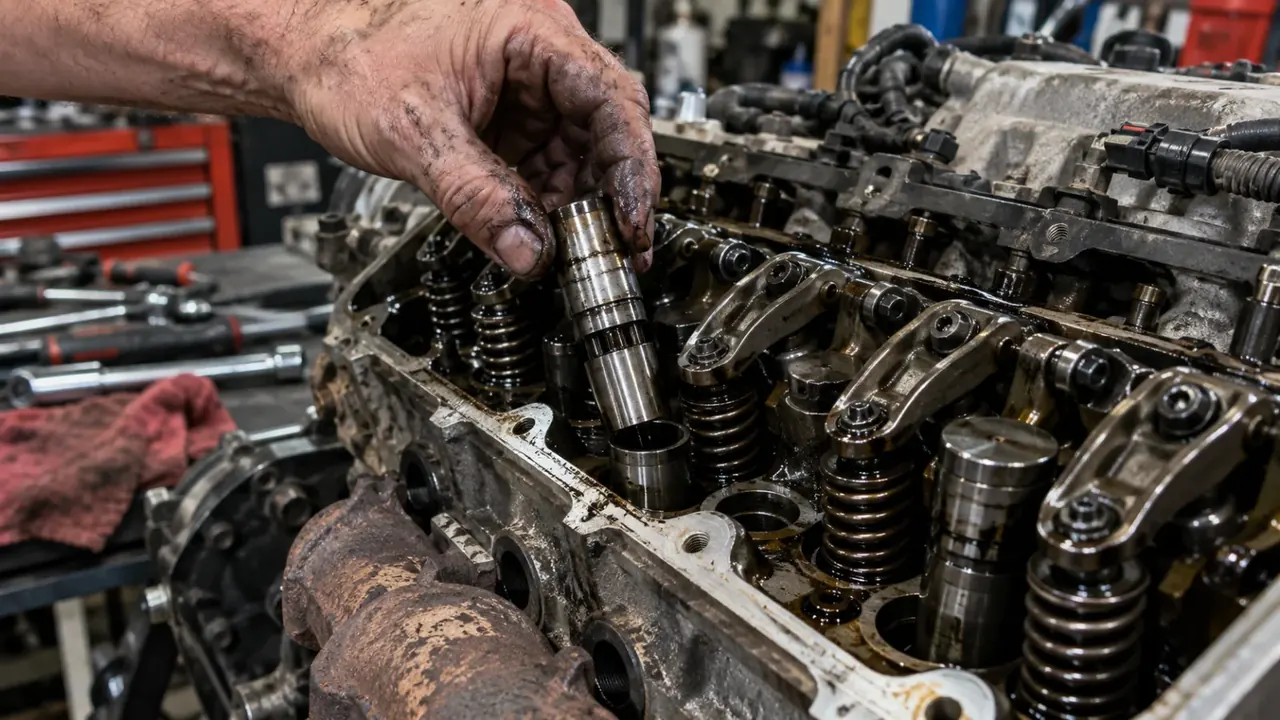
When ignition and fuel check out and the misfire is still there, the cause is likely mechanical: a valve that is not opening fully, a lifter that has failed, a bent pushrod, or a compression problem.
What GM's bulletin says
GM's service bulletin 15-06-01-002N is titled "Engine Misfire/Tick Noise, Malfunction Indicator Lamp (MIL) Illuminated - DTC P0300 Set." It covers a wide range of 2014-2020 GM trucks, SUVs and performance cars with the 5.3L (L83, L8B) and 6.2L (L86, LT1, LT4) engines, including the Tahoe, Suburban, Yukon, Yukon XL, Escalade, Sierra, Camaro and Corvette. It lists the possible causes as:
- An AFM lifter that is mechanically collapsed and/or stuck all of the time.
- Internal locking pin damage in the lifter, due to oil aeration.
- A lifter that has collapsed and is stuck in the lifter bore.
- A bent pushrod.
The bulletin tells technicians to inspect for valve operation if normal diagnosis does not isolate the cause. If valves are not moving, the repair is to replace the valve lifter oil manifold and the affected bank of AFM lifters. "Any time a lifter is replaced, the lifter guide(s) must also be replaced," and if the camshaft lobes or lifter rollers show excessive wear, the camshaft and lifters are replaced too. GM adds that "it is not necessary to replace the engine assembly" in that case (GM bulletin 15-06-01-002N).
What the shop will do
To confirm a lifter or valve problem, a technician typically runs a compression test or a relative compression test, follows with a leak-down test on any low cylinder, and may check valve movement by watching the rocker arms with the valve covers off. A cylinder whose intake or exhaust valve is not opening shows up clearly in these tests. A tick at idle that is loudest over one bank is a supporting clue, not proof.
What the repair involves
The parts list in GM's bulletin includes cylinder head gaskets and head bolts, along with the lifter guides, the valve lifter oil manifold and the fuel feed pipes (GM bulletin 15-06-01-002N). On these engines, replacing lifters means taking off the intake and the cylinder heads. That makes it a major labor job even when the parts are not expensive, and it is why the diagnosis steps above are worth doing properly before anyone recommends it.
When the engine is apart that far, some owners choose to replace all the lifters rather than one bank, and some choose a mechanical AFM delete. Those are decisions to make with your technician, based on mileage, how long you plan to keep the vehicle, and the condition of the camshaft.
Is it the AFM system or not?
This table pulls the clues together. Use it to decide where to look next, not as a diagnosis on its own.
| What you notice | More likely | Less likely |
|---|---|---|
| Misfire counts on cylinders 1, 4, 6 or 7 with a tick at idle | AFM lifter or valvetrain | A shared fuel problem |
| Misfire on cylinders 2, 3, 5 or 8 only | Ignition, injector or valve on that cylinder | AFM lifters |
| Misfire moves when you swap the coil | The coil | Anything mechanical |
| Misfires on all cylinders right after a fill-up | Fuel quality | A lifter |
| Large positive fuel trims at idle on both banks | A vacuum leak or fuel delivery | Ignition |
| Misfire only on a cold start, gone when warm | Ignition, injectors, fuel quality, sometimes a lifter | A failed lifter that stays collapsed |
| Flashing check engine light under load | A serious misfire of any cause | Nothing; slow down and get it checked |
Where an AFM disabler fits
An AFM disabler keeps the engine in V8 mode by stopping the engine computer from commanding cylinder deactivation. That is all it does. It does not reprogram the engine, it plugs into the OBD-II port, and it unplugs to return to stock.
It is important to be clear about what that means for a misfire:
- It does not repair a failed lifter. A collapsed or stuck lifter needs to be replaced. Keeping the engine in V8 mode will not bring it back.
- It does not cure an ignition or fuel misfire. If the problem is a coil, plug, injector or vacuum leak, fix that.
- It does not turn off the check engine light. The light reflects what the engine computer is detecting. Only fixing the cause does that honestly.
- It can be part of a plan for a healthy engine. Many owners with a sound engine, or an engine that has just been repaired, choose to keep it in V8 mode all the time. That is a choice about how the engine operates from here on, not a repair.
The order matters. If you have an active P0300, diagnose and fix it first. Then, if you want the engine in V8 mode, choose the disabler for your vehicle. Popular listings include the Chevrolet Tahoe AFM disabler, the Suburban AFM disabler, the GMC Sierra 1500 AFM disabler, the GMC Yukon AFM disabler and the Cadillac Escalade AFM disabler. The full range is in the AFM, DFM and VCM disabler aisle.
What you can do yourself, and where a shop takes over
| Step | Owner-friendly? | Notes |
|---|---|---|
| Scan codes, freeze frame, misfire counts | Yes | Needs a scan tool or app that reads per-cylinder counts |
| Plugs and coils, coil swap test | Usually | Use the correct plug and do not re-gap it |
| Fuel quality | Yes | Run the tank down and refill with a good brand |
| Fuel trims and vacuum leaks | Partly | Trims need a scan tool; a smoke test is a shop job |
| Fuel pressure and injectors | Usually a shop | High-pressure direct injection system |
| Compression, leak-down, valve movement | Shop | Confirms a mechanical cause |
| Lifter or camshaft replacement | Shop | Cylinder heads come off |
Before you approve a lifter job, ask the shop what tests confirmed it, which cylinders are affected, whether they will inspect the camshaft, and whether they will replace the lifter guides as GM's bulletin requires. A good shop will be glad you asked.
P0300 and an emissions inspection
If you live where vehicles are inspected through the diagnostic port, a misfire code has a direct effect on the test. EPA's guidance for state inspection programs, EPA420-R-01-015, sets out the logic most programs follow (EPA420-R-01-015):
| At the inspection | Result under EPA's guidance |
|---|---|
| Check engine light lit or flashing with the engine running | Fail |
| A code stored with the light commanded on, even if the bulb is not lit | Fail |
| A code stored but the light not commanded on (a pending code) | Not a fail; pending codes often clear on their own |
| More readiness monitors "not ready" than allowed (on 2001 and newer vehicles, more than one) | Rejected until the vehicle has been driven enough to run them |
Misfire detection is one of the three continuous monitors, along with fuel trim and comprehensive components. EPA's guidance says these continuous monitors should always show as ready and should not count toward readiness. A misfire code with the light on still fails the vehicle.
Proving the repair
The same guidance has a detail that matters after a misfire repair. When a vehicle fails only for codes from the continuous monitors, EPA advises technicians not to clear the codes with a scan tool. Instead, the system should detect the repair and reset itself, which EPA says should happen naturally after three key-on, key-off cycles if the repair was done correctly. Clearing codes resets every monitor to "not ready," and the catalyst, oxygen sensor and evaporative monitors can then take days of driving to run again. EPA's general advice is to allow about a week of normal driving between a repair and a retest.
In practice, after plugs, a coil or a lifter repair:
- Leave the code alone and drive normally for a few days, including a cold start and a warm cruise.
- Watch the per-cylinder misfire counts on your scan tool. They should stay at or near zero on the cylinders that were misfiring.
- Confirm the check engine light has gone out on its own and no new code is pending.
- If a shop cleared the codes anyway, check that the readiness monitors are set before you book the inspection.
Inspection rules are set by each state, so check your own program's requirements before the test.
Further reading
Our AFM lifter failure symptoms guide starts from what you hear and feel rather than the code. Does changing oil more often save your lifters? covers the maintenance side, and disabler vs. delete vs. tune compares the options for keeping an engine in V8 mode. Escalade owners should also read our Escalade 6.2L AFM guide.
Frequently asked questions
Can bad gas cause P0300?
Yes. GM says poor fuel quality can cause poor driveability and that it may take at least one full tank of good fuel for the light to go off. If it started right after a fill-up, try that first.
Can I keep driving with P0300?
With a steady light, drive gently and get it diagnosed soon. With a flashing light, GM says reduce speed, avoid hard acceleration and grades, and if it keeps flashing, park and get service.
Will clearing the code fix it?
No. The light comes back if the misfire continues, and clearing it erases the freeze frame data a technician needs.
Which cylinders does AFM affect?
GM's PIP5663 lists cylinders 1, 7, 6 and 4 as the cylinders the system deactivates in V4 mode.
Does an AFM disabler fix a misfire?
No. It keeps the engine in V8 mode. A failed lifter, coil, plug or injector still has to be repaired.
Does every AFM engine get P0300 eventually?
No. GM's bulletin describes a known failure on certain engines, but many AFM engines run their whole lives without it.
Do I need a scan tool?
For a proper diagnosis, yes. You need per-cylinder misfire counts and fuel trims. A basic code reader only shows the code.
How big a job is replacing AFM lifters?
Large. GM's parts list includes head gaskets and head bolts, because the cylinder heads come off. Confirm the diagnosis before you approve it.
Will P0300 fail an emissions inspection?
In programs that follow EPA's guidance, yes, if the check engine light is commanded on. A pending code with the light off is not a fail.
Should I clear the code after fixing a misfire?
EPA's inspection guidance advises against it when only continuous monitor codes such as misfire are set. A correct repair should let the system reset itself after about three key cycles, and the other monitors stay ready.
Sources
Every outside figure in this article links to one of these sources. Store experience is described in general terms only.
- GM Service Bulletin 15-06-01-002N (via NHTSA) · P0300 with tick noise, lifter causes, repair and parts list, affected models
- GM PIP5663, information on AFM and DFM usage (via NHTSA) · AFM deactivates cylinders 1, 7, 6 and 4
- 2021 Chevrolet Tahoe/Suburban owner's manual (GM) · Check engine light steady vs. flashing, fuel quality, TOP TIER, spark plug gap
- TOP TIER Detergent Gasoline · List of TOP TIER gasoline brands
- EPA420-R-01-015, OBD checks in inspection and maintenance programs · Pass, fail and rejection criteria; continuous monitors; three key cycles; a week of driving
Next steps
If your engine is healthy, or newly repaired, and you want it in V8 mode all the time, browse the AFM, DFM and VCM disabler aisle or go straight to the Tahoe, Suburban, Sierra 1500, Yukon or Escalade listing. Not sure which fits? Send us the VIN and we will confirm before you order.