"Will this fit my truck?" is the most common question we get, and the honest answer is usually "send us your VIN." Model names alone are not enough. A Silverado 1500 from 2014 could have one of several engines, and parts, fluids, service bulletins and electronic modules often depend on which one is under your hood.
The good news is that your vehicle tells you exactly what it has, if you know where to look. This guide shows you how to read the two characters in a GM VIN that matter most, where to find the Service Parts Identification label with GM's three-character RPO codes, and how to use NHTSA's free online decoder to double-check. It takes about five minutes and saves a lot of returns.
Key Takeaways
The 10th character of your VIN is the model year, and on GM trucks and SUVs the 8th character is the engine code. Confirm the engine with NHTSA's free VIN decoder using all 17 characters, then check the three-character RPO codes on the Service Parts Identification label, usually in the glove box. Between the two, you will know exactly which engine you have.
| Question | Short answer |
|---|---|
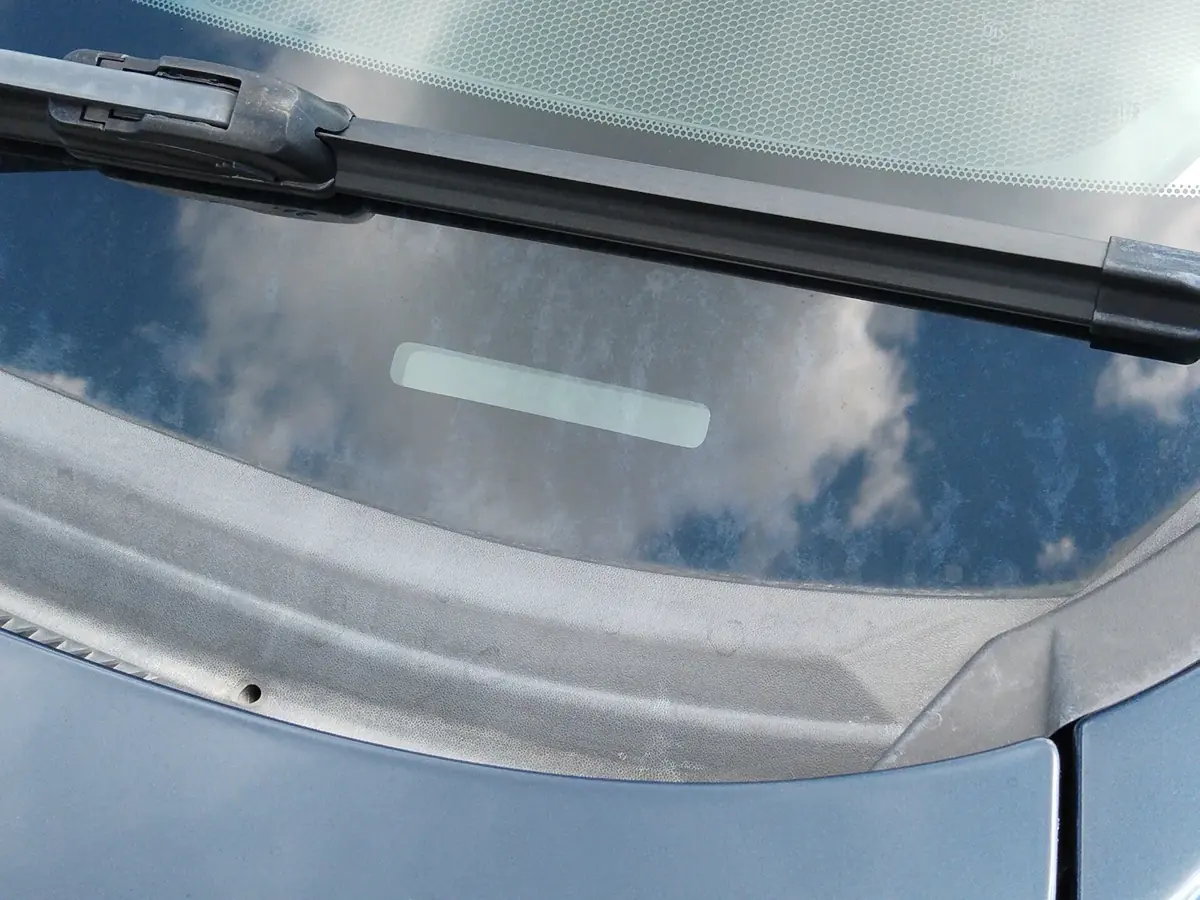
| Where is the VIN? | On a plate visible through the windshield at the driver's side, on the door jamb label, and on your registration and insurance card. |
| Which character is the model year? | The 10th. Federal rules (49 CFR 565.15) set the codes; for example, 7 is 2007, A is 2010, E is 2014 and J is 2018. |
| Which character is the engine? | On GM trucks and SUVs, the 8th character is the engine code. Its meaning depends on the model year, so decode the full VIN rather than guessing. |
| What is an RPO code? | A three-character Regular Production Option code GM uses to identify factory equipment. Engine codes include LMG, LC9, L83 and LV3. |
| Where is the RPO label? | On most GM trucks and SUVs of this era, inside the glove box door or on the glove box lid. |
Why the exact engine matters
GM sold many of its full-size trucks and SUVs with a choice of engines in the same model year. They look identical from the outside and often share a badge, but they differ in ways that matter when you buy parts or follow a service bulletin.
- Service bulletins are written by engine code. GM bulletin 10-06-01-008M on AFM oil consumption lists the affected engines by RPO code, not by model name. Bulletin 18-NA-355 on torque converter shudder lists engines and transmission codes.
- Parts catalogs are organized by engine. Spark plugs, gaskets, sensors, filters and lifters often differ between engines in the same truck.
- Electronic modules depend on configuration. AFM disablers, tuners and other plug-in devices are matched to the engine and the vehicle's electronics.
- Used-vehicle shopping. A seller's "5.3" may or may not be right, and the engine generation affects which known issues apply.
A wrong guess means the wrong part, a return, and a truck that is down longer than it needs to be. Five minutes with the VIN avoids that.
Where to find your VIN
Federal rules require the VIN to be readable from outside the vehicle through the windshield, on the driver's side. The regulation, 49 CFR Part 565, says the VIN must be 17 characters long and that it can only use the letters A to Z (except I, O and Q) and the numbers 0 to 9. That last rule is handy: if you think you see an O, it is a zero.
| Location | What to look for |
|---|---|
| Base of the windshield, driver's side | A metal plate visible from outside the vehicle |
| Driver's door jamb | A label with the VIN, often with tire and weight information |
| Registration and title | Printed VIN; easiest when you are not at the vehicle |
| Insurance card | Printed VIN |
| Some phone apps and dealer service records | Usually shown on every invoice |
Double-check before you send it. One wrong character can decode to a completely different vehicle. Read it from two sources, such as the windshield plate and the registration, and make sure they match.
How a VIN is built
Every VIN on a vehicle sold in the U.S. follows the same four-section structure set out in 49 CFR 565.15. The manufacturer decides what most of the characters mean, but the positions are fixed.
| Positions | Section | What it identifies |
|---|---|---|
| 1–3 | Manufacturer identifier | Who built the vehicle and the vehicle type |
| 4–8 | Vehicle attributes | For trucks: make, model or line, series, chassis, cab type, engine type, brake system and weight rating |
| 9 | Check digit | A calculated digit that catches transcription errors |
| 10 | Model year | Set by the federal table below |
| 11 | Plant | The assembly plant |
| 12–17 | Production number | The sequential serial number |
The regulation requires that the engine type be decipherable from positions 4 to 8 for trucks and multipurpose vehicles such as SUVs, but it lets each manufacturer choose how. GM uses the 8th position as the engine code on its trucks and SUVs. That is why the 8th character matters so much in this guide.
The check digit in position 9 is calculated from the other 16 characters using a formula set out in the same regulation. You do not need to do the math yourself; online decoders run it automatically and will flag a VIN that does not add up, which is a quick way to catch a typo.
Reading the model year (10th character)
The 10th character is the model year. The codes are set by Table VII of 49 CFR 565.15, and they repeat on a 30-year cycle. For the GM trucks and SUVs most of our customers drive, these are the ones that matter:
| 10th character | Model year | 10th character | Model year |
|---|---|---|---|
| 7 | 2007 | F | 2015 |
| 8 | 2008 | G | 2016 |
| 9 | 2009 | H | 2017 |
| A | 2010 | J | 2018 |
| B | 2011 | K | 2019 |
| C | 2012 | L | 2020 |
| D | 2013 | M | 2021 |
| E | 2014 | N | 2022 |
| P | 2023 | S | 2025 |
| R | 2024 | T | 2026 |
Notice that the letters I, O, Q, U and Z, and the number 0, are not used as year codes. The regulation also explains how to tell a 2007 from a 2037, both coded 7: if the 7th character of the VIN is a number, the year is in the 1980 to 2009 range; if it is a letter, the year is in the 2010 to 2039 range. Every GM truck and SUV in this guide has a letter in the 7th position from 2010 on, so in practice there is no confusion for the vehicles we cover; a 7 in the 10th position on one of them means 2007.
Model year is not the same as the year it was built. A truck built in late 2013 can be a 2014 model. Parts and bulletins go by model year, so always use the 10th character, not the date on the door jamb.
Reading the engine code (8th character)
On GM trucks and SUVs, the 8th character of the VIN tells you which engine was installed at the factory. The tricky part is that GM reuses characters over time, so the same character can mean different engines in different model years. That is why we always recommend decoding the full VIN rather than looking up the 8th character in a chart.
Here is an example using NHTSA's vPIC decoder, the free tool run by the U.S. Department of Transportation. We entered a partial VIN for a 2014 Chevrolet Silverado 1500 2WD with the serial number blanked out. With "C" in the 8th position, the decoder returned:
| Field | Decoder result |
|---|---|
| Make | Chevrolet |
| Model | Silverado |
| Model year | 2014 |
| Displacement | 5.3 L |
| Engine model | L83 - VVT, AFM (Active Fuel Management), Aluminum |
That is the kind of answer you want: the displacement, the RPO engine code, and a note that the engine has AFM. But the same exercise shows why partial VINs are risky. When we tried other characters in the 8th position with a partial VIN, the decoder returned engines that GM never put in that body style, because without the rest of the VIN it cannot cross-check against the model. With all 17 characters, the decoder can validate the check digit and the combination of attributes, and the results are much more reliable.
Same character, different engine: a real example
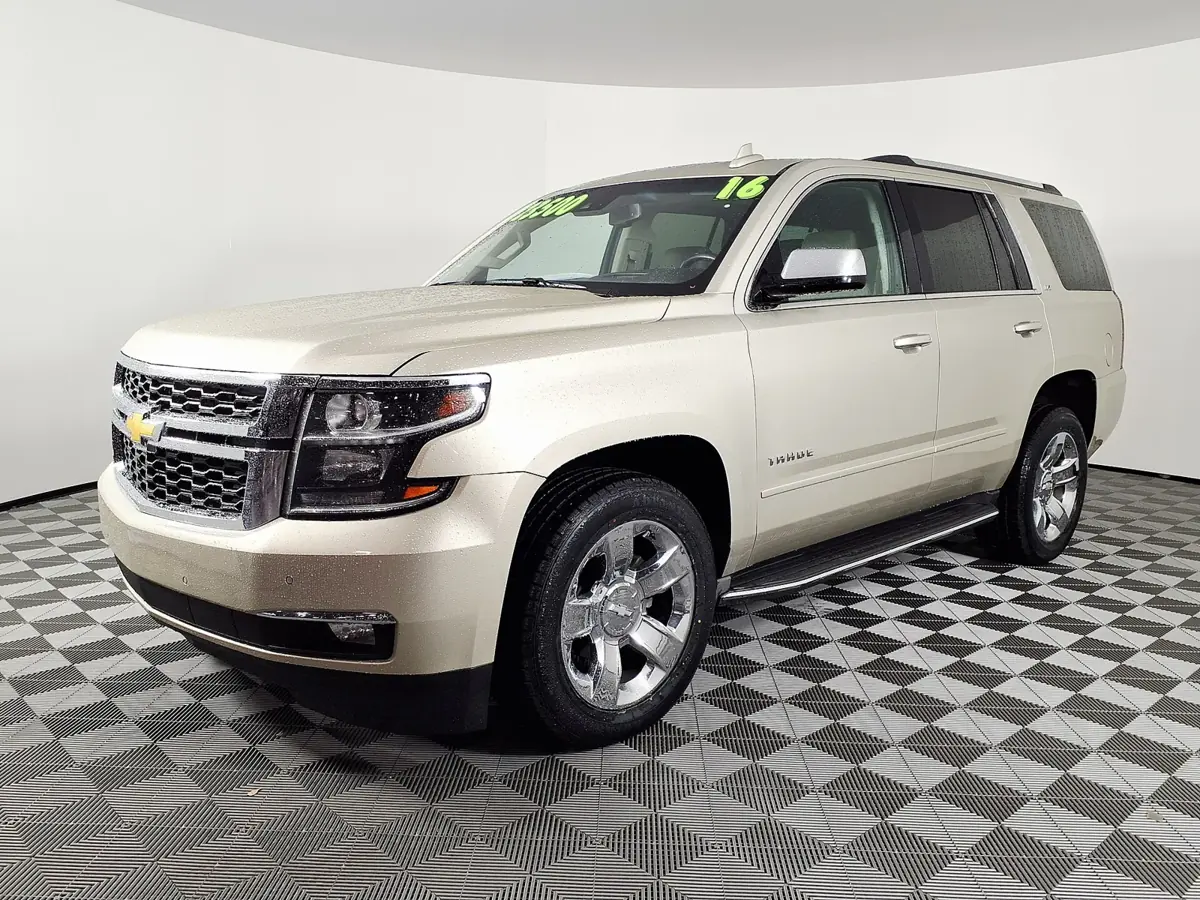
To show why a lookup chart for the 8th character is a bad idea, we ran a few partial VINs for the Chevrolet Tahoe through NHTSA's vPIC decoder, keeping the model and changing only the year and the 8th character. The serial numbers were left blank, so treat these as illustrations of how GM reuses characters, not as a lookup table.
| 8th character | 2009 Tahoe 4WD | 2012 Tahoe 4WD | 2016 Tahoe 4WD |
|---|---|---|---|
| J | 5.3L LY5 | 6.0L LZ1 | 6.2L L86 |
| C | 4.8L LY2 | not tested | 5.3L L83 |
| 0 | 5.3L LMG | 5.3L LMG | not tested |
| 3 / 7 | LC9 5.3L appears under "3" | LC9 5.3L appears under "7" | not tested |
The same letter J points to three different engines across three model years. The 5.3L LC9 moved from one character to another. If you looked up "J" in a forum chart made for a different year, you could easily order parts for the wrong engine. This is the single best argument for decoding the whole VIN, every time.
The decoder results also illustrate the partial-VIN problem from earlier. Without a serial number, the decoder returns what the 8th character meant across GM's whole lineup that year, including engines that were never offered in a Tahoe. With the full VIN, it can rule those out.
The check digit: how a decoder catches typos
Position 9 is a check digit, calculated from the other 16 characters with a formula set out in 49 CFR 565.15. Each letter is given a number (A is 1, B is 2, J is 1 again, and so on), each position has a weight, the products are added up, and the total is divided by 11. The remainder is the check digit, with a remainder of 10 written as X.
The regulation includes its own worked example, which we reproduce here in short form:
| Step | Regulation example |
|---|---|
| Sample VIN (position 9 blank) | 1 G 4 A H 5 9 H _ 5 G 1 1 8 3 4 1 |
| Each character times its position weight | 8, 49, 24, 5, 32, 15, 18, 80, 0, 45, 56, 7, 6, 40, 12, 12, 2 |
| Sum of the products | 411 |
| 411 divided by 11 | 37 remainder 4 |
| Check digit | 4 |
You never need to do this by hand. The point is that a single wrong character almost always breaks the math, so a decoder that rejects your VIN or warns about the check digit is telling you there is a typo. Fix it before trusting anything else on the screen.
Reading the decoder report: which fields matter
The vPIC report lists dozens of fields, most of them blank for any given vehicle. These are the ones worth reading when you are buying parts or checking fitment.
| Field | What it tells you | Why it matters |
|---|---|---|
| Model Year | Decoded from the 10th character | Parts and bulletins go by model year |
| Make, Model, Series, Trim | For example Chevrolet Silverado 1500 LT | Trim can change sensors and electronics |
| Drive Type | 2WD or 4WD | Some modules and parts differ by drivetrain |
| Displacement (L) | Engine size | First check against what you expected |
| Engine Model | Usually the RPO code plus a short description | The most precise engine identifier the VIN gives you |
| Fuel Type | Gasoline, flex fuel (E85), diesel, hybrid | A flex-fuel engine can run E85; check what you actually put in |
| GVWR | Weight class, for example Class 2F: 7,001–8,000 lb | Useful for towing, suspension and some parts |
| Plant City | Where it was assembled | Occasionally matters for running changes |
| Error Text | Warnings such as "Incomplete VIN" | If this shows a problem, fix the VIN first |
A note on flex fuel: many of the GM V8s in this guide were built as flex-fuel engines. That only matters if you actually fill with E85. Fueleconomy.gov notes that flex-fuel vehicles get roughly 15% to 27% fewer miles per gallon on E85 than on regular gasoline, which is worth knowing if you are comparing fuel economy numbers between trucks.
The RPO label in the glove box
GM puts a Service Parts Identification label in its vehicles, and on most trucks and SUVs of this era you will find it inside the glove box, on the door or the lid. It lists the VIN, paint codes and a block of three-character codes. Those are Regular Production Option codes, or RPOs, and they record the factory equipment on that specific vehicle.
Most of the codes cover things like trim, axle ratio, seats or radio. A handful identify the engine and transmission. If the label is faded or missing, a GM dealer can print the same list from the VIN.
Engine RPO codes you are likely to see
These are the AFM V8 codes listed in GM bulletin 10-06-01-008M, plus newer codes as described by NHTSA's vPIC database. We list them by code rather than by vehicle because GM used several of them across multiple models and years.
| RPO code | Displacement | How GM or NHTSA describes it |
|---|---|---|
| LMG | 5.3L | Iron block V8 with AFM (GM bulletin); flex fuel, cylinder deactivation, iron (vPIC) |
| LY5 | 5.3L | Iron block V8 with AFM (GM bulletin); 5.3L per vPIC |
| LC9 | 5.3L | Aluminum block V8 with AFM (GM bulletin); flex fuel, aluminum, cylinder deactivation (vPIC) |
| LH6 | 5.3L | Aluminum block V8 with AFM (GM bulletin); 5.3L per vPIC |
| L76 | 6.0L | Aluminum block V8 with AFM (GM bulletin); 6.0L per vPIC |
| LZ1 | 6.0L | Aluminum block V8 with AFM (GM bulletin); flex fuel, DOD, aluminum (vPIC) |
| L83 | 5.3L | VVT, AFM, aluminum (vPIC); direct injection on many years |
| LV3 | 4.3L V6 | SIDI, VVT, aluminum (vPIC); uses cylinder deactivation per EPA testing |
| L86 | 6.2L | SIDI, VVT, AFM, aluminum (vPIC) |
| L94 | 6.2L | Aluminum block V8 with AFM (GM bulletin) |
The bulletin also lists LH9, L99, L92 and LFA among AFM engines. Engines that do not appear in the bulletin's AFM list, such as the 4.8L LY2 or the 6.0L LY6 that the decoder shows for some 2007 to 2009 VINs, are a sign to double-check whether AFM applies before buying an AFM product. Some of those were used outside the trucks and SUVs we cover. If you see one of them on your label and are not sure, send us a photo of the label.
A backup: the emissions label under the hood
If the glove box label is gone, look under the hood for the Vehicle Emission Control Information label, usually on the underside of the hood or on the radiator support. It lists the engine displacement and the EPA engine family for that vehicle. It will not give you the RPO code, but it is a quick way to confirm displacement when the VIN decode and the seller's story do not agree, and it is hard to fake because it is applied at the factory.
Transmission codes worth knowing
GM bulletin 18-NA-355 on torque converter shudder lists its 8-speed automatics by RPO: M5N, M5T, M5U and M5X. If your label shows one of those, the bulletin may apply to your vehicle. If you see a 6-speed code instead, it does not. Our shudder diagnosis guide explains what that means in practice.
Take a photo. The RPO label fades with sun and heat. A clear photo on your phone saves you from digging through the glove box every time you need a part, and you can send it straight to a parts counter or to us.
Step-by-step: confirming your engine
This is the routine we use when a customer sends a VIN.
- Read all 17 characters of the VIN from two places and make sure they match.
- Check the 10th character for the model year using the table above.
- Enter the full VIN in NHTSA's vPIC decoder. Note the displacement and the engine model field, which usually includes the RPO code.
- Open the glove box and find the Service Parts Identification label. Look for the engine RPO in the list.
- If the decoder and the label agree, you are done. If they do not, trust the label and contact the dealer or the parts supplier.
- Check whether the engine is listed as having AFM, DOD or cylinder deactivation. That tells you whether AFM-related bulletins and products apply.
Keep in mind that engine swaps happen. If a previous owner replaced the engine, neither the VIN nor the RPO label will reflect the new one. On a used truck with an unknown history, a look at the engine itself or a dealer check of the service history is worth the time.
Three lookups, start to finish
Here is how the process plays out in practice. These are composite examples based on the kinds of questions we get, not specific customers.
"It says 5.3 on the side, so it is a 5.3, right?"
An owner of a 2008 Sierra 1500 wanted an AFM disabler. The 10th character was 8, so model year 2008. The full VIN decoded to a 5.3L with the RPO code LMG, and the glove box label showed LMG as well. LMG is on GM's AFM engine list in bulletin 10-06-01-008M, so AFM applied and the Sierra 1500 disabler was the right part. Total time: about three minutes.
"The forum chart says my engine is something else"
A 2016 Tahoe owner had found a chart saying the letter in the 8th position meant a 5.3L. The chart was for an older generation. The full VIN decoded to a 6.2L L86 with AFM, which the Tahoe disabler covers for 2010 to 2017. Without the full decode, the owner would have bought parts for the wrong engine.
"Which RAM module do I need?"
A 2025 RAM 1500 owner wanted to keep Stop/Start off. Engine did not matter here, but drivetrain did. The decoder showed 4WD, so the RAM 1500 4WD module was the match rather than the 2WD version. Our RAM vehicle guide explains where each one installs.
The pattern in every case: model year from the 10th character, engine or drivetrain from the full decode, confirmation from the RPO label. Three checks, three minutes, no returns.
Using the VIN to choose the right Recontrolx product
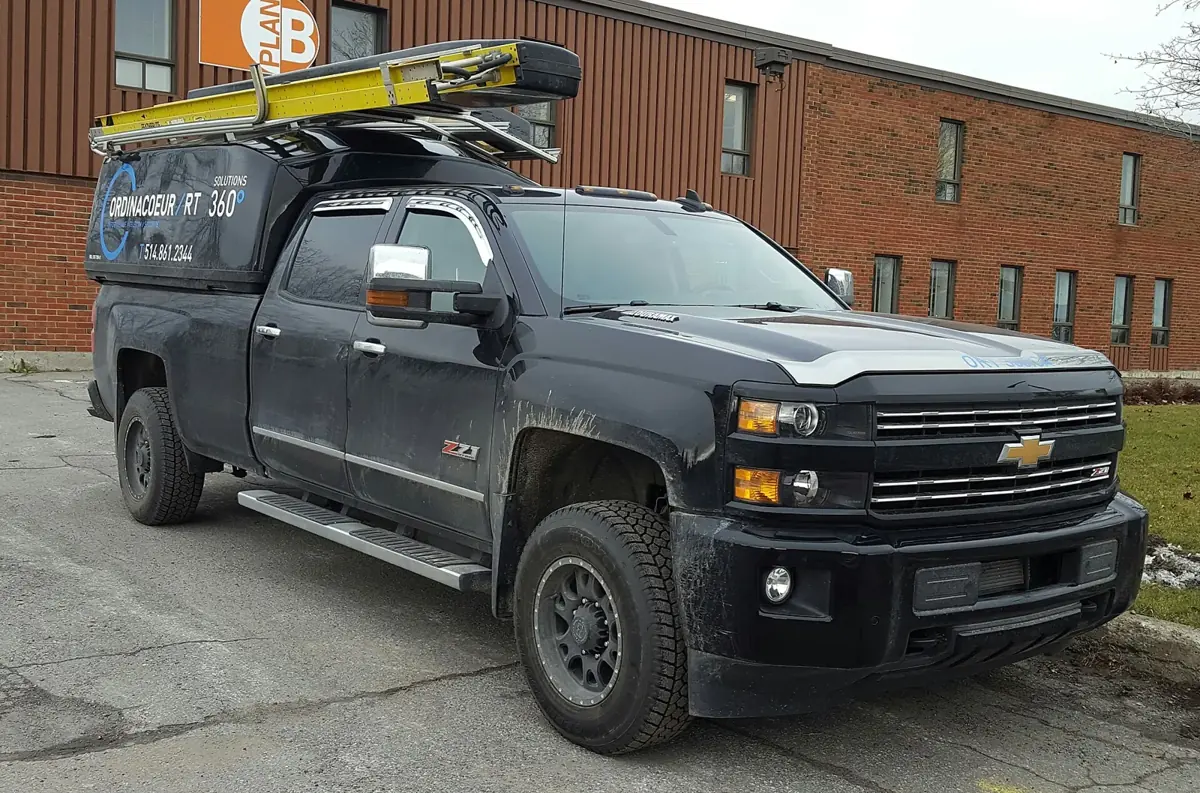
Our product pages list the model years and engines each module is designed for. Here is how those line up with the information you just looked up.
| Vehicle | Model years and engines (from the product page) | Product |
|---|---|---|
| Chevrolet Silverado 1500 | 2007–2018: 4.3L V6 (2014–2018), 5.3L V8, 6.0L V8 | Silverado 1500 AFM/DFM Disabler |
| GMC Sierra 1500 | 2007–2018: 4.3L, 5.3L, 6.0L, 6.2L | Sierra 1500 AFM/DFM Disabler |
| Chevrolet Tahoe | 5.3L (2007–2018), 6.0L (2007–2014), 6.2L (2010–2017) | Tahoe AFM/DFM Disabler |
| GMC Yukon | 2007–2018: 5.3L, 6.0L, 6.2L | Yukon AFM/DFM Disabler |
| GMC Yukon XL 1500 | 2007–2018: 5.3L, 6.0L, 6.2L | Yukon XL 1500 AFM/DFM Disabler |
| Chevrolet Suburban | 2007–2018; confirm engine on the product page | Suburban AFM/DFM Disabler |
| Chevrolet Avalanche | 5.3L (2007–2013), 6.0L (2007–2009), 6.2L (2010–2013) | Avalanche AFM Disabler |
| Cadillac Escalade | 6.2L (2010–2017) | Escalade 6.2L AFM Disabler |
For start-stop eliminators, the VIN matters for a different reason: drivetrain and trim. On the RAM 1500, the 2025–2026 4WD module and the 2025–2026 2WD module are different parts, and the decoder's drive type field confirms which one you have. The 2021–2026 F-150 module covers the F-150 and Raptor in those years, the 2015–2020 F-150 module covers the earlier trucks, and the 2019–2024 Equinox module covers the Equinox in that range. If you are between generations, the 10th character settles it.
If anything does not line up, or the decoder shows an engine you did not expect, send us the VIN. We would much rather spend two minutes confirming than have you wait on a return. Our vehicle compatibility guide also lists every model we support.
Using the VIN when buying a used truck
The same five minutes are even more valuable when you are shopping. Before you drive across town to look at a truck, ask the seller for the VIN and run it through the decoder.
- Confirm the model year and engine match the listing. "5.3" in an ad is a claim; the VIN is a record.
- Check for open safety recalls. NHTSA's recall lookup uses the same VIN.
- Look up any bulletins that apply to that engine code, such as 10-06-01-008M for AFM oil consumption on earlier V8s.
- Ask for service records that show the VIN, so you know the history belongs to that truck.
- At the inspection, compare the VIN on the windshield plate, the door jamb and the title. They should all match.
Pay attention to how a seller reacts when you ask for the VIN. Most private sellers and every legitimate dealer will hand it over without a second thought, since it is printed on the windshield anyway. Reluctance is not proof of a problem, but it is a reason to slow down. A VIN that decodes to a different trim, engine or model year than the listing is a bigger red flag, and worth a direct question before you go any further.
If the truck has an AFM engine, our guide to AFM oil consumption and our lifter failure symptoms guide cover what to look and listen for during a test drive.
Common mistakes we see
Most fitment problems come down to a handful of avoidable errors.
| Mistake | Why it causes trouble | How to avoid it |
|---|---|---|
| Going by the badge on the fender | Badges get swapped and do not show the engine generation | Use the VIN and RPO label |
| Using the build date instead of model year | Late-year builds are often next year's model | Use the 10th character |
| Decoding a partial VIN | The decoder cannot cross-check, so results can be wrong | Enter all 17 characters |
| Confusing O with 0 or I with 1 | O, I and Q are not allowed in a VIN | Always read them as 0 and 1 |
| Assuming every engine of a size has AFM | Some engines of the same displacement do not use cylinder deactivation | Check the engine description for AFM, DOD or cylinder deactivation |
| Ignoring the drivetrain | Some modules differ between 2WD and 4WD | Check the decoder's drive type field |
What we ask for when you contact us
If you want us to confirm a fit, these three things are all we need:
- The full 17-character VIN.
- A photo of the Service Parts Identification label, if it is readable.
- A sentence on what you are trying to do: for example, "hold AFM off on my daily driver" or "keep stop-start off after every start."
If the label is unreadable, the VIN alone is usually enough. We will run it through the same decoder, cross-check the model year and engine against the product page, and reply with the exact product link so there is no guesswork at checkout. If something looks unusual, such as an engine that was not offered in that model, we will ask a follow-up question before you order rather than after.
With that, we can tell you which module fits, whether any bulletins on your engine are worth knowing about, and what to expect after installation. Our installation and fitment guide has more detail on each product line.
Frequently asked questions
Which character in a GM VIN is the engine code?
On GM trucks and SUVs, the 8th character. Its meaning changes by model year, so always decode the full VIN.
Which character is the model year?
The 10th. Under 49 CFR 565.15, for example, A is 2010, E is 2014, J is 2018 and T is 2026.
Where is the RPO label on a Silverado or Tahoe?
On most trucks and SUVs of this era it is inside the glove box, on the door or lid. It lists three-character RPO codes, including the engine.
What if my RPO label is missing or faded?
A GM dealer can print the factory option list from the VIN. NHTSA's vPIC decoder will also show the engine model for most GM trucks.
Is the NHTSA decoder free?
Yes. vPIC is run by the U.S. Department of Transportation and is free to use with no account.
Why did the decoder show an engine my truck never had?
That usually happens with a partial or mistyped VIN. Enter all 17 characters, check the check digit, and compare with the RPO label.
Does the VIN show whether my engine has AFM?
Indirectly. The decoder's engine description often mentions AFM, DOD or cylinder deactivation, and the RPO code tells you which engine family it is.
Can a VIN tell me if the engine was replaced?
No. The VIN and RPO label record the factory configuration. If an engine was swapped, only a physical inspection or service records will show it.
Can the same 8th character mean different engines?
Yes. In NHTSA's decoder, for example, J decodes to a 5.3L LY5 on a 2009 Tahoe, a 6.0L LZ1 on a 2012 Tahoe and a 6.2L L86 on a 2016 Tahoe. Always decode the full VIN.
What does an X in the 9th position mean?
It is a valid check digit. Under the federal formula, a remainder of 10 is written as X.
Do I need the VIN to order a start-stop eliminator?
It helps. For the RAM 1500, the drivetrain matters because 2WD and 4WD use different modules; the VIN and decoder confirm which you have.
Sources
Every outside figure in this article links to one of these sources. Store experience is described in general terms only.
- 49 CFR 565.15: VIN content requirements · Electronic Code of Federal Regulations
- 49 CFR Part 565: Vehicle Identification Number requirements · Electronic Code of Federal Regulations
- vPIC VIN Decoder · NHTSA, U.S. Department of Transportation
- GM Service Bulletin 10-06-01-008M: Engine Oil Consumption on Engines with AFM · filed with NHTSA
- Ethanol · fueleconomy.gov
- GM Service Bulletin 18-NA-355: Shake and/or Shudder During Light Throttle Acceleration · filed with NHTSA
Next steps
Know your engine? Pick your module. Browse the AFM/DFM Disabler line or the Auto Start-Stop Eliminator line, or send us your VIN and we will confirm the fit before you order. Check vehicle compatibility
Related reading: