Most Ford owners meet their tire pressure system twice. The first time is a cold morning when the amber horseshoe lights up and a gas station air hose makes it go away. The second time is the day they buy a second set of wheels, usually winter steelies or a set of aftermarket rims, and discover that the car now flashes the light for a minute on every start and then leaves it on for the whole drive.
This guide covers the Ford side of our TPMS sensor emulator line: the 2011-2017 Ford Expedition TPMS Emulator and the 2010-2018 Ford Focus TPMS Emulator, both $119.99. We will go through how Ford's system works, what the federal rules actually require, where an emulator makes sense and where new sensors are the better buy, how the training process goes, and the tire checks you take on yourself once a module is supplying the signals. If you are deciding between sensors and an emulator, read the section on choosing first. It will save you money either way.
Key Takeaways
The short version, for owners who want the answer before the explanation.
| Question | Short answer |
|---|---|
| Which Fords are covered? | The 2011-2017 Expedition and the 2010-2018 Focus. Each has its own listing with the exact years. |
| What does the module do? | From one powered unit inside the vehicle, it supplies four learned signals for the left-front, right-front, right-rear and left-rear positions, so a wheel set without transmitters can be recognized. |
| Does it read real tire pressure? | No. The signals are emulated. You check the tires with a gauge. |
| Is a relearn needed? | Yes. The vehicle has to be put through Ford's TPMS training process so it learns the module's four positions. |
| Best use? | Seasonal, specialty or fleet wheel sets that do not carry sensors. For dead sensors on your everyday wheels, new sensors are usually the cleaner fix. |
| Price? | $119.99 per vehicle listing. |
How Ford's TPMS works on these vehicles
Both the Expedition and the Focus in these years use direct TPMS. Each road wheel has a pressure sensor attached to the inside of the valve stem, hidden behind the tire bead. The sensor measures pressure, adds its own ID, and sends a radio message to a receiver in the vehicle. The receiver only listens for the IDs it has learned. A sensor it does not know, or a wheel with no sensor at all, counts as missing.
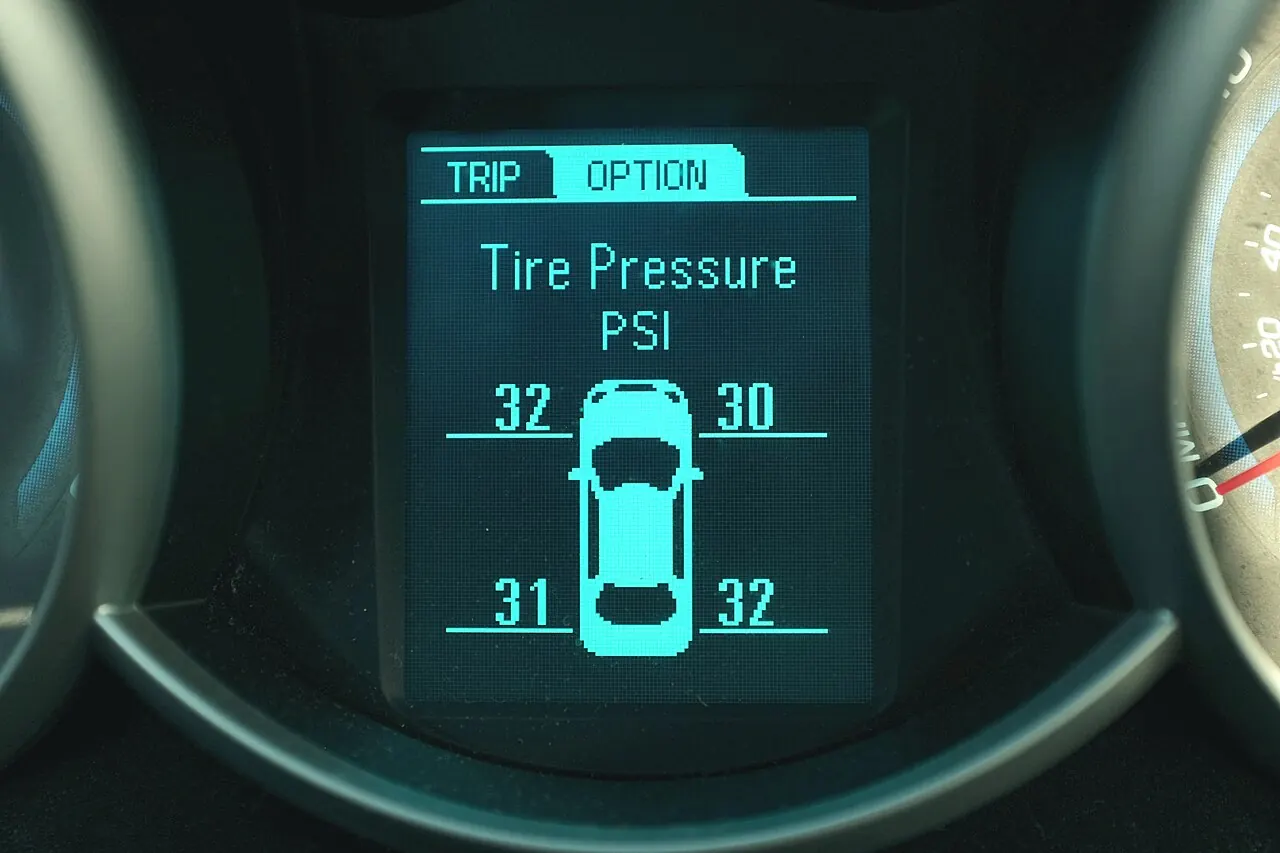
The warning light behavior is set by federal rule, which is why Fords, GMs and most other cars of this era act the same way. Federal Motor Vehicle Safety Standard No. 138 requires the low pressure telltale to come on within 20 minutes once a tire is 25 percent or more below the recommended cold pressure. It also requires a malfunction warning. On cars with one combined lamp, like these Fords, the lamp must flash for at least 60 seconds and no more than 90 seconds after the ignition is switched on, and then stay lit for as long as the fault exists. That sequence repeats on every start until the fault is fixed (49 CFR 571.138).
Reading the light
| What you see | What it usually means | First thing to do |
|---|---|---|
| Solid light, no flashing | One or more tires is low | Check all four with a gauge when cold and fill to the door label |
| Flashes about a minute, then stays on | The system has a fault: a missing, dead or unlearned sensor, or a receiver problem | Check pressures, then find out which position is not reporting |
| Comes on only on cold mornings | Pressures are near the threshold | Fill to the placard figure on a cold tire; heat from driving hides the problem |
| Started right after new wheels or tires | Wheels without sensors, or sensors never trained | Train the sensors, or decide on sensors versus an emulator |
The required owner's manual wording, which Ford prints in these manuals, says it plainly: TPMS malfunctions "may occur for a variety of reasons, including the installation of replacement or alternate tires or wheels on the vehicle that prevent the TPMS from functioning properly" (FMVSS 138 owner's manual text).
Why the sensors stop talking
The sensor battery is sealed inside the unit. MOTOR magazine, writing for working technicians, put the projected battery life at six to ten years, and noted that the batteries are typically encased in moisture-proof potting, so the practical repair is a whole new sensor. It also made the point most shops learn the hard way: when one sensor of a matched set quits from age, the other three are usually not far behind (MOTOR). A 2011 Expedition or a 2012 Focus still wearing its original sensors is well past that window.
What TPMS is worth, in numbers
Before talking about replacing the signal, it is fair to say what the system does for you, because the module takes that job away and hands it back to you.
NHTSA studied it directly. In a 2011 survey of 6,103 vehicles, 23.1 percent of model year 2004-2007 vehicles without TPMS had at least one severely underinflated tire, defined as 25 percent or more below the recommended cold pressure. Among the same model years with TPMS, the figure was 11.8 percent. NHTSA estimated that TPMS cut the likelihood of a severely underinflated tire by 55.6 percent, and saved a typical light truck about 27.89 gallons of fuel over its first eight years (NHTSA technical report notice, 77 FR 69541; full report DOT HS 811 681).
That is a real benefit, and it is why we say the same thing on every TPMS page we write: an emulator gives the vehicle the signals it expects, but it does not watch your tires. If you install one, the monthly gauge check stops being optional. Owners who already check their tires, the kind who buy a second set of winter wheels in the first place, tend to be fine with that. Owners who rely on the light to tell them when to add air should buy sensors.
The 2011-2017 Expedition
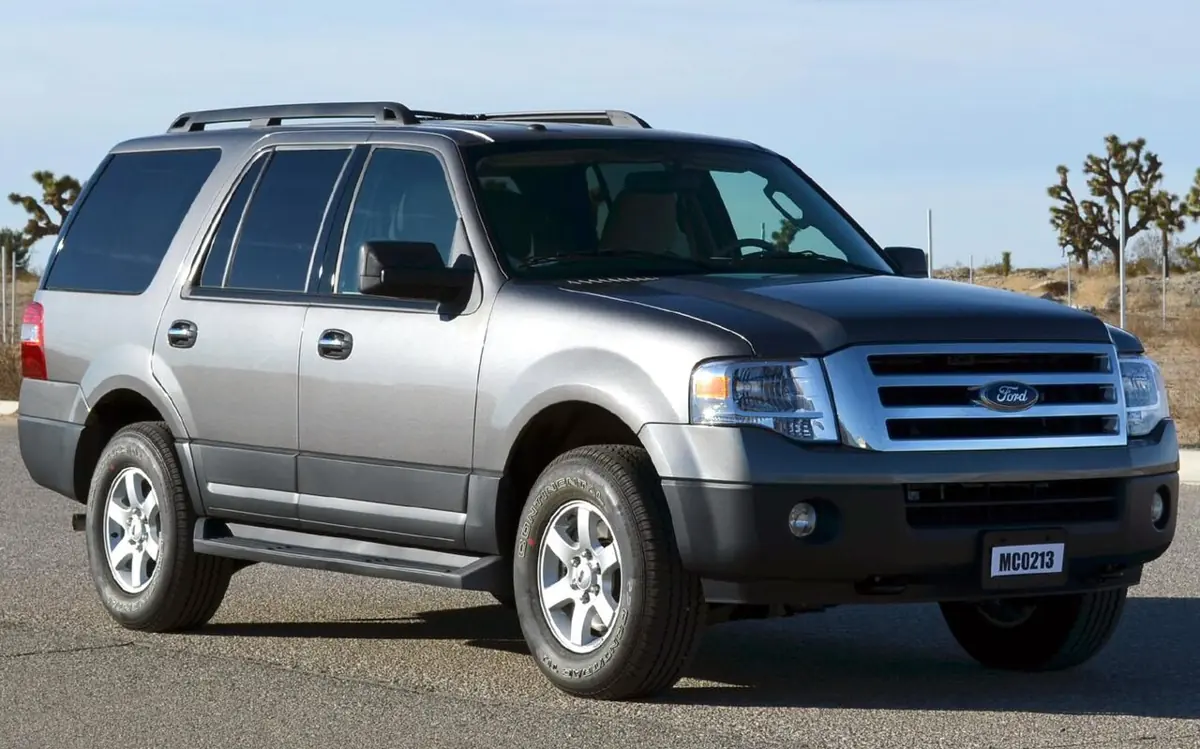
The Expedition in these years is a body-on-frame three-row SUV that often tows, carries a full family and runs a second wheel set for winter. That mix makes it a common candidate for an emulator, and also the vehicle where tire checks matter most.
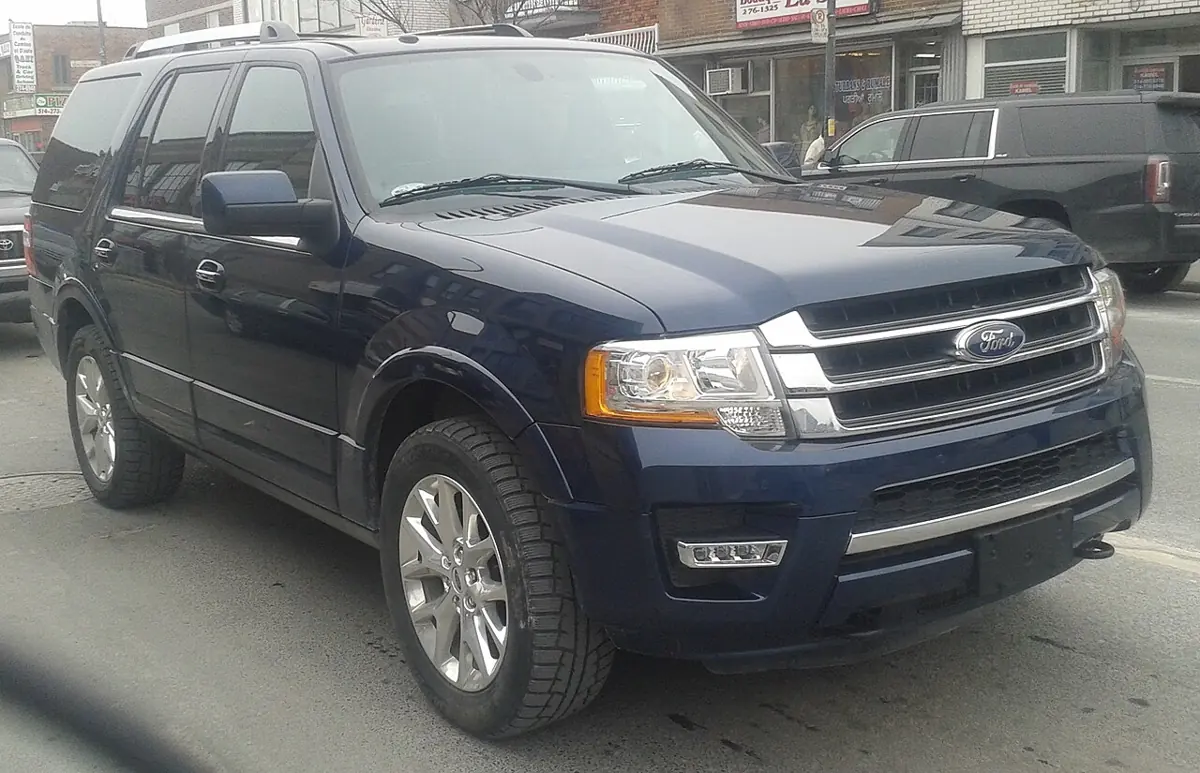
The Expedition TPMS Emulator covers seven model years: 2011, 2012, 2013, 2014, 2015, 2016 and 2017. The listing is explicit that this year range does not carry over to other Ford SUVs, so an Explorer or an F-150 owner should not assume a match because the badge looks the same. Confirm the year from the VIN record or registration rather than the sticker on the back glass.
What the module does on the Expedition: once it is powered and the vehicle has been trained, the receiver recognizes four learned positions supplied by one unit inside the cabin. Nothing goes inside a tire, so wheel swaps and tire work do not touch it. It does not change engine, transmission, stability control or trailer settings.
Load and towing
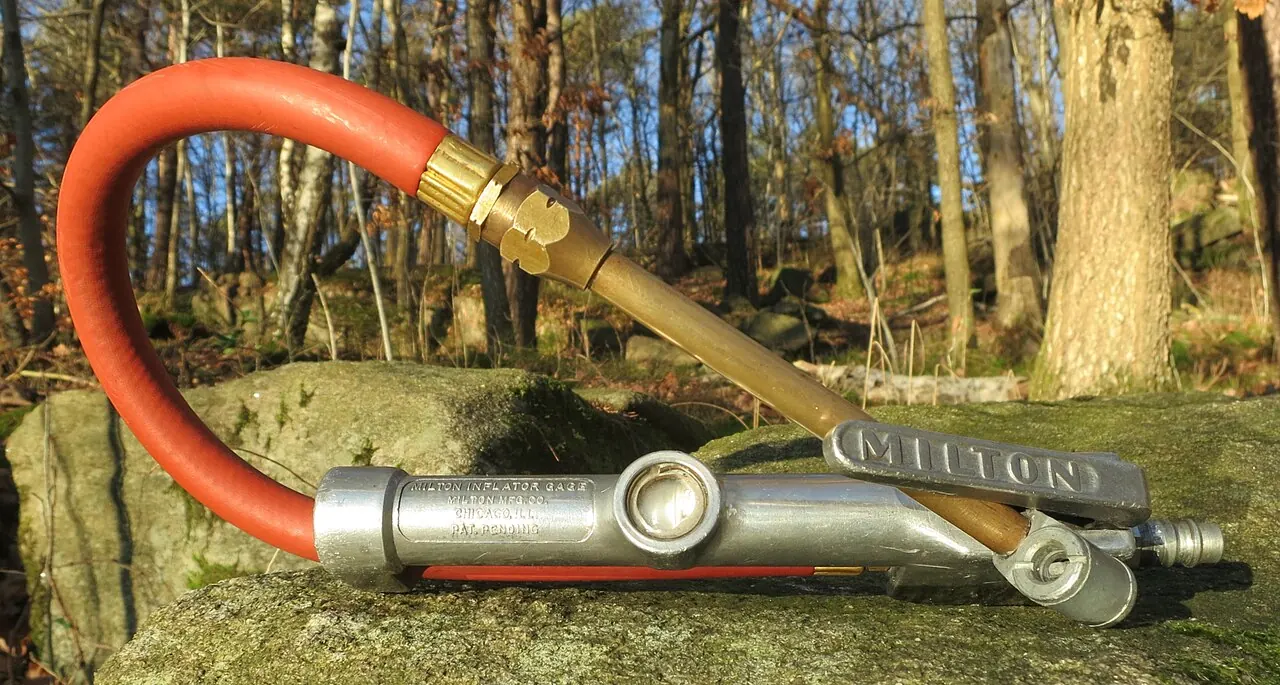
Ford's own placard figures assume the tires are cold. On a loaded Expedition heading out with a trailer, check all four road tires before you leave, look at the sidewalls and tread for cuts or uneven wear, and set pressures for the load you are actually carrying. The emulator cannot see a nail, a leaking valve or a tire that has heated up on a long grade. A gauge in the door pocket costs a few dollars and is the only pressure reading you will have.
The 2010-2018 Focus
The Focus covers a long run, from the last years of the second-generation car through the third-generation hatchback and sedan. The Focus TPMS Emulator lists nine model years: 2010 through 2018. Because the run spans a generation change, the training steps and cluster messages can differ by year. Use the instructions for your exact model year, not a video for a different one.

The typical Focus case is a winter set on steel wheels, or a set of aftermarket rims bought used without sensors. On a compact car, four new sensors plus mounting and programming can be a large share of what the wheels themselves cost, which is why some owners look at an emulator. The trade is the same as on the Expedition: one module, four learned signals, no pressure readings.
A Focus spends much of its life in city traffic, where potholes and curbs do more damage than highway miles. Cold weather also lowers pressure across all four tires at once. Check them cold at least monthly and before a long trip, using the figure on the driver-side door label.
Finding the silent corner before you buy anything
A flashing light tells you something is missing, not what. Ten minutes of checking can show if you are dealing with one dead sensor, a full set at the end of its life, or a problem that no sensor or module will fix.
- Start with pressure. Set all four tires to the door-label figure on a cold morning and drive for 20 minutes. FMVSS 138 gives the system up to 20 minutes to react, so a short trip around the block proves nothing.
- Note the pattern. If the lamp flashes on every start and then stays on, the fault is still present. If it only comes on solid after a cold night, you are looking at pressure, not hardware.
- Read the sensors. An inexpensive TPMS activation tool, or a shop's scan tool, will trigger each sensor and show whether it answers. A sensor that never answers is dead or missing. Some tools also report battery status, which tells you whether the other three are close behind.
- Check the history. Were the tires replaced recently? Was a wheel swapped or a sensor broken during mounting? A fault that started the day of tire work points at the work.
- Rule out the receiver. If every sensor answers the tool but the vehicle still shows a fault, the problem may be on the vehicle side. That needs diagnosis, not parts.
Once you know which case you have, the choice in the next section becomes simple. Many owners discover at this step that they need one sensor, not a new strategy, and that is a good outcome.
Sensors or emulator: how to choose
This is the part where we are happy to talk you out of our own product. The right choice depends on what is wrong and which wheels you are talking about.
| Your situation | Usually the better choice | Why |
|---|---|---|
| One sensor on your everyday wheels died from age | New sensors, ideally a full set | The other three are likely near the end; the system keeps watching your tires |
| A sensor was damaged during tire work | A replacement sensor | It is a repair, and the shop should restore what it broke |
| Winter or summer wheels with no sensors | Emulator or a second sensor set | An emulator avoids buying and training a second set of four |
| Specialty rims that cannot take a standard sensor | Emulator | The wheel itself is the limit |
| Fleet vehicle with a managed tire program | Either, depending on the program | Fleets with scheduled pressure checks often prefer one cabin module |
| Light flashes even with good sensors | Diagnosis first | A receiver or wiring fault is not fixed by any part on this page |
The product listings say the same thing in their own words: the emulator "does not measure pressure, repair a leak or replace a failed sensor." It is designed for wheel sets that do not carry ordinary transmitters. If your everyday wheels have sensors and one has gone quiet, our sensor replacement vs reset vs emulator comparison walks through costs in more detail.
A quick cost sense check
MOTOR's survey of the market put wholesale sensor prices at roughly $25 to over $80 each, with local labor quotes of $20 to $50 per tire for mounting, balancing and relearning (MOTOR). Those were the figures at the time it was written, and shop prices vary. Get a written quote for four sensors installed on your wheels and compare it with the $119.99 module plus the time you will spend checking tires by hand. For some owners the sensors win, for others the module does.
Training the module
The vehicle will not recognize anything until it learns the four positions. Both product pages describe the same order of work, and it goes smoothly if you do it in one sitting.
- Park somewhere safe and level with the tires inspected and set to the cold pressure on the door label.
- Power the emulator as described in the included instructions and keep it stable and powered for the whole session.
- Put the vehicle into Ford's TPMS training mode for your exact model year.
- Work through the four positions in order: left-front, right-front, right-rear, left-rear. Wait for the confirmation at each one.
- When all four are accepted, switch the ignition off, start again, and watch the cluster. The malfunction flash should not return.
If the session stops partway through, do not keep repeating it blindly. Check power to the module, then start again from the first position. If a clean attempt still fails, a TPMS-capable scan tool can show whether the vehicle stored the IDs or whether the receiver itself has a problem. Our TPMS relearn guide is written around GM vehicles, but the logic of reading what the receiver has learned is the same.
Going back to sensors
When the sensor-equipped wheels go back on, switch the vehicle off, unplug the emulator, and train the four wheel-mounted sensors. Remove the module before any tire service or TPMS diagnosis, so the technician is looking at the factory system without an extra signal source in the cabin. That is also what the product pages recommend.
Planning a seasonal wheel swap
Most emulator buyers are running two wheel sets, so it helps to plan the year rather than the day.
In the fall, put the winter set on, check the cold pressures, power the module and train it. Keep a note in the glovebox of the date and the pressures you set. In the spring, put the summer set back on, unplug the module and train the sensors on those wheels, or keep the module in if the summer set also runs without sensors. Either way the swap becomes a known half hour instead of a surprise.
Two habits make this smoother. First, mark each wheel with its position when it comes off, so you can rotate on purpose rather than by accident. Second, check the spare at the same time. Neither the factory sensors on most of these vehicles nor the emulator watch the spare, and it is the tire most likely to be low the day you need it.
If you ever sell the vehicle, tell the buyer the module is fitted and hand over the instructions, or remove it and train the factory sensors before the sale. A new owner who does not know the light is being satisfied by a module may not know to check the tires by hand.
Spares, stored wheels and tire age
Seasonal sets and spares age even when they are not worn. NHTSA explains that tire aging cannot be seen by looking at a tire, that vehicles driven rarely or only a few miles a year are the ones at risk, and that some vehicle and tire makers recommend replacement at six to 10 years regardless of tread. The last four digits of the DOT Tire Identification Number on the sidewall give the week and year of manufacture; "0308" means the third week of 2008 (NHTSA TireWise).
| Tire | What to check before it goes back on |
|---|---|
| Winter or summer set from storage | Date code, cracks, pressure set cold to the placard |
| Full-size spare | Date code and pressure; NHTSA advises not using a full-size spare as a replacement for worn tires except in an emergency |
| Any tire after a pothole or curb strike | Pressure that day; NHTSA says a tire can lose pressure suddenly after an impact |
Fuel matters too, if less than safety. Fueleconomy.gov estimates that each 1 psi drop in average pressure costs about 0.2 percent in gas mileage (fueleconomy.gov).
The rules on disabling TPMS
This section is general information, not legal advice. Federal rules, state inspection laws and the facts of your situation all matter; if you are unsure, ask your state motor vehicle agency or a qualified attorney.
This topic draws strong opinions, so here is what the documents say.
The federal "make inoperative" provision, 49 U.S.C. 30122(b), says a manufacturer, distributor, dealer, rental company or motor vehicle repair business "may not knowingly make inoperative" any device installed to meet a federal safety standard (49 U.S.C. 30122). TPMS is one of those devices. The provision is written around businesses.
NHTSA's Chief Counsel applied it to tire shops in a 2011 letter to the Tire Industry Association. Two of the answers matter here. A shop may replace a sensor that was already dead with a plain valve stem, because the part was already inoperative, but it may not go further and disable the malfunction lamp. And if a car arrives with a working TPMS, a shop that installs winter wheels without working sensors violates the provision, even though the warning light would stay on (NHTSA interpretation, Nov. 22, 2011). The same letter notes that state laws on vehicle repair may add their own requirements.
In practice, that means a tire shop may decline to mount sensorless wheels on a vehicle with a working system, and you should expect that. Some states also look at dashboard warnings during safety inspections. Rules differ by state, so check yours before you change anything, and keep the module removable so the factory system can be inspected and serviced as built.
Living with it
Once it is trained, day-to-day life is quiet. The flashing malfunction sequence stops, the cluster stops nagging, and swapping wheel sets in spring and fall is a training session rather than a parts order. Nothing else on the vehicle changes.
Your side of the deal is the routine the light used to prompt:
- Check all four road tires cold, at least monthly, with a gauge you trust.
- Check again before towing, a long trip or a big temperature drop.
- Look at the tread and sidewalls when you check pressure. Bulges, cuts and uneven wear tell you things a pressure number cannot.
- Keep the spare inflated. The module does not monitor it.
- Unplug the module before tire work or TPMS diagnosis.
If the warning comes back with known-good pressures, do not assume another relearn will fix it. Check module power, confirm the training took, and then look at the receiver and wiring.
If a tire fails at speed
An emulator, a sensor or a gauge can reduce the chance of a blowout, but not remove it. NHTSA's advice for the moment it happens is worth reading once, before you need it (NHTSA TireWise):
- Hold the steering wheel with both hands.
- Keep your speed if it is safe to do so; do not slam on the brakes.
- Release the accelerator gradually.
- Steer as needed to keep the vehicle stable, looking where you want to go.
- Once the vehicle is stable, slow down and pull off the road where it is safe.
NHTSA notes that a front blowout is felt mostly through the steering and a rear one through the seat and body; the steps are the same either way. On a heavy SUV like the Expedition, a calm response matters even more.
What the Ford line covers today
Ford coverage in our TPMS line is two vehicles: the Expedition 2011-2017 and the Focus 2010-2018. The rest of the line is GM, with Chevrolet and GMC trucks, SUVs, vans and cars from roughly 2007 to 2017. You can see every current fitment in the TPMS aisle.
If your Ford is not listed, please do not order a listed part and hope. TPMS receivers differ by platform and year, and a near miss simply will not train. Send us your VIN and we will tell you plainly whether we have a fit.
Frequently asked questions
Does the Expedition module fit an Explorer or F-150?
No. The Expedition listing covers the 2011-2017 Expedition only, and the page states the year range does not carry over to other Ford SUVs.
Will the emulator warn me about a low tire?
No. Its signals are emulated, so it cannot measure pressure. Check all four tires cold with a gauge at least monthly and before towing or long trips.
Do I have to do a relearn?
Yes. Power the module, put the vehicle into Ford's TPMS training mode for your model year, and train the left-front, right-front, right-rear and left-rear positions in order.
My light came on in winter. Is a sensor bad?
Check the cold pressures first. Cold air lowers pressure in all four tires. A solid light that clears after filling is low pressure; a light that flashes for about a minute on start and then stays on is a system fault.
One original sensor died. Should I buy the emulator?
Usually not. For sensor-equipped everyday wheels, new sensors keep the system monitoring your tires, and the other original sensors are likely near the end of their batteries too. The emulator suits wheel sets without sensors.
Will a tire shop install wheels without sensors?
Many will not on a vehicle whose TPMS works, because NHTSA has said that doing so violates the federal make-inoperative provision for repair businesses. This is general information, not legal advice.
Can I move the module between wheel sets?
The module stays in the cabin, so it does not move with the wheels. When you switch back to sensor-equipped wheels, unplug it and train those sensors.
Does it affect SYNC, the engine or the transmission?
No. It does not reflash any module or change powertrain, stability control or towing settings.
What should I do if a tire blows out?
NHTSA advises holding the wheel with both hands, avoiding hard braking, easing off the accelerator, stabilizing the vehicle and then pulling off safely.
How old is too old for a tire?
Some vehicle and tire makers recommend replacing tires six to 10 years old regardless of tread. Check the DOT date code.
Sources
Every outside figure in this article links to one of these sources. Store experience is described in general terms only.
- 49 CFR 571.138, FMVSS No. 138 Tire Pressure Monitoring Systems · Warning thresholds, malfunction lamp timing, owner's manual wording
- NHTSA technical report notice, 77 FR 69541 (Nov. 19, 2012) · TPMS effectiveness figures
- NHTSA, Evaluation of the Effectiveness of TPMS, DOT HS 811 681 · Full report
- MOTOR, "TPMS Sensors Hit Retirement Age" · Sensor battery life and replacement costs
- NHTSA Chief Counsel interpretation to the Tire Industry Association (2011) · Make-inoperative scenarios for repair businesses
- 49 U.S.C. 30122, Making safety devices and elements inoperative · Statute text
- NHTSA, TireWise: tire safety and maintenance · Blowout steps, tire aging, date codes, spares
- Fueleconomy.gov, keeping your vehicle in shape · Mileage effect of tire pressure
Next steps
Ready to order, or want to check fitment first?
- 2011-2017 Ford Expedition TPMS Emulator, $119.99
- 2010-2018 Ford Focus TPMS Emulator, $119.99
- All TPMS sensor emulators
Still deciding? Read TPMS replacement vs reset vs emulator for the cost comparison, or send us your VIN and we will confirm the fit.