A tire rotation should be the most boring service a truck gets. Then you drive away, and the cluster shows the right front pressure where the left rear used to be, or a pair of dashes where a number should be, or a light that flashes for a minute every time you start the engine. The tires are fine. The truck just does not know where they are anymore.
That is what a TPMS relearn fixes. On GM vehicles from the 2007 to 2016 era, each sensor is learned to a specific corner, so moving wheels around means teaching the receiver the new layout. This guide covers how to tell whether a relearn is really what you need, how the procedure works with and without a tool, why it sometimes fails, and what to do when a sensor is simply dead. Most of it comes straight from GM's own service bulletins, which are more useful than most forum threads and less often quoted.
Key Takeaways
The answers most Chevy owners are looking for, in one table.
| Question | Short answer |
|---|---|
| When do I need a relearn? | After a tire rotation, or after a TPMS sensor or module is replaced. GM says not after adding air. |
| Solid light or flashing light? | Solid means low pressure: add air and drive. Flashing for a minute and then solid means a system fault that needs diagnosis. |
| Can I do it myself? | Yes. Most of these vehicles enter learn mode from the driver information center or the key fob, and a GM-compatible activation tool triggers each sensor. |
| What order? | Left front, right front, right rear, left rear. The horn confirms each corner. |
| What if a sensor is dead? | A relearn cannot pair a sensor that is not transmitting. Replace the sensor, or for a wheel set with no sensors, consider an emulator. |
| Chevrolet emulator coverage? | Seventeen Chevrolet listings, $119.99 each, in the Chevrolet TPMS aisle. |
What a relearn actually does
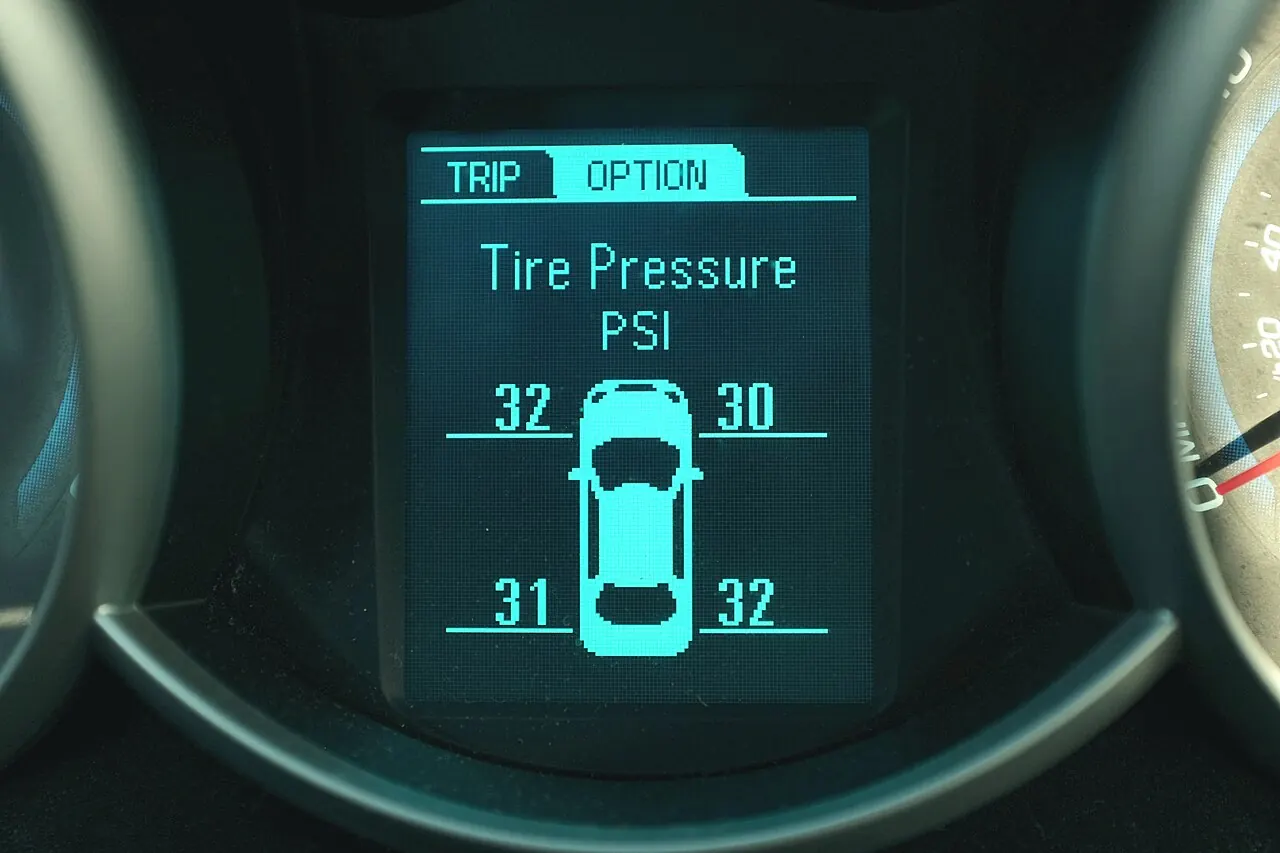
Every direct TPMS sensor transmits an ID along with its pressure reading. The receiver keeps a short list of the four IDs it has learned and which corner each one belongs to. That is how the cluster can show four separate pressures. GM's dealer bulletin on TPMS puts it in one line: "Each tire monitor sensor is learned to a specific vehicle corner" (GM bulletin 09-03-16-002B).
Move the wheels and the list is wrong. The receiver still hears all four sensors, so you usually will not get a fault, but it shows each pressure in the wrong place. That matters more than it sounds. If the right rear picks up a nail, the cluster will show the drop on whichever corner that sensor used to live on, and you will go looking at the wrong tire.
A "reset" in everyday speech means something different: clearing a warning. On these GM vehicles there is nothing to reset after you add air. The low tire light, in GM's own comparison, works like the low fuel light. Add air, drive a short distance, and it turns itself off. The same bulletin tells dealers flatly: "Do not perform a TPM relearn after adding air to tires."
When a relearn is the right job
- After a tire rotation.
- After a TPMS sensor is replaced, or a wheel with a different sensor is installed.
- After the TPMS receiver or related module is replaced.
- When the cluster shows dashes in one or two positions after a previous relearn. GM says this is often a relearn that picked up another vehicle's sensor.
That list is short on purpose. GM's instruction to its own technicians is to "only perform a TPM sensor re-learn after a tire rotation or system part replacements." Everything else is pressure, a dead sensor, or a fault that needs diagnosis.
Read the light before you touch anything
The warning lamp already tells you most of what you need, if you look at it with the engine off and the ignition on. GM's service consultants are trained to check it exactly that way, and the guidance in the bulletin is clear.
| At key on, engine off | What GM says it means | What to do |
|---|---|---|
| Light comes on and stays solid | The system is working. One or more tires is low. | Set all four to the door label pressure and drive |
| Light blinks for one minute, then stays solid | A TPM system problem exists and a trouble code has been set | Diagnose before relearning |
| Light on for a few minutes after a cold start, then off | A tire is just under the threshold when cold | Add air to the cold placard figure |
| Dashes in one or two pressure readouts | Usually a bad relearn that picked up another vehicle's sensor | Redo the relearn away from other vehicles, ideally with a scan tool |
| Dashes in all four readouts | A system problem | Follow GM service diagnosis |
The flashing sequence is not a GM design choice. It is required by Federal Motor Vehicle Safety Standard No. 138, which says a combined low pressure and malfunction lamp must flash for 60 to 90 seconds after the ignition is turned on, and then stay lit for as long as the fault exists (49 CFR 571.138). Every manufacturer of this era does the same thing, which is useful when you are reading advice written for another brand.
The gauge-first habit
A large share of "my TPMS is broken" visits are really weather. GM's rule of thumb is that tire pressure changes about 1 psi for every 10°F change in temperature (GM bulletin 09-03-16-002B). A truck set to 35 psi in a 70°F garage in October is reading 31 psi on a 30°F morning in December, before anything is wrong with it.
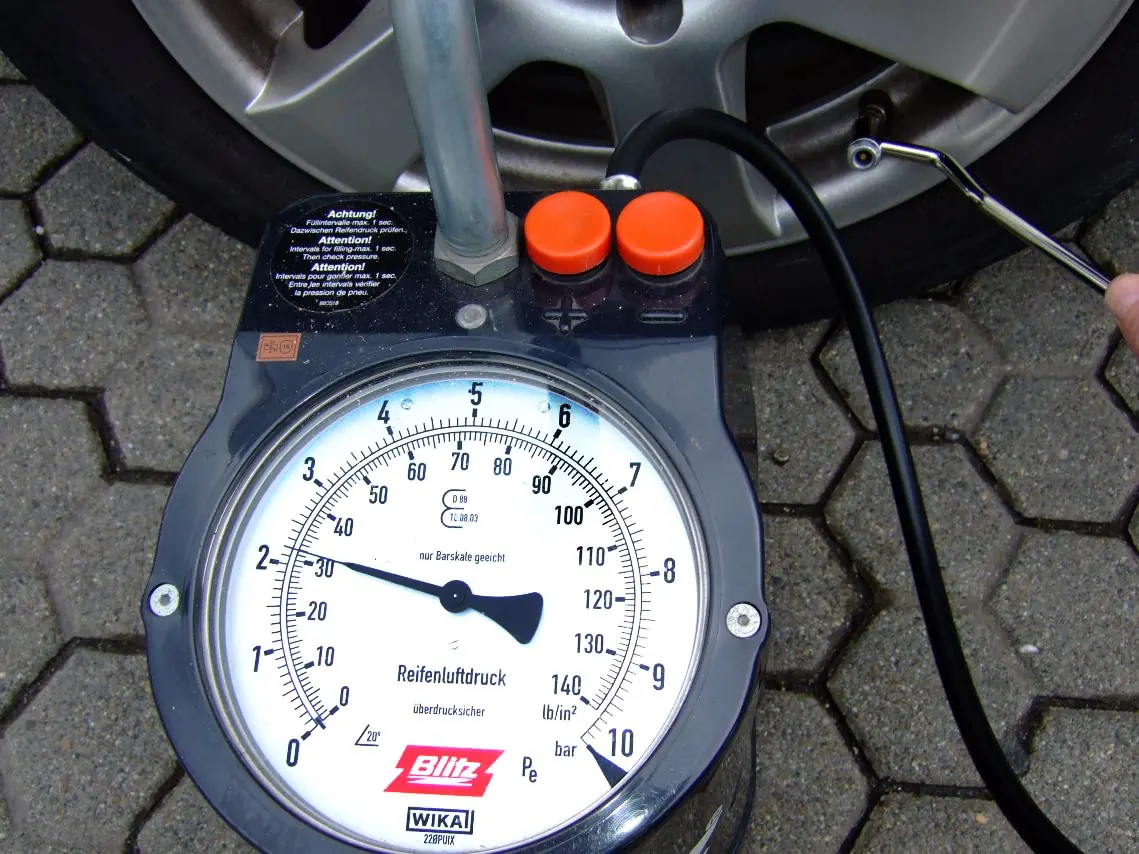
The same bulletin gives advice that most owners have never heard. Never set the tire pressure below the placard value, whatever the temperature. Set it to the placard pressure for the coldest weather the vehicle will see. And if you are filling tires in a warm garage or right after a drive on a cold day, GM tells technicians to add 3 to 4 psi above the placard figure, so the tires land in range once they cool outside.
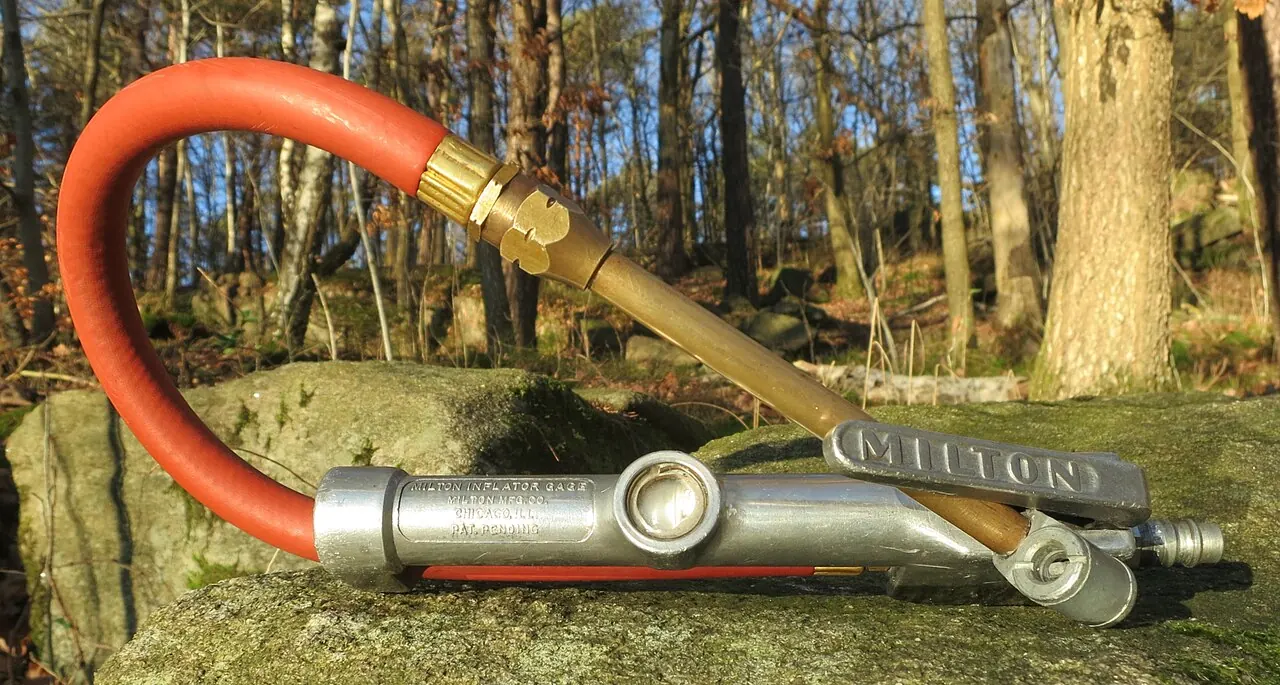
So before any relearn, do three things. Use a good gauge, not the one built into the air hose. Check all four tires cold. Then drive for a while. FMVSS 138 gives the system up to 20 minutes to react to a change, so a lap of the parking lot proves nothing. If the light stays off, there was nothing to relearn.
A monthly tire check, the NHTSA way
NHTSA's tire guidance is the simplest routine there is, and it removes most of the reasons people end up running a relearn in the first place (NHTSA TireWise).
- Check cold. NHTSA defines cold as not driven for at least three hours. Check all tires at least once a month, including the spare if you have one.
- Use the placard, not the sidewall. The correct pressure is on the Tire and Loading Information label on the driver's door edge or pillar, or in the owner's manual. The number molded into the tire is a maximum, not a target.
- Let air out if a tire is high, by gently pressing the valve stem with the edge of the gauge.
- Add the missing pounds if a tire is low, then recheck.
- Confirm all four match, unless your vehicle specifies different front and rear pressures.
If you have to add air after driving, NHTSA advises filling to the placard's cold pressure anyway and rechecking later when the tires are cold. A slightly low warm reading is safer than driving on a significantly under-inflated tire.
Tread and age, while you are there
| Check | How | When to act |
|---|---|---|
| Tread depth | Penny test: Lincoln's head upside down and facing you, or the treadwear indicator bars | If you can see the top of Lincoln's head, or the tread is level with the bars; NHTSA treats 2/32 inch as worn out |
| Damage | Look for cuts, cracks and bulges | Any bulge or deep cut: replace |
| Age | Read the last four digits of the DOT Tire Identification Number, which give the week and year of manufacture; check both sides | Some vehicle and tire makers recommend replacing tires six to 10 years old regardless of tread |
NHTSA's figures make the case for the habit: 511 people died in tire-related crashes in 2024, and only 19 percent of consumers properly inflate their tires.
The relearn procedure, step by step
Your owner's manual prints the exact steps for your model year, and you should follow it over any article, including this one. The menu names and the way you enter learn mode changed during the 2007 to 2016 run. The overall shape, though, is the same on nearly all of these vehicles.
What you need
- A GM-compatible TPMS activation tool. GM's dealer documents name the J 46079 and EL-50448. Many aftermarket tools support the same vehicles.
- The vehicle parked with the parking brake set, away from other cars with TPMS if you can manage it.
- All four tires already set to the correct cold pressure.
The sequence
- Set the parking brake and turn the ignition on with the engine off.
- Put the system into learn mode. Depending on the vehicle and year, that is done from the driver information center tire pressure screen or by holding the lock and unlock buttons on the key fob together. The horn chirps twice and, on vehicles with a message center, a tire learning message appears.
- Start at the left front tire. Hold the activation tool against the sidewall near the valve stem and press the button. The horn chirps once when the sensor is learned.
- Move to the right front, then the right rear, then the left rear, waiting for the chirp at each one.
- After the left rear, the horn chirps twice to confirm the procedure is complete.
- Turn the ignition off, recheck the pressures, and drive. The cluster should show all four readings in the right places.
Why the order matters
The receiver assigns each new ID to the next corner in its list. If you trigger the right front first, it gets stored as the left front, and you are back where you started. If you skip a tire or the chirp does not come, start over from the left front rather than continuing.
Scan tool or activation tool?
GM tells its technicians to start the relearn from a scan tool whenever possible. A scan-tool-started relearn locks out signals from other vehicles nearby, and accepts only signals triggered by the J 46079 or EL-50448 tool. GM says this "avoids storing false TPM I.D.s," which is the cause of the dashes customers come back with (GM bulletin 09-03-16-002B). At home in your driveway, with your other car parked down the street, the menu or key fob method usually works fine. In a busy shop or a parking lot full of other vehicles, interference is a real risk.
When the relearn will not finish
Most failed relearns come down to a handful of causes. Work through them in this order:
- No chirp at one corner. Hold the tool closer to the valve stem and try again. If that corner never answers, the sensor may be dead or missing.
- The wrong corner chirped. Another vehicle's sensor may have been learned. Move away from other cars and redo the whole sequence.
- Learn mode will not start. Check the steps for your exact year, then check the battery. Low system voltage causes odd behavior in many modules.
- Every sensor answers the tool but the vehicle will not learn them. At this point it is a vehicle-side problem. A scan tool will show stored codes and the IDs the receiver has on file.
That last case sometimes has a specific cause. GM issued a diagnostic tip for 2007 to 2012 Malibus that would go into learn mode after a rotation but not respond to sensors activated with the tool. The fix was to remove the B+ fuse for the OnStar module, complete the learn, and reinstall the fuse (GM bulletin PIC6047A). It is a good example of why a relearn that will not finish is worth a proper diagnosis instead of a fifth attempt.
What low pressure costs at the pump
Fueleconomy.gov estimates that under-inflated tires lower gas mileage by about 0.2 percent for every 1 psi drop in the average pressure of all four tires, and that correct inflation improves mileage by 0.6 percent on average (fueleconomy.gov). For a pickup averaging 18 mpg over 15,000 miles a year, an average of 5 psi low costs about 1 percent, roughly 8 gallons a year. The fuel is the smaller cost; the larger ones are shorter tire life and the safety margin you give up.
Running a second set of wheels
Winter wheels are where relearns stop being occasional. If your second set has its own sensors, every seasonal swap is a relearn, because the receiver only remembers one set of four IDs at a time. Plan for it twice a year, and keep the activation tool with the wheels so it is there when you need it.
A few habits make the swap painless:
- Mark each wheel with its corner when it comes off, so you can rotate on purpose rather than by accident.
- Set the pressures before you start the relearn, with the tires cold. Learning the IDs and setting pressure are separate jobs, but doing them in that order means you only drive away once.
- Do the relearn in the driveway, not in a parking lot full of other vehicles. GM's bulletin is clear that other vehicles' sensors are the usual cause of bad learns.
- Write down the date and pressures on a card in the glovebox. It takes a minute and settles arguments in March.
If the second set has no sensors at all, the vehicle will flash the malfunction lamp on every start for the whole season. That is the case an emulator is designed for, covered below. Some owners decide instead to buy a second set of four sensors for the winter wheels. Both work. The sensors keep the system monitoring the tires; the emulator saves buying and training a second set.
If you take it to a shop
Plenty of owners would rather pay someone, and a relearn is a quick job for a tire shop with the right tool. A few questions get you a better result:
- Will you start the relearn from a scan tool? That is GM's recommended method because it locks out other vehicles' signals.
- Can you read all four sensor IDs before and after? GM suggests comparing the IDs before and after a relearn to catch a false learn before the vehicle leaves.
- If a sensor is dead, can you tell me the battery status of the others? Some sensors report it, and it helps you decide between one sensor and four.
- Will you set pressures to the placard figure when cold? Filling warm tires to the placard number leaves them low the next cold morning.
Tire pressure and the low tire light are owner maintenance items in GM's own words, and its bulletin notes that adjusting pressures is not covered under warranty. A real system fault, the flashing lamp with a stored code, is a different matter and worth raising with the dealer if the vehicle is still covered.
Looking after the sensors you have
Sensors that are not dead yet are worth protecting, because the cheapest relearn is the one you never have to do twice. On these vehicles the sensor is fastened to the inside of the valve stem, hidden behind the tire bead, which is exactly where a hurried tire change can break it.
- Tell the shop before they start. A technician who knows the wheels carry sensors will break the bead away from the valve stem instead of across it.
- Keep the valve caps on. The cap keeps grit and water out of the valve core, and a sticky or leaking core is a common cause of one tire that keeps going low.
- Ask about a service kit when tires are replaced. Many sensor makers sell kits with a new core, seal and nut. Shops often fit one as routine when they have the wheel apart anyway.
- Be careful with tire sealant. Some aerosol and bottled sealants can foul a sensor. If you have used one, mention it at the next tire service so the shop can check and clean the sensor.
- Watch for one corner that is always low. A slow leak at the stem shows up as a pattern long before it shows up as a flat.
None of this changes how often you need a relearn. It just makes it less likely that the next rotation turns into a sensor replacement.
When a sensor is dead
A relearn pairs sensors that are transmitting. It cannot help a sensor that has gone silent, and on vehicles of this age, silence is usually the battery. MOTOR magazine put the projected life of TPMS sensor batteries at six to ten years, and pointed out that the batteries are sealed in potting material, so the practical repair is a new sensor. It also notes what technicians see in practice: when one sensor of a set dies of age, the other three tend to follow (MOTOR).
That gives you three realistic paths.
| Path | Good fit | Keep in mind |
|---|---|---|
| Replace the dead sensor | One failure on a vehicle with newer sensors | You will do the relearn after it is installed |
| Replace all four | Original sensors on a 2007 to 2016 vehicle | Costs more today, saves repeat visits |
| TPMS emulator | A second wheel set without sensors, or specialty wheels | Does not read pressure; you check tires by gauge |
We sell the third option, so here is the honest scope. Our Chevrolet TPMS emulators supply four IDs from one module inside the vehicle. The product pages say the vehicle still has to be put through its TPMS learning sequence so the receiver registers all four emulated positions, and that the module does not read the air in your tires. It is designed for wheel packages that lack working transmitters, such as winter or work wheels. Because the IDs live in the cabin instead of on the wheels, rotating the tires does not move them, which is one less relearn for owners who rotate often. For a daily driver whose own sensors are aging out, new sensors keep the system watching your tires, and that is worth something: NHTSA estimated TPMS cut the chance of a severely underinflated tire by 55.6 percent (NHTSA).
General information, not legal advice. Federal law bars repair businesses from knowingly making a working TPMS inoperative, and NHTSA has said that includes mounting sensorless wheels on a vehicle whose system works (NHTSA interpretation, 2011). Expect some shops to decline that work, and check your state's inspection rules.
Chevrolet emulator coverage
If an emulator fits your situation, the listing has to match your vehicle and year exactly. TPMS receivers differ by platform, and a near miss will not learn. Here is every Chevrolet listing, all at $119.99:
| Vehicle and years | Listing |
|---|---|
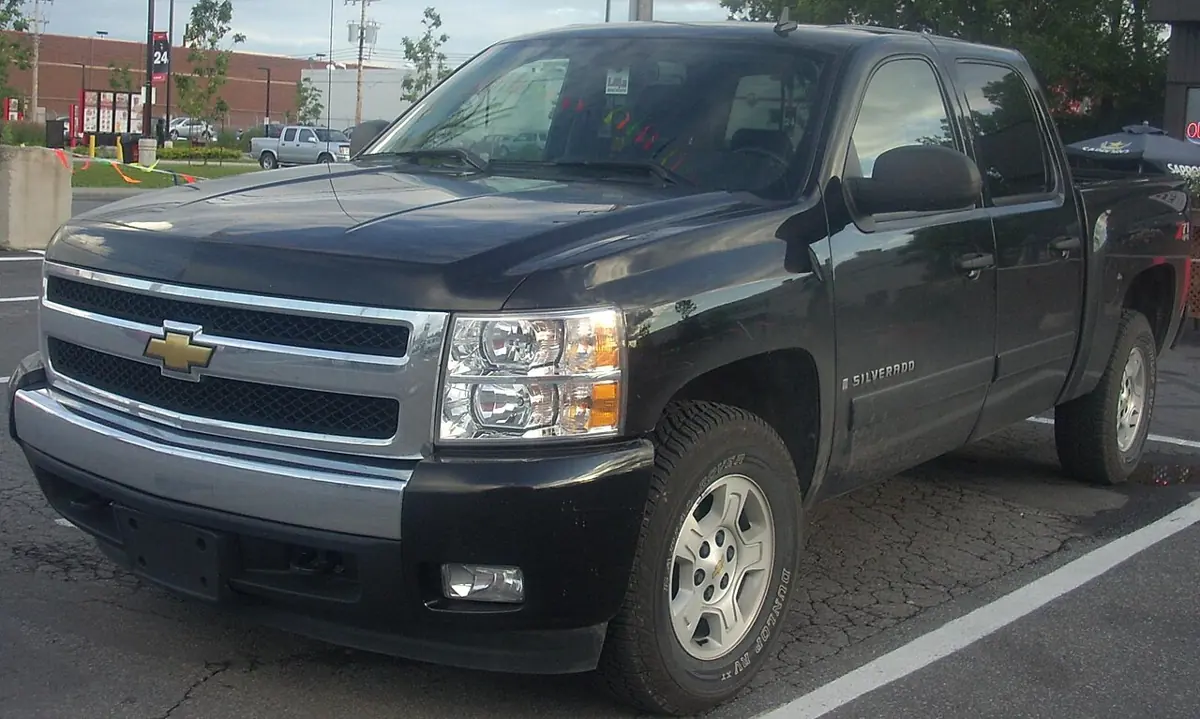
| Silverado 1500 2007-2016 (plus 2012 Orlando) | View fitment |
| Silverado 2500 / 2500 HD 2007-2016 | View fitment |
| Silverado 3500 / 3500 HD 2007-2016 | View fitment |
| Tahoe 2008-2016 (plus Uplander 2008-2009) | View fitment |
| Suburban 1500 2008-2014 | View fitment |
| Suburban 2500 2008-2013 / 3500 HD 2016 | View fitment |
| Express 1500 / 2500 2008-2011 | View fitment |
| Colorado 2015-2016 | View fitment |
| Equinox 2008-2012 | View fitment |
| Malibu 2008-2010 / 2013-2016 | View fitment |
| Impala 2008-2011 / 2014-2016 | View fitment |
| Cruze / Cruze Limited 2011-2016 | View fitment |
| Cobalt 2008-2010 | View fitment |
| Sonic 2012-2016 | View fitment |
| Spark 2011-2016 | View fitment |
| Camaro 2010-2016 | View fitment |
| Corvette 2008-2017 | View fitment |
GMC trucks and SUVs of the same era are in the GMC TPMS aisle, and everything is in the main TPMS aisle. If your Chevy is newer than the years shown, it uses a later sensor generation and these listings do not apply. Send us the VIN and we will check.
Frequently asked questions
Do I need a relearn after adding air?
No. GM tells dealers not to perform a relearn after adding air. Set the tires to the door label pressure and drive a short distance, and a solid low tire light turns itself off.
Why do I need a relearn after a rotation?
Each GM sensor is learned to a specific corner. After a rotation the receiver still hears all four, but shows each pressure on the wrong corner until you relearn.
What order do I trigger the sensors?
Left front, right front, right rear, left rear. The horn chirps once at each corner and twice at the end.
Can a relearn fix a flashing TPMS light?
Only if the cause is an unlearned or wrongly learned sensor. If a sensor is dead, the relearn has nothing to pair, and the sensor needs replacing.
Why do I see dashes in one or two readouts?
GM says this is usually a previous relearn that picked up another vehicle's sensor. Redo it away from other cars, or have a shop start it from a scan tool.
How much does temperature change tire pressure?
GM's rule of thumb is about 1 psi for every 10°F. Set tires to the placard pressure for the coldest weather you expect, never below it.
Do I need a tool?
On most of these vehicles, yes, to trigger each sensor. GM names the J 46079 and EL-50448, and many aftermarket activation tools support the same vehicles.
Does a TPMS emulator need a relearn?
Yes, once. The vehicle learns the four emulated IDs. Because they stay in the cabin module, a later tire rotation does not move them.
How often should I check tire pressure?
NHTSA says at least once a month, with the tires cold, meaning not driven for at least three hours.
Where do I find the right pressure?
On the Tire and Loading Information label on the driver's door edge or pillar, or in the owner's manual, not on the tire sidewall.
How do I know when tires are worn out?
Use the penny test or the treadwear indicator bars. NHTSA treats 2/32 inch of tread as the replacement point.
Sources
Every outside figure in this article links to one of these sources. Store experience is described in general terms only.
- GM Service Bulletin 09-03-16-002B, TPM system customer concerns (via NHTSA) · Solid vs flashing light, temperature rule, relearn guidance, tools
- GM bulletin PIC6047A, unable to learn TPM after service (via NHTSA) · Malibu OnStar fuse tip
- 49 CFR 571.138, FMVSS No. 138 · Malfunction lamp timing, 20-minute detection
- MOTOR, "TPMS Sensors Hit Retirement Age" · Sensor battery life
- NHTSA technical report notice, 77 FR 69541 · TPMS effectiveness
- NHTSA Chief Counsel interpretation to the Tire Industry Association (2011) · Make-inoperative guidance for repair businesses
- NHTSA, TireWise: tire safety and maintenance · Monthly checks, cold pressure, tread, age, crash figures
- Fueleconomy.gov, keeping your vehicle in shape · Mileage effect of tire pressure
Next steps
Relearn done and the light is still on? Diagnose before buying parts. If you need an emulator for a second wheel set:
For a full cost comparison of sensors, resets and emulators, read TPMS replacement vs reset vs emulator.