When the tire pressure light comes on, most owners want to know one thing: what is it going to cost to make it go away? The honest answer depends on why it came on, and there are really three different situations hiding behind the same amber symbol. The tires may simply be low. The system may have lost track of which sensor is on which wheel. Or a sensor may have stopped transmitting altogether.
Each of those has a different fix. A relearn costs little or nothing but only works when the sensors are alive. New sensors restore the system exactly as it was built, at a real cost per wheel. A vehicle-specific emulator replaces the four sensor signals from one module inside the vehicle, which suits some situations well and others not at all. This guide explains how to tell which situation you are in, what each fix involves and costs, what federal rules and studies say, and how to choose. Sources are linked as you go.
Key Takeaways
The short answers first.
| Question | Short answer |
|---|---|
| Solid light or flashing light? | Solid usually means low pressure. Flashing for about a minute and then staying on means a system fault, such as a missing or dead sensor. Federal rules set that pattern. |
| When does a relearn fix it? | When the sensors still transmit and only their positions or IDs are lost, for example after a rotation or wheel swap. |
| What do new sensors cost? | Schrader, an original-equipment sensor maker, puts sensors at roughly $50 to $100 each. Installed prices vary; one AAA club lists $90 to $120 per sensor, plus mounting. |
| What does an emulator do? | It supplies four learned wheel-position signals from one in-cabin module. It does not measure tire pressure. |
| When is an emulator a good fit? | Seasonal, specialty or second wheel sets without sensors, on a listed vehicle, for an owner who checks tires with a gauge. |
| What does ours cost? | $119.99 per listed vehicle, covering selected GM and Ford models. |
What the light is telling you
The tire pressure warning on these vehicles is not one message. The way it behaves tells you which kind of problem you have, and that pattern is set by federal rule rather than by each carmaker.
Federal Motor Vehicle Safety Standard No. 138 requires the low pressure telltale to come on within 20 minutes once a tire is 25 percent or more below the recommended cold pressure. It also requires a malfunction warning. On vehicles that use one combined lamp for both, the lamp must flash for at least 60 seconds and no more than 90 seconds after the ignition is switched on, then stay lit for as long as the malfunction exists (49 CFR 571.138).
| What you see | What it usually means | First step |
|---|---|---|
| Solid light, no flashing | One or more tires is low | Check all four cold with a gauge and fill to the door label |
| Flashes about a minute, then stays on | A system fault: a missing, dead or unlearned sensor, or a receiver problem | Check pressures, then find which position is not reporting |
| Only on cold mornings | Pressures are near the threshold | Fill to the door-label figure on a cold tire |
| Started right after new wheels or tires | Sensorless wheels, or sensors never learned | Relearn, or decide between sensors and an emulator |
Temperature explains a surprising number of solid lights. GM's dealer bulletin on TPMS concerns gives the rule of thumb that pressure changes about 1 psi for every 10°F change in temperature (GM bulletin 09-03-16-002B). A truck set to 35 psi in a warm garage in October can read several psi lower on a frosty December morning with nothing wrong at all.
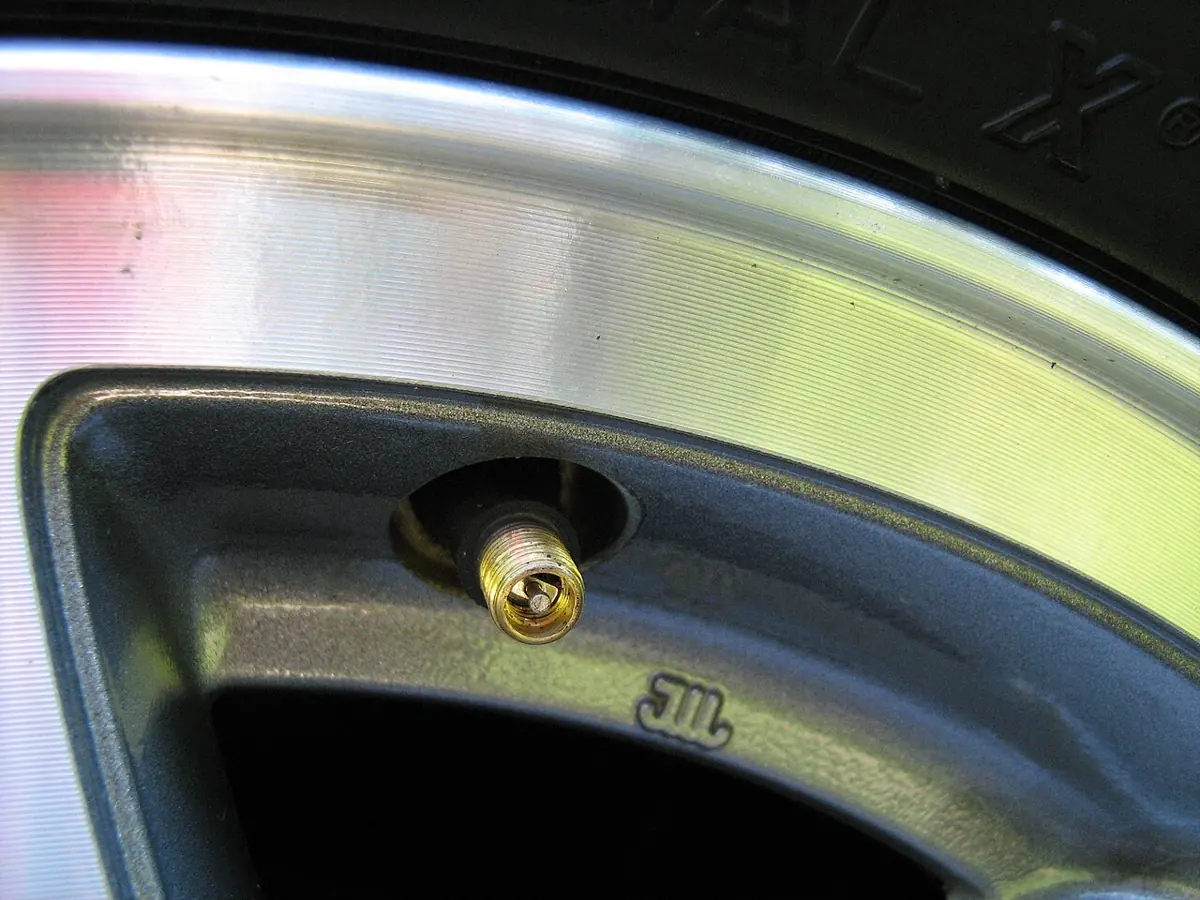
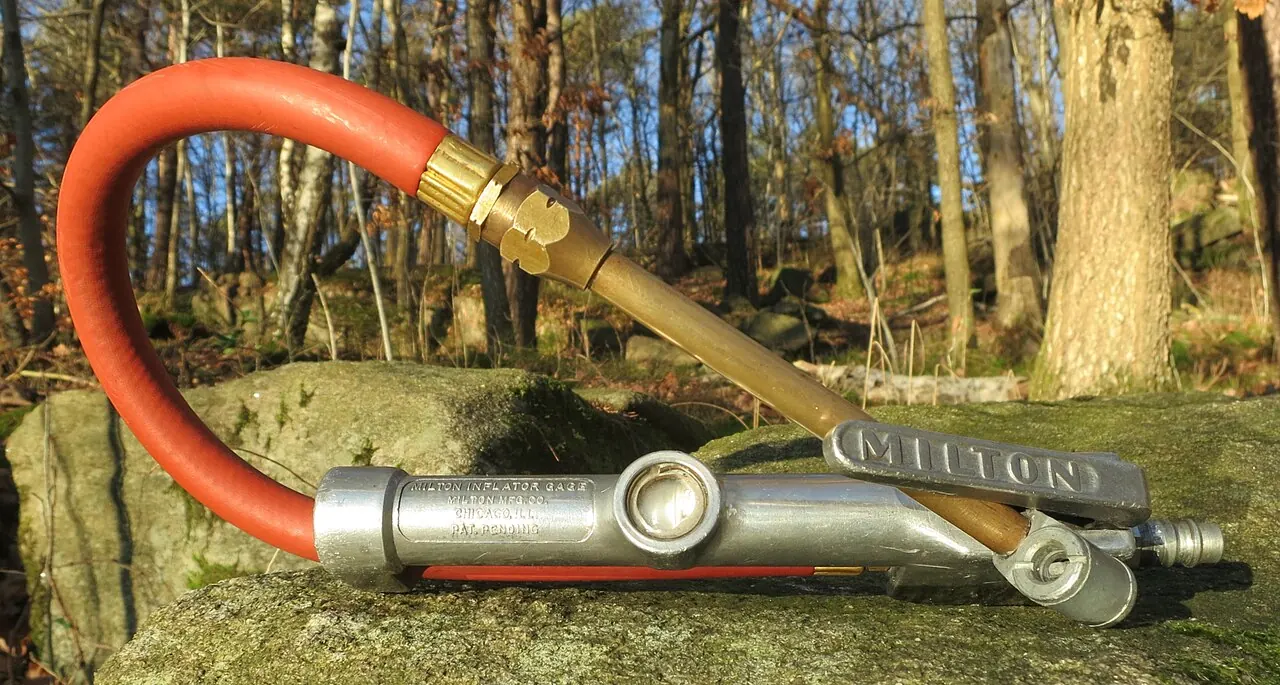
Always check pressure against the Tire and Loading Information label on the driver's door frame, not the maximum figure molded into the tire sidewall. That label is the number the system is built around.
Why sensors stop talking
Direct TPMS sensors are small radio transmitters mounted inside each wheel, usually at the valve stem. Each one sends its own ID with its pressure reading, and the vehicle's receiver listens only for the IDs it has learned.
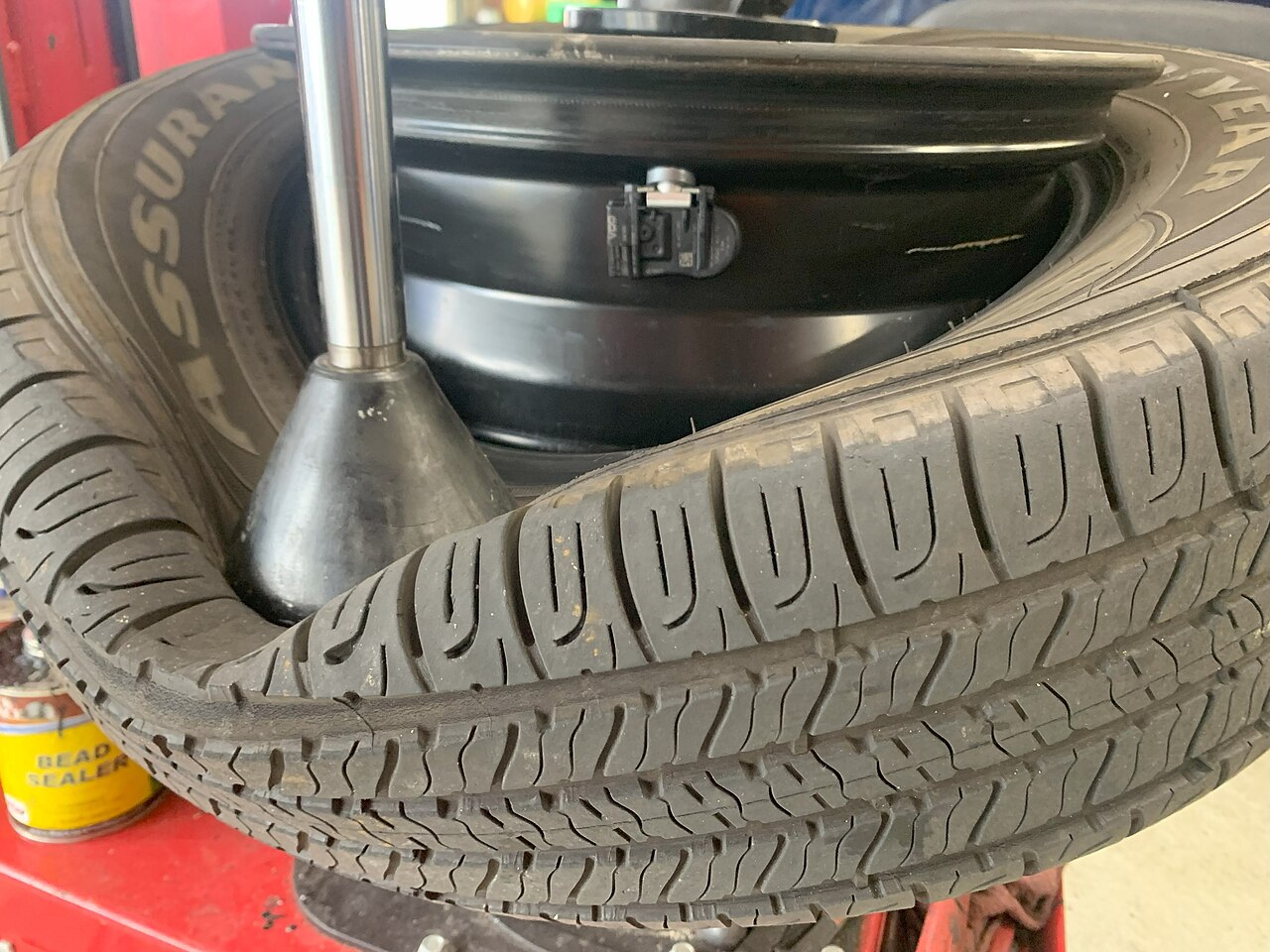
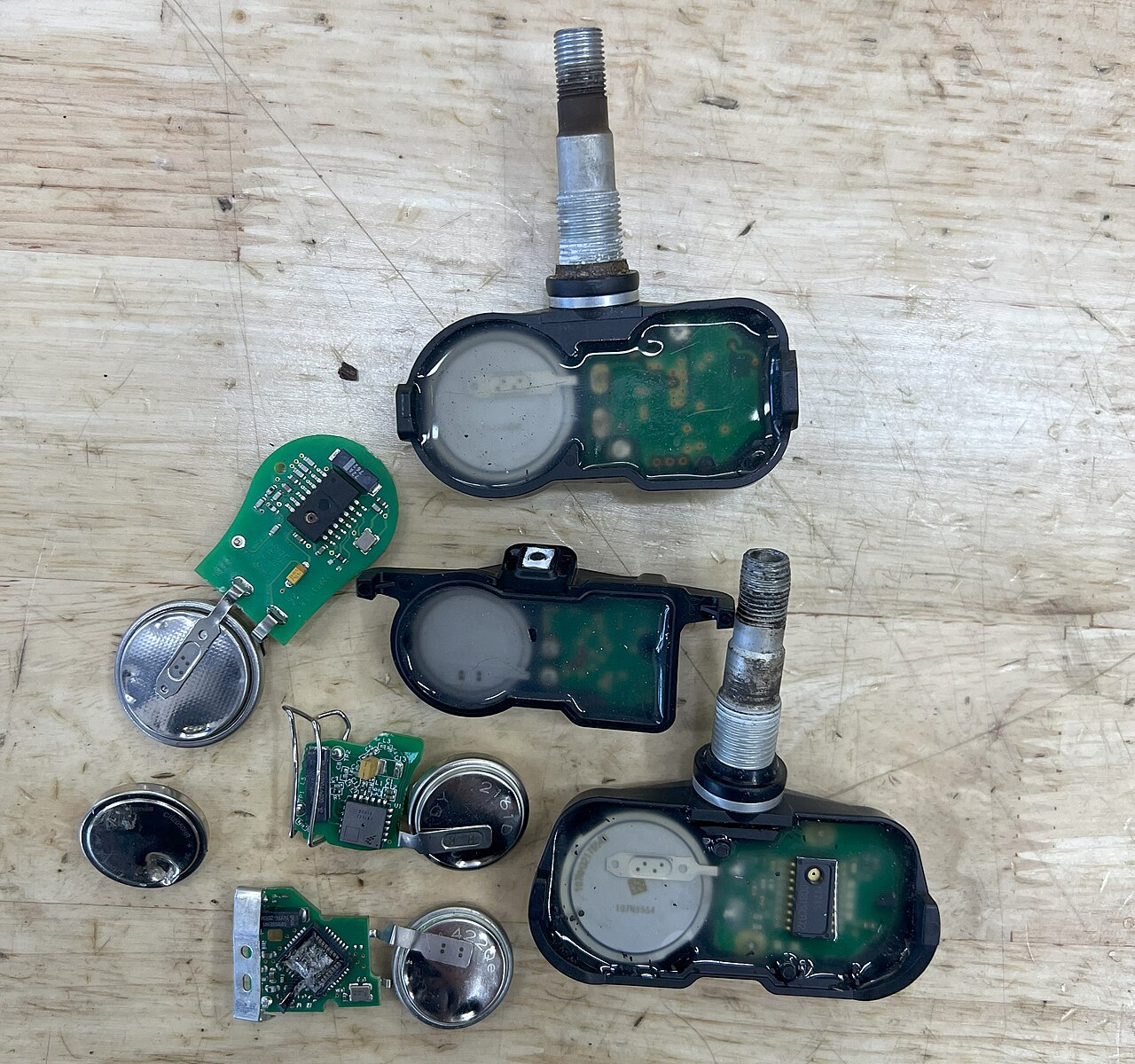
The sensor runs on a sealed battery. MOTOR magazine, writing for working technicians, put projected sensor battery life at six to ten years, noted that the batteries are typically sealed in moisture-proof potting so the practical repair is a new sensor, and pointed out that when one sensor in a matched set fails from age, the others are usually not far behind (MOTOR). A 2010 truck still on its original sensors is well past that window.
Batteries are not the only cause. Valve stems corrode, especially where road salt is used. Sensors get damaged during tire changes. And a second set of wheels bought without sensors, or with sensors the vehicle has never learned, will always read as missing.
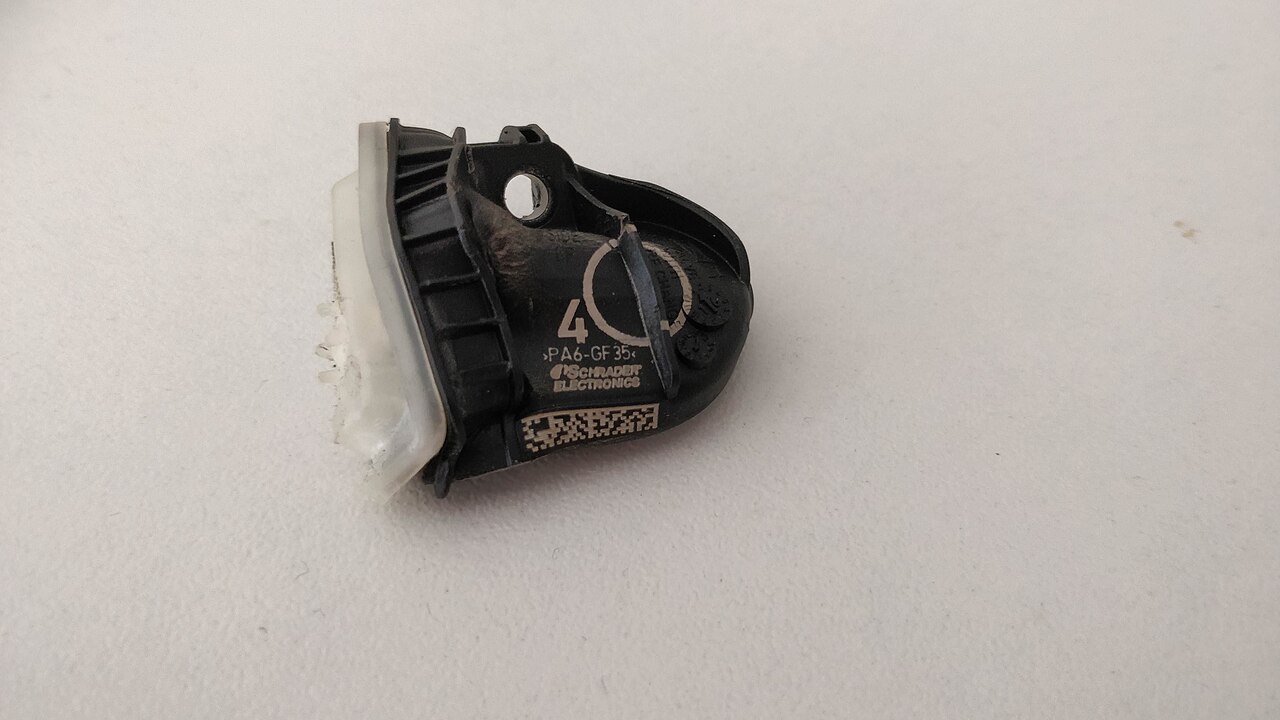
The important point for choosing a fix: a sensor with a dead battery cannot be relearned. There is no signal left to learn. That is why the next step, checking that your sensors are alive, decides everything else.
Find the silent corner first
Ten minutes of checking can show if you have one dead sensor, a whole set at the end of its life, or a problem no sensor or module will fix.
- Set the pressures. Fill all four tires to the door-label figure on a cold morning and drive for about 20 minutes. If the light goes out, it was pressure.
- Watch the start-up. If the light flashes for about a minute and then stays on, it is a fault, not low pressure.
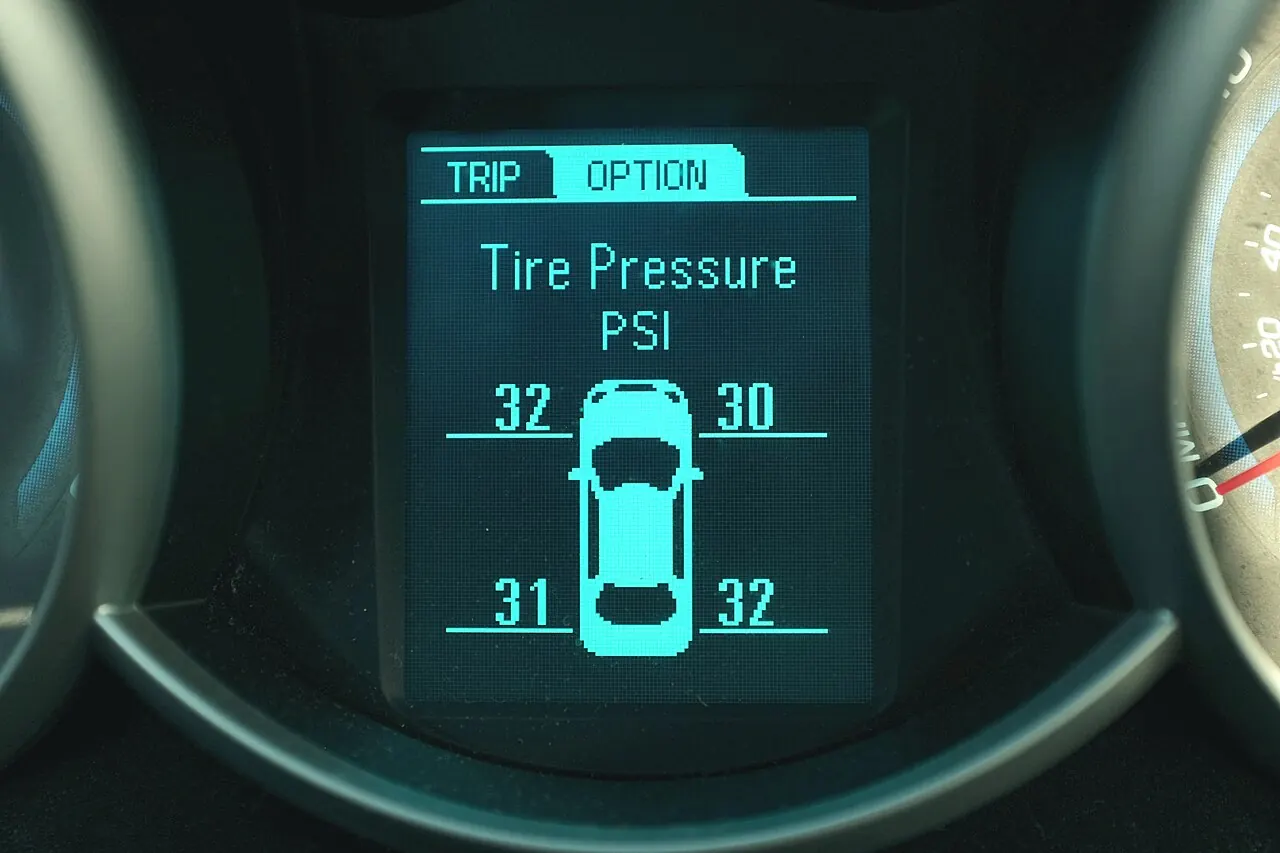
- Check the cluster. On vehicles that show individual tire pressures, a corner with dashes instead of a number is the one not reporting.
- Use a TPMS tool. A tire shop can trigger each sensor and read its ID, pressure and often battery status in a few minutes. On GM vehicles the dealer tools are the J 46079 or EL-50448.
- Think about history. New wheels, recent tire work, or a seasonal swap often explain everything.
The result usually falls into one of three groups. All four sensors respond but the positions are wrong: you need a relearn. One or more sensors do not respond: they need replacing, or the wheel set is a candidate for an emulator. The light stays on with all four sensors working and learned: the receiver or wiring needs diagnosis, and neither new sensors nor an emulator is the right first purchase.
Option A: reset and relearn
People use "reset" and "relearn" interchangeably, but they are different. A relearn teaches the receiver which sensor ID belongs to which corner. GM's bulletin puts it in one line: "Each tire monitor sensor is learned to a specific vehicle corner" (GM bulletin 09-03-16-002B). After a rotation or a wheel swap, the IDs are still valid but in the wrong places, and a relearn puts them right.
A relearn is the right tool when:
- The light came on after a tire rotation and every sensor still transmits.
- You swapped between two wheel sets that both have working sensors.
- A sensor was replaced and the new ID has not been learned yet.
It is the wrong tool for a dead sensor. There is no signal to learn, and the relearn will stop at that corner.
On many GM vehicles a relearn can be started from the driver information center or a key fob sequence, using a TPMS tool or a deflation method at each wheel in turn. GM tells its technicians to start it from a scan tool when possible, because that locks out signals from other vehicles nearby and "avoids storing false TPM I.D.s" (GM bulletin 09-03-16-002B). Our Chevy TPMS relearn guide walks through the steps, the order of the corners and what to do when a relearn will not finish.
Option B: replace the sensors
Replacement restores the system exactly as it was built: live pressure for each wheel, a real low-pressure warning, and correct readings after every rotation once relearned. It is the right choice for most daily drivers on their original wheels.
What it costs
Prices vary by vehicle, region and shop, so treat these as reference points rather than quotes.
| Item | Reference figure | Source |
|---|---|---|
| Replacement sensor | About $50 to $100 each, depending on vehicle | Schrader |
| TPMS valve service kit (cap, core, grommet, nut) | About $5 to $10 per wheel | Schrader |
| Sensor replacement, installed (one AAA club) | $90 member, $120 non-member, per sensor, plus mounting | AAA Hudson Valley |
| Mount and balance (same club) | $40 member, $60 non-member, per tire | AAA Hudson Valley |
Schrader also notes that the valve service kit should be replaced every time a tire is dismounted, and that a programming tool and extra time are needed to check and relearn the system (Schrader). Ask what is included when you get a quote.
Replace one, or all four?
If one sensor has failed from age and the others are the same age, the others are likely close behind, as MOTOR points out (MOTOR). Replacing all four at once often costs less in labor than doing them one at a time over a year or two, especially if the tires are coming off anyway for new rubber. If a sensor failed because it was damaged, and the rest are young, replacing just that one makes sense.
Second wheel sets
Schrader's own advice for winter or custom wheels is to buy a set of sensors for the extra wheels and have them relearned each time you switch, then relearned again when the original wheels go back on (Schrader). That works, and it keeps full monitoring. It also means buying eight sensors instead of four and paying for a relearn twice a year.
Option C: a vehicle-specific emulator
An emulator takes a different approach. Instead of a transmitter inside each tire, one powered module inside the vehicle supplies the four wheel-position signals the receiver expects. After the vehicle's relearn procedure, the receiver recognizes the four positions and the malfunction warning sequence stops.
| What it does | What it does not do |
|---|---|
| Supplies four learned signals: left front, right front, right rear, left rear | Measure the air in any tire |
| Lets a sensorless wheel set be recognized after a relearn | Warn you of a leak, a puncture or a slow loss |
| Stays out of the tires, so wheel swaps and tire work do not touch it | Replace your own monthly gauge check |
| Unplugs to return the vehicle to its factory sensors | Fix a faulty receiver or wiring |
Our product pages say this plainly: the emulator creates TPMS signals but does not sample the air pressure inside a tire, so every listing tells owners to keep checking all four tires cold with an accurate gauge, using the pressure on the door label.
Where it makes sense
- A seasonal or specialty wheel set without sensors, on a listed vehicle, for an owner who checks tires by hand.
- A work or fleet vehicle that rotates through wheel sets.
- A vehicle whose owner understands the trade and prefers it to buying and relearning a second set of sensors.
For dead sensors on the wheels you drive on every day, new sensors are usually the better fix, because they keep real monitoring. We say that on every TPMS page we publish.
Fitment
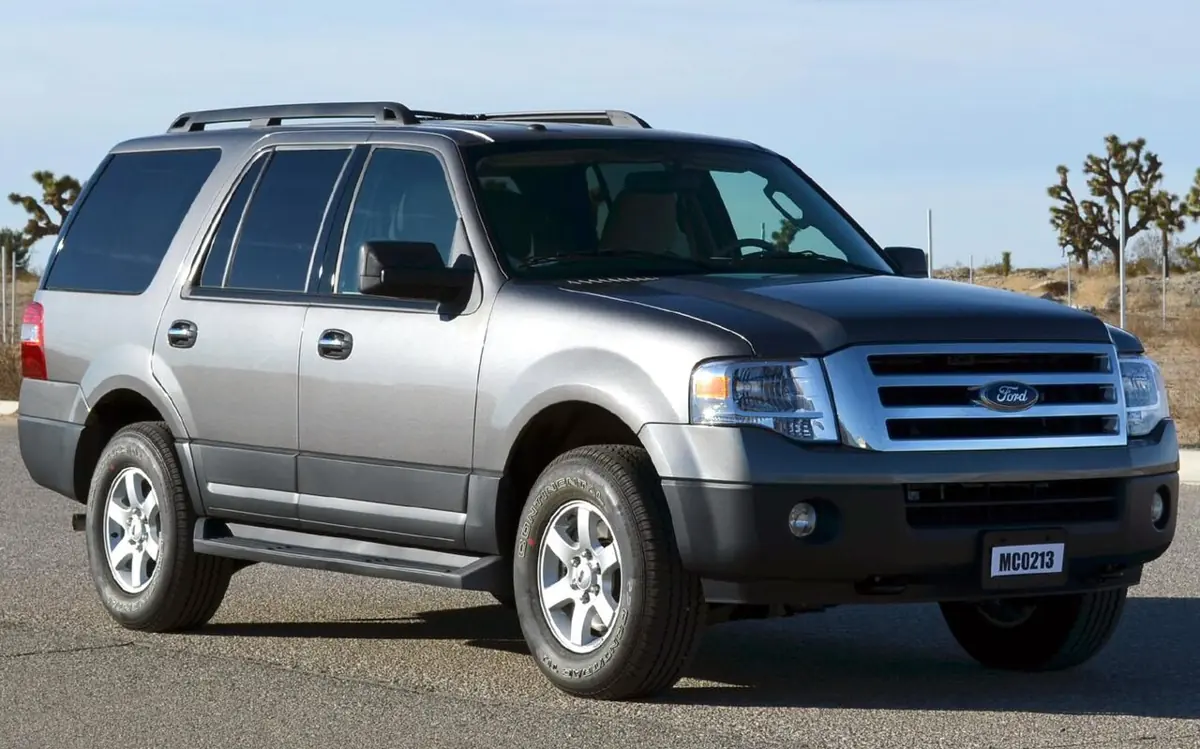
Every emulator is matched to specific makes, models and years. Current coverage includes Chevrolet and GMC trucks, SUVs, vans and cars from roughly 2007 to 2017, plus the 2011-2017 Ford Expedition and 2010-2018 Ford Focus. Browse the Chevrolet, GMC and Ford TPMS aisles, and match your exact year before ordering. Each listing is $119.99. Two of the most requested are the Silverado 1500 2007-2016 emulator and the Tahoe 2008-2016 emulator.
What TPMS is worth, in numbers
Before choosing anything that replaces real monitoring, it helps to know what monitoring does. NHTSA studied it. In a survey of 6,103 vehicles, 23.1 percent of model year 2004-2007 vehicles without TPMS had at least one tire 25 percent or more below the recommended pressure, against 11.8 percent of the same model years with TPMS. NHTSA estimated that TPMS reduced the likelihood of a severely underinflated tire by 55.6 percent (NHTSA notice, 77 FR 69541; full report DOT HS 811 681).
That is a real safety benefit, and it is why an emulator only makes sense alongside a habit of checking tires by hand. If you rely on the light to tell you when to add air, buy sensors.
What correct pressure is worth in money
Safety is the main reason to keep pressures right, but the money adds up too. Two government sources put figures on it:
- NHTSA says properly inflating tires can save as much as 11 cents a gallon, that only 19 percent of consumers properly inflate their tires, and that proper inflation can extend the average life of a tire by 4,700 miles (NHTSA TireWise).
- Fueleconomy.gov says correct inflation improves gas mileage by 0.6 percent on average and up to 3 percent in some cases, and that under-inflated tires lower mileage by about 0.2 percent for every 1 psi drop in the average pressure of all four tires (fueleconomy.gov).
| Average pressure across all four tires | Mileage loss (0.2% per psi) | Extra fuel per year* | Extra cost per year* |
|---|---|---|---|
| 2 psi low | about 0.4% | about 2 gal | about $7 |
| 5 psi low | about 1% | about 5 gal | about $17 |
| 10 psi low | about 2% | about 10 gal | about $34 |
*Our assumptions: 12,000 miles a year, 25 mpg, $3.50 a gallon. The fuel cost is modest; the larger costs of running low are shorter tire life and the safety risk. That is why the gauge habit matters whichever fix you choose for the sensors.
Side by side
| A. Relearn | B. New sensors | C. Emulator | |
|---|---|---|---|
| Works with dead sensors | No | Yes | Yes, on a listed vehicle |
| Works with sensorless wheels | No | Yes, once sensors are fitted | Yes, on a listed vehicle |
| Live pressure readings | Yes, if sensors are alive | Yes | No |
| Tire work needed | None | Tires dismounted to fit sensors | None |
| Relearn needed | It is the relearn | Yes | Yes |
| Typical cost | Little or nothing; a shop may charge | Per sensor plus labor; see figures above | $119.99 per listed vehicle |
| Best for | Rotations and swaps with live sensors | Daily drivers on original wheels | Second wheel sets, with manual tire checks |
Which fix fits
| Your situation | Start with |
|---|---|
| Light came on after a rotation, all sensors respond | A relearn |
| Solid light on a cold morning | A gauge and an air hose |
| Light flashes then stays on, original sensors 8 or more years old | A sensor check; likely new sensors |
| Light came with a new set of wheels that have no sensors | Sensors for that set, or an emulator if your vehicle is listed |
| Daily driver you plan to keep for years | New sensors |
| Light stays on with all four sensors working and learned | Diagnosis of the receiver and wiring |
| A tire is visibly low or losing air | Fix the tire today; none of the three is a substitute |
Three owners, three answers
Numbers on a table only go so far. Here is how the same light plays out for three different owners, using the reference prices above. Your local quotes will differ, so treat the totals as a way of thinking rather than a price list.
1. The rotation surprise
A 2015 Silverado owner has the tires rotated, and the light comes on the next morning. It flashes, then stays on. A shop tool shows all four sensors responding with healthy batteries, but the cluster has them on the wrong corners. This is a relearn job and nothing else. Many shops do it as part of the rotation; at worst it is a small labor charge. Buying sensors or a module here would be money spent on a problem that does not exist.
2. The aging original set
A 2011 Tahoe still on its factory sensors starts flashing the warning. The tool finds one sensor silent and two others reporting weak batteries. With sensors at roughly $50 to $100 each and service kits at $5 to $10 per wheel (Schrader), plus labor, replacing all four is a real expense, but it is the right one. This is the truck's only wheel set, the owner relies on the light, and the remaining original sensors are near the end of the six to ten years MOTOR describes (MOTOR). Doing all four while the tires are off once avoids paying for dismounting again next year.
3. The winter wheels
A 2014 Sierra owner in a snowy state buys a second set of steel wheels with winter tires, without sensors. Every winter the light comes on and stays on for four months. Option one is a set of four sensors for the winter wheels and a relearn at each changeover, which is what Schrader recommends for extra wheel sets (Schrader). Option two is an emulator for that truck, relearned when the winter wheels go on and unplugged when the summer wheels with their working sensors return. The emulator costs $119.99 once. The trade is that during winter the light will not warn of a slow leak, so the owner checks pressures with a gauge every couple of weeks, which matters more in cold weather anyway, given the 1 psi per 10°F rule (GM bulletin 09-03-16-002B).
Notice that the emulator only wins in the third case, and only for an owner willing to take on the checking. That is the pattern in real life too.
Mistakes that cost owners money
- Buying parts before testing. A shop TPMS tool tells you in minutes which sensors respond. Without that, you can replace a working sensor and leave the dead one in place.
- Filling to the sidewall number. The maximum molded into the tire is not the vehicle's recommended pressure. Use the door label.
- Ignoring a solid light because it is cold. Cold explains the drop, but the tire is still low for the conditions. Add air.
- Skipping the relearn. New sensors and emulators both need the vehicle's relearn before the light clears. The procedure differs by model year; follow the one for your vehicle.
- Reusing old valve hardware. Schrader recommends a new service kit every time a sensor-equipped tire is dismounted, because worn grommets and cores leak.
- Ordering by model name alone. Emulator listings are matched to exact year ranges, and those ranges do not always line up with body styles. Match the exact year, or send us the VIN.
The rules
This section is general information, not legal advice. Federal rules, state inspection laws and the facts of your situation all matter; if you are unsure, ask your state motor vehicle agency or a qualified attorney.
The federal "make inoperative" provision, 49 U.S.C. 30122(b), says a manufacturer, distributor, dealer, rental company or motor vehicle repair business "may not knowingly make inoperative" any device installed to meet a federal safety standard (49 U.S.C. 30122). TPMS is one of those devices.
NHTSA's Chief Counsel applied this to tire shops in a 2011 letter to the Tire Industry Association. A shop may replace a sensor that has already failed with a plain valve stem, because the part was already inoperative, but may not disable the malfunction lamp. And if a vehicle arrives with a working TPMS, a shop that installs wheels without working sensors violates the provision, even though the warning light would stay on (NHTSA interpretation, Nov. 22, 2011).
In practice, expect some tire shops to decline to mount sensorless wheels on a vehicle with a working system. Some states also check dashboard warnings during safety inspections. Rules differ by state, so check yours before you change anything, and keep any module removable so the factory system can be inspected and serviced as built.
Tire habits that matter whichever you choose
- Check all four tires cold at least once a month, and before a long trip or towing.
- Use the door-label pressure, not the sidewall maximum.
- Look at tread and sidewalls while you are there. Cuts, bulges and uneven wear tell you things no sensor does.
- Keep the spare inflated. Most systems do not monitor it.
- Replace the valve service kit whenever a tire with a sensor is dismounted.
- After any wheel swap or sensor change, complete the relearn before you rely on the light.
For more on the system itself, see our TPMS guide and the vehicle compatibility guide.
Frequently asked questions
Is a reset the same as a relearn?
Not quite. A relearn teaches the receiver which sensor ID belongs to each corner. It only works when the sensors still transmit.
Why does my light flash and then stay on?
Federal rules require a flashing malfunction warning of 60 to 90 seconds at start-up, then a steady light, when the system has a fault such as a missing or dead sensor.
How long do TPMS sensors last?
MOTOR magazine puts projected battery life at six to ten years. The battery is sealed in, so the fix is a new sensor.
How much do new sensors cost?
Schrader puts sensors at about $50 to $100 each. Installed prices vary; one AAA club lists $90 to $120 per sensor plus mounting.
Does an emulator show tire pressure?
No. It supplies the signals the receiver expects but does not measure air. Check tires with a gauge.
Will a tire shop mount wheels without sensors?
Many will not on a vehicle with a working system, because NHTSA has said that violates the make-inoperative provision for repair businesses. This is general information, not legal advice.
Do I still need a relearn with an emulator?
Yes. The vehicle has to learn the module's four positions using the procedure for your model year.
Can I go back to sensors later?
Yes. Unplug the module, fit or reinstall sensors, and relearn them.
How much fuel does low tire pressure waste?
Fueleconomy.gov estimates about 0.2 percent for every 1 psi drop in average pressure across all four tires.
Does correct pressure make tires last longer?
NHTSA says properly inflated tires can extend the average life of a tire by 4,700 miles.
Sources
Every outside figure in this article links to one of these sources. Store experience is described in general terms only.
- 49 CFR 571.138, FMVSS No. 138 (eCFR) · Low pressure and malfunction warning requirements
- GM Service Bulletin 09-03-16-002B (via NHTSA) · Corner learning, temperature rule, relearn guidance, tools
- MOTOR, TPMS sensors hit retirement age · Sensor battery life and replacement
- Schrader TPMS, TPMS replacement · Sensor cost, service kits, second wheel sets
- AAA Hudson Valley mobile tire service · Installed sensor and mounting prices
- NHTSA notice, 77 FR 69541 · TPMS effectiveness findings
- NHTSA, DOT HS 811 681 · Full TPMS effectiveness report
- NHTSA interpretation to the Tire Industry Association, 2011 · Make-inoperative guidance for tire shops
- 49 U.S.C. 30122 (Cornell LII) · Statute text
- NHTSA, TireWise: tire safety and maintenance · Inflation savings, tire life, monthly checks
- Fueleconomy.gov, keeping your vehicle in shape · Mileage effect of tire pressure
Next steps
If a relearn is what you need, start with our Chevy TPMS relearn guide. If an emulator fits your situation, find your exact vehicle in the Chevrolet, GMC or Ford TPMS aisle, or browse every TPMS application. Not sure which year range you are in? Send us the VIN and we will check before you order.